Federal rebates, run by states

Home Energy Rebates in 2026: HOMES and HEEHR

The Inflation Reduction Act created two rebate programs, and both still exist: HOMES for whole-home upgrades and HEEHR for electric appliances. States run them, so whether you can apply depends on where you live. As of October 12, 2026, they’re taking applications in 10 states plus DC.

Partly open DOE: “Home Energy Rebates are now available in select states” (program page modified July 8, 2026). DOE no longer publishes a current state-by-state list.

DOE program page ↗ · verified October 12, 2026

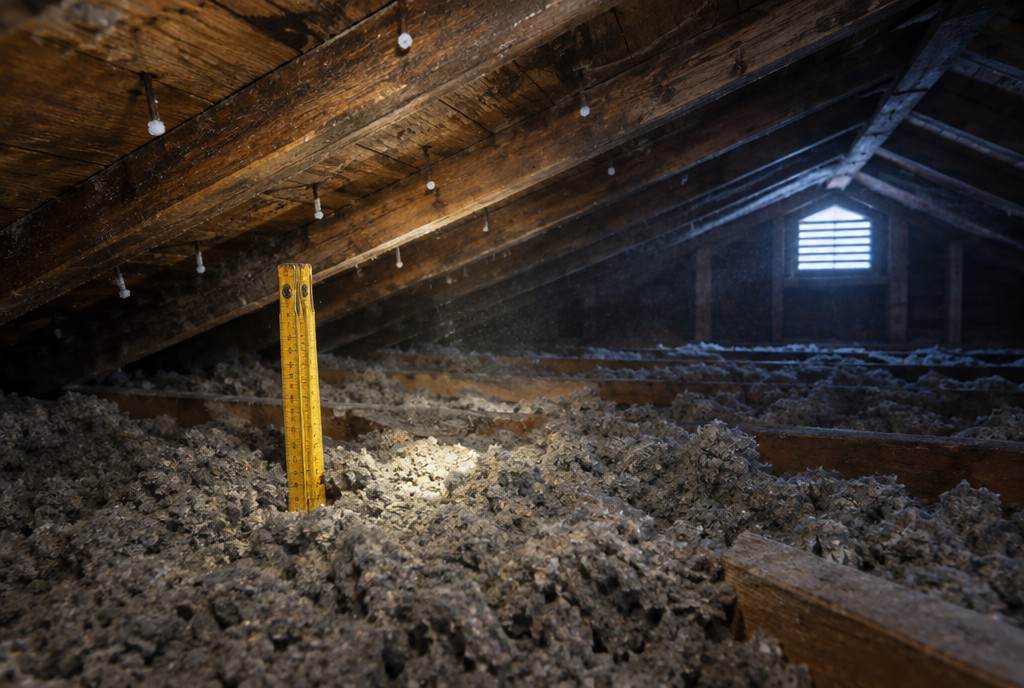
Loose-fill insulation between attic joists, a yellow ruler showing its depth and frost on the roofing nails above

The two programs

HOMES · whole-home upgrades

Home Owner Managing Energy Savings

Law
Inflation Reduction Act Sec. 50121 (42 U.S.C. 18795)
Funding
$4.3 billion, available through September 30, 2031
Pays for
Whole-home projects, with rebates set by modeled or measured energy savings and household income. Open programs that state a threshold start at 20% modeled savings (Georgia, Indiana, North Carolina, Rhode Island, Wisconsin).
Who
Set by each state. Wisconsin opens HOMES to all incomes; North Carolina and Michigan limit it to low- and moderate-income households.

Two open programs, as published

Georgia: Under 80% AMI: 20-34% modeled savings, up to 98% of cost, max $10,000; 35%+ savings, max $16,000. 80% AMI and above: 20-34% savings, up to 50%, max $2,000; 35%+ savings, max $4,000. Contractor assessment may carry a fee.

Wisconsin: Single-family, 20-34% modeled savings: <80% AMI 100% up to $5,000; 80-150% AMI 50% up to $2,000; >150% AMI 50% up to $1,500. 35%+ savings: $10,000 / $4,000 / $3,000. Multifamily per-unit equivalents with building caps ($200,000-$500,000). Assessment has a cost; low-income households can get up to $500 toward it.

GEFA ↗ · Focus on Energy ↗ · 42 U.S.C. 18795 ↗ · verified October 12, 2026

HEEHR · electric appliances (formerly HEAR)

High-Efficiency Electric Home Rebates

Law
Inflation Reduction Act Sec. 50122 (42 U.S.C. 18795a)
Funding
$4.275 billion to states and territories plus $225 million to tribes, through September 30, 2031
Who
Households at or below 150% of area median income (AMI)
Share paid
Up to 100% of the cost below 80% of AMI; up to 50% at 80–150% of AMI
Since May 29, 2026
Only upgrades from existing electric equipment to more efficient electric equipment, or new construction
Federal caps, up to $14,000 per household
ItemUp to
Heat pump for heating and cooling$8,000
Electrical panel (load center)$4,000
Electrical wiring$2,500
Heat pump water heater$1,750
Insulation, air sealing and ventilation$1,600
Heat pump clothes dryer$840
Electric stove, cooktop, range or oven$840

Virginia Energy FAQ ↗ · NC DEQ ↗ · 42 U.S.C. 18795a ↗ · verified October 12, 2026

What changed on May 29, 2026

DOE Program Notices 26-1 (HOMES) and 26-2 (HEEHR) took effect May 29, 2026 and were announced to states on June 1. They rewrote the rules.

New names

The programs went back to their names in the law: HOMES (Home Owner Managing Energy Savings) and HEEHR (High-Efficiency Electric Home Rebates). “Home Efficiency Rebates” and “Home Electrification and Appliance Rebates” (HEAR) are the old names, and many state pages still use them.

No more fuel switching in HEEHR

DOE now allows rebates only “for upgrading HVAC and appliances only from existing electric equipment to more efficient electric equipment,” plus new construction, even though the law’s definition lists purchases made “to replace a nonelectric appliance.”

Insulation and air sealing first

Homes must get insulation and air sealing before heating and cooling upgrades, unless they already meet a level the state sets.

Equity set-asides removed

The Justice40 requirement to reserve 40% of funds for low-income households, Community Benefits Plans and disadvantaged-community mapping are gone. HOMES keeps the $200 payment the law sets for contractors per home in a disadvantaged community.

Fraud controls

Consumer protection plans became “Fraud, Waste, and Abuse Mitigation Plans,” and contractors are vetted against the Treasury “Do Not Pay” system.

Less paperwork

ENERGY STAR certification became optional for HOMES, and several inspection and paperwork requirements were dropped. If DOE doesn’t respond within 30 days of a state’s final Blueprint feedback, the state may launch.

Deadlines

Launched programs had three months to comply; states cite August 31 or September 1, 2026. Reservations approved earlier may still be paid. States that hadn’t launched must align before launching, and many are resubmitting: Maryland on September 30, 2026, while Virginia and Kentucky are updating their documents.

Tribal HEEHR

Program Notice 26-3 covers tribal HEEHR, whose application deadline was reopened to December 11, 2026.

Program Notice 26-1 ↗ · Program Notice 26-2 ↗ · DOE bulletin, June 1, 2026 ↗ · verified October 12, 2026

What it means for you

  • If you heat with gas, oil or propane, HEEHR won’t pay toward electric equipment that replaces it. North Carolina stopped funding fuel switching on September 1, 2026; Wisconsin stopped retail coupons for equipment replacing fossil fuel appliances the same day; Efficiency Arizona’s last day to reserve under the old rules was August 28, 2026.
  • Upgrades from electric to more efficient electric still qualify, and so does new construction.
  • Plan for insulation and air sealing first, unless your home already meets your state’s level.
  • A reservation approved before your state changed its rules may still be paid.
  • Some state pages don’t say yet how they’ve applied the new rules, including Michigan, New Mexico, Rhode Island, California and DC. Ask the program before you buy equipment.

Where they’re open now

Checked against each state’s own page on October 12, 2026. 10 states plus DC are taking applications for at least one program. Each state page quotes the state’s wording and links the official site.

Open 8

At least one of the two programs is taking applications.

Home Energy Rebates: Open
StateHEEHR · appliancesHEEHRHOMES · whole homeHOMES
District of ColumbiaOpen · limits applyOpen
GeorgiaPausedOpen
IndianaOpenOpen
New MexicoOpenOpen
New YorkOpenUnconfirmed
North CarolinaOpen · limits applyOpen
Rhode IslandOpen · limits applyOpen
WisconsinOpenOpen

Open with limits, paused or waitlist 5

Some households can apply, or the state has paused its program or opened only a waitlist.

Home Energy Rebates: Open with limits, paused or waitlist
StateHEEHR · appliancesHEEHRHOMES · whole homeHOMES
ArizonaPartly openUnconfirmed
MaineOpen · limits applyNot open yet
MichiganOpen · limits applyOpen · limits apply
UtahPausedPaused
West VirginiaWaitlistWaitlist

Closed 3

Launched, then closed to new applicants once the money was reserved.

Home Energy Rebates: Closed
StateHEEHR · appliancesHEEHRHOMES · whole homeHOMES
CaliforniaClosedNot open yet
ColoradoClosedNot open yet
South DakotaNot participatingNot participating

Not launched or unconfirmed 35

No rebates yet, or no state page could confirm the status.

Alabama · Alaska · Arkansas* · Connecticut · Delaware · Florida · Hawaii · Idaho · Illinois · Iowa · Kansas · Kentucky · Louisiana* · Maryland · Massachusetts* · Minnesota · Mississippi* · Missouri · Montana · Nebraska* · Nevada · New Hampshire* · New Jersey · North Dakota · Ohio* · Oklahoma · Oregon · Pennsylvania · South Carolina · Tennessee · Texas · Vermont · Virginia · Washington · Wyoming

* No state program page could be checked; the status comes from the Building Performance Association’s June 2026 map.

How to apply

  1. Find your state’s program. Open your state’s page in our state list; it links the official program site. You apply through the state or its contractors, not through DOE.

  2. Check income eligibility. States use area median income (AMI). For HEEHR, households above 150% of AMI aren’t eligible; below 80% of AMI, rebates can cover up to 100% of the cost. Some states accept enrollment in other programs as proof: Arizona lists SNAP, AHCCCS/Medicaid, LIHEAP, Lifeline, Head Start and public housing.

  3. Use a participating contractor or retailer. Most programs pay through enrolled contractors, such as TECH-certified, HEEHRA-trained contractors in California, MiHER Registered Contractors in Michigan and registered contractors in North Carolina. Wisconsin, Arizona and New Mexico also use retail coupons.

  4. For HOMES, start with an energy assessment. The rebate depends on modeled savings. The assessment can carry a fee: Georgia warns of possible costs, Wisconsin gives low-income households up to $500 toward it, and North Carolina’s is free. Assessors usually have to be enrolled in the state program (Oregon requires every contractor, home energy assessor and energy modeler offering rebates to enroll), so check before you book one.

  5. Get approved before work starts. Colorado guarantees a rebate only after a formal reservation notice, and several states say rebates aren’t retroactive.

Taking applications now

Official program pages for the 10 states plus DC where at least one program is taking applications, as checked October 12, 2026.

Gotchas

  • Scams. Kentucky says anyone offering its rebates before launch “is misinformed,” North Dakota calls current offers likely scams, and Alaska and California warn of rebate scams. Indiana says its program contractors don’t go door to door.
  • Money runs out. Colorado’s single-family rebates closed when its funds reached $0. California’s are fully reserved, with a waitlist. Michigan paused new income-qualified applications in several districts, which covers every county in metro Detroit.
  • Stale state pages. Some state pages haven’t been updated since 2024 or 2025 and still show launch dates that have passed, including Delaware, Iowa, Nevada and Wyoming.
  • Look-alike state programs. Washington’s state-funded HEAR, Oregon’s heat pump programs, DC’s DCSEU residential rebates and Alaska’s $10,000 new-home rebate are state programs, not the federal rebates.
  • No federal tax credit to combine. The 25C and 25D credits ended for work after December 31, 2025. What ended

How we got here

  1. January 20, 2025Executive Order 14154 Sec. 7(a) pauses disbursement of IRA funds pending OMB review.
  2. July 4, 2025Public Law 119-21 enacted: rescinds unobligated Sec. 50123 contractor-training funds; HOMES and Sec. 50122 rebates not rescinded.
  3. May 29, 2026DOE Program Notices 26-1 (HOMES) and 26-2 (HEEHR) take effect; announced to states June 1, 2026.
  4. August 31, 2026Approximate deadline for launched programs to conform (three months after publication; NC and WI implemented changes Sept. 1, 2026).
  5. December 11, 2026Reopened deadline for tribal HEEHR applications.

Several states say their plans sat with DOE after the January 2025 pause: Utah’s page (dated July 2025) says DOE “has not approved the application from Utah, nor those from numerous other state energy offices,” and Montana paused planning in February 2025.

Common questions

Are the federal Home Energy Rebates still available in 2026?

In some states. Both programs are still funded through September 30, 2031, but each state runs its own. As of October 12, 2026, 10 states plus DC were taking applications for at least one program: Arizona, DC, Georgia, Indiana, Maine, Michigan, New Mexico, New York, North Carolina, Rhode Island and Wisconsin. Most other states haven't launched.

What is HEEHR, and is it the same as HEAR?

Yes. HEEHR (High-Efficiency Electric Home Rebates) is the name DOE restored on May 29, 2026 for the program many states still call HEAR (Home Electrification and Appliance Rebates). It pays toward heat pumps, heat pump water heaters, electric stoves, heat pump dryers, panels, wiring, insulation and air sealing for households up to 150% of area median income, up to $14,000 per household.

Can I get a Home Energy Rebate to replace my gas furnace with a heat pump?

Not through HEEHR anymore. Since DOE's May 29, 2026 rules, HEEHR pays only for upgrades from existing electric equipment to more efficient electric equipment, plus new construction. North Carolina, Wisconsin and Arizona applied the change on September 1, 2026. Utility programs in several metro areas still pay toward heat pumps; check your metro page.

How many states have launched Home Energy Rebates?

The Building Performance Association's June 2026 map counted 12 states plus DC as launched, and 55 states and territories applied (all but South Dakota). Our check of state pages on October 12, 2026 found 10 states plus DC taking applications. Colorado's and California's programs are now closed to new applicants, Utah's is on hold and West Virginia is running a pilot with a waitlist.

Do I apply to the Department of Energy?

No. DOE funds the programs, but you apply through your state's program, usually with a participating contractor or retailer. DOE no longer publishes a current state-by-state list; its old status map shows “Last updated 04/09/2024.”

Can I get a rebate for work I already finished?

Usually not. Alaska, Illinois, Vermont and Washington say their rebates aren't retroactive, Minnesota says HEAR rebates won't be, and Arizona says completed projects don't qualify. Minnesota says HOMES projects started on or after August 16, 2022 may qualify if they meet every requirement.

Not sure where to start?

Tell us your ZIP code, the kind of home you have and what you’re planning. A person reads every message and replies with the certified auditors and utility programs that serve your area.

A person replies by email. We don’t sell your details or share them with contractors. See our privacy note.

Sources

Checked October 12, 2026. The state-by-state status comes from each state’s page; see the state pages for those sources.