Gear guide · Water & moisture · updated October 12, 2026

Water test kits

Private wells aren't regulated under the federal Safe Drinking Water Act or by most states, so the owner is responsible for making sure the water is safe. EPA says to test every year for total coliform bacteria, nitrates, total dissolved solids and pH. Start with your local health department: some test private wells for free, and they know what's common in local groundwater. Paid lab panels earn their keep on what a basic test skips, such as arsenic and uranium, which occur naturally in some regions' groundwater, and lead from older plumbing.

Not sure this category applies to your home? The testing guide covers which tests matter. For the testing side, see the well water guide.

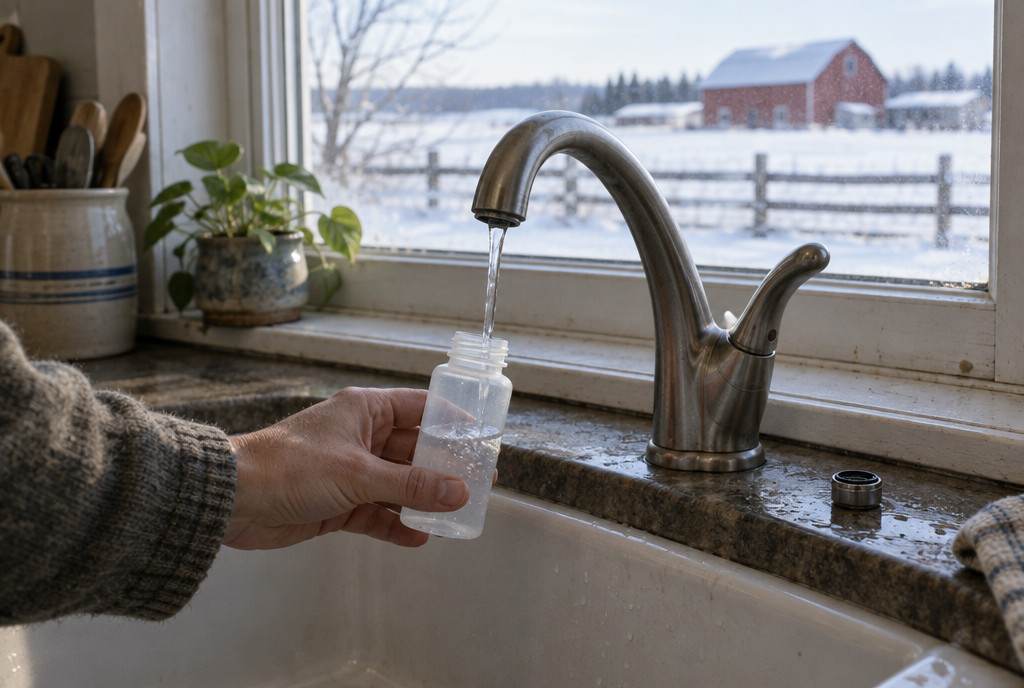
Filling a water-sample bottle at a farmhouse kitchen tap with the aerator removed, snowy fields and a barn outside

Buttons open amazon.com search results. As an Amazon Associate, AuditYourHome earns from qualifying purchases, at no extra cost to you.

The lab-grade answer

Tap Score mail-in lab panel

Mail-in kits analyzed by a lab, with a readable report. Choose a well panel (nitrates, metals, minerals) or a city panel (lead and other metals). Tap Score says it uses only ISO 17025, ELAP and NELAC certified labs; if a lender or a state program needs the result, confirm the lab is certified in your state.

$190–$475 by panel

Find on Amazon.com ↗

The screening strips

Health Metric well water kit

DIY strips for nitrate and nitrite, hardness, pH, iron and a bacteria presence test. A screen between lab tests, not a substitute for one.

The lead question

Safe Home lead-in-water test

A single-issue kit for older homes: is there lead in this tap's water? Safe Home sells DIY and mail-in lab versions; the lab version gives you a number to act on.

Prices are rough US list prices from each maker's own website, checked October 12, 2026. Where we couldn't confirm a current US price, we left it off rather than guess. Amazon prices move and often run below list, so check the live listing.

Before you buy

  • EPA: test a private well every year for total coliform bacteria, nitrates, total dissolved solids and pH, and more often if young children, older adults, or someone pregnant or nursing lives there.
  • Test right away after flooding or nearby construction, after any well repair, or if the taste, odor or color changes.
  • Use a lab certified for drinking-water testing; EPA links each state's lab certification program. EPA itself doesn't test home water.
  • Add tests for what's nearby, per EPA: farms (nitrate, nitrite, pesticides, coliform), mining (metals, pH), gas drilling (chloride, sodium, barium, strontium), and landfills, gas stations, dry cleaners or a fuel smell (VOCs).
  • A TDS meter on its own isn't a safety test. It reads dissolved minerals, and water with bacteria or high nitrate can still read normal.
  • On city water? Under EPA's 2024 lead rule, most water systems must replace lead service lines within 10 years. Ask your utility whether your address has one.

Some links here are affiliate links — as an Amazon Associate, AuditYourHome earns from qualifying purchases, at no extra cost to you. Picks are chosen on merit; no manufacturer pays for placement, and prices shown are planning bands, not quotes.

Also in gear guides: Radon monitors & test kits · Indoor air quality monitors · Air purifiers (HEPA)