How it works · verified October 12, 2026

What happens in a home energy audit

A good audit measures the house instead of guessing: a blower door for air leaks, an infrared camera for missing insulation and safety checks on gas appliances, then a report that ranks the upgrades. Here is what each kind of U.S. audit includes, how long it takes and what comes next.

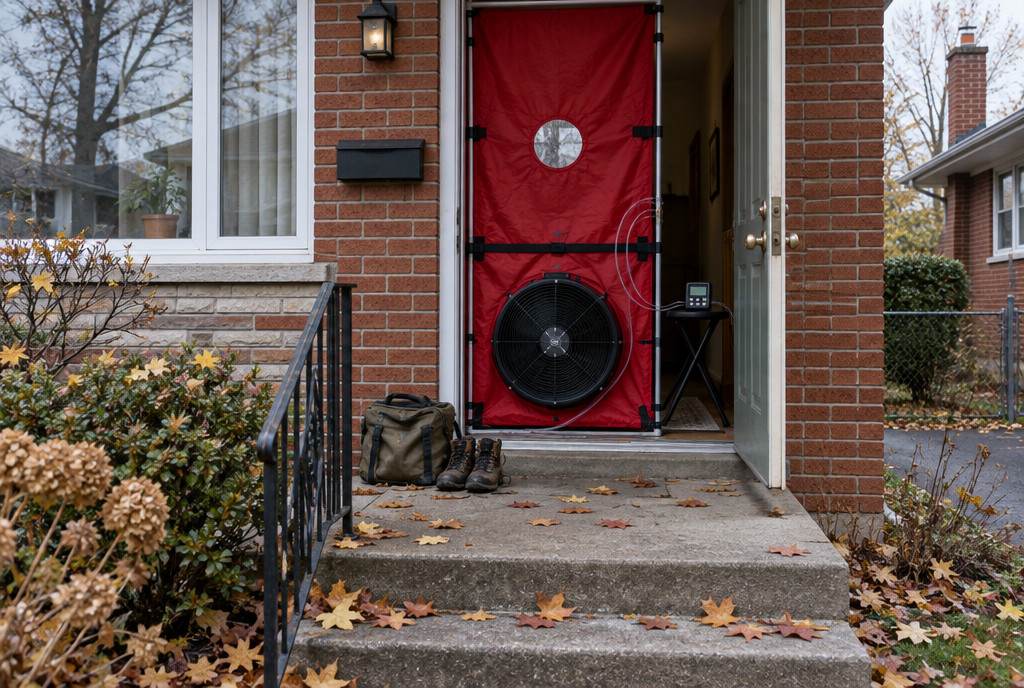
A red blower-door panel with a large fan fitted into the front doorway of a brick bungalow, a pressure gauge on a stool inside

Four kinds of home energy audit

They differ in who does them, what gets measured and what you get at the end. Prices are on what an audit costs.

1

Utility or state program assessment

A visit from your utility’s energy advisor or a participating contractor, often free and often with free products installed. What gets measured varies a lot. Georgia Power’s free in-home audit is a walk-through with recommendations; PSEG Long Island’s includes a thermal scan and a blower door test; Minnesota’s Home Energy Squad adds a blower door measurement and a heating safety test on its Energy Planner visit.

Who
Utility staff or the program’s contractors
Cost
Free in many metros; $49–$100 in some
You get
Recommendations and the program’s rebates, e.g. Mass Save’s report lists the rebates you qualify for
2

Comprehensive diagnostic audit

A certified professional tests the whole house. BPI describes its Home Energy Professional Energy Auditor as someone who evaluates a home’s energy efficiency, health and safety with diagnostic tools and modeling software and writes a prioritized scope of work. DTE’s contractor-delivered assessment in Michigan, for example, includes blower door tests, safety and efficiency testing of heating and cooling equipment, thermal imaging and energy modeling.

Who
BPI Building Analyst Professional or Home Energy Professional Energy Auditor
Cost
Set by the contractor; some utilities pay part (DTE, Georgia Power, SRP, Xcel)
You get
Test results and a prioritized list of upgrades
3

HERS rating

A RESNET HERS Rater tests the home, typically with blower door and duct leakage tests, and scores it on the HERS Index against a modeled reference home built to the 2006 energy code (IECC). That reference scores 100; lower is better, so 70 means 30% more efficient and 0 means net zero. HERS ratings are used most for new homes, ENERGY STAR and code compliance, and FHA accepts them for its Energy Efficient Mortgage.

Who
A RESNET HERS Rater
Cost
RESNET publishes no price
You get
A HERS Index score, listed in RESNET’s registry
4

DOE Home Energy Score

A 1–10 rating, like a miles-per-gallon label for the house: 5 is an average U.S. home and 10 is the top 10%. A certified assessor collects about 40 data points in a walk-through of under an hour. The score rates the house, not how you use it, and comes with upgrade recommendations that pay back within 10 years and a “score with improvements.” Single-family homes, townhouses and duplexes can be scored; multifamily and mobile homes can’t.

Who
A Home Energy Score Certified Assessor
Cost
DOE doesn’t set fees; in California a $250 rebate applies for many utility customers
Required
In Portland, Oregon, before most homes are listed for sale

Online self-assessments

Many utilities offer a free online check that takes about 20 minutes (Nicor Gas’s) and mails energy-saving products. Nothing is measured, so treat it as a first look. Read the terms: Nicor says customers who complete its self-assessment can’t receive additional services through its Home Energy Savings offering. Nicor Gas ↗

The tests

DOE says many professional assessments include a blower door test and an infrared scan. These are the tests worth asking about, with links to our full guides.

Blower door test

Depressurizes the house, usually to 50 pascals, to measure air leakage. ACH50 = airflow at 50 Pa (cfm) × 60 ÷ house volume (cubic feet). The 2021 IECC asks new homes for 3.0 ACH50 or less in zones 3–8.

Blower door guide →

Infrared scan

Shows missing, partial or damaged insulation in framed walls and ceilings (ASTM C1060). With the house depressurized, it also finds air leaks (ASTM E1186). ASTM says confirming missing insulation needs an independent check.

Infrared guide →

Combustion safety

Checks gas appliances for spillage and carbon monoxide under worst-case depressurization. BPI’s ambient CO levels: 9–35 ppm advise, 36–69 ppm ventilate and shut off sources, 70 ppm or more evacuate and call for help from outside.

Combustion safety guide →

Duct leakage

Tests the ducts at 25 pascals with the registers sealed. The 2021 IECC limit for new homes is 4.0 cfm25 per 100 sq ft of conditioned floor area.

Duct leakage guide →

Heat-loss calculation

ACCA Manual J works out room-by-room heating and cooling loads; Manual S sizes the equipment from them and Manual D designs the ducts. Where codes adopt them, new equipment must be sized this way.

Heat-loss guide →

Attic inspection

Measures insulation depth against ENERGY STAR’s retrofit levels: in climate zones 4–8, R60 for an uninsulated attic, or R49 if it already has 3–4 inches.

Attic guide →

Utility bill analysis

A year of bills sets the baseline. Utilities that use the Green Button standard let you download your own usage data.

Bill analysis guide →

Home health tests

Radon, carbon monoxide, lead paint, asbestos, mold and well water need their own tests and specialists.

The testing guide →

Sources: DOE Building America (blower door) ↗ · ASTM C1060 ↗ · BPI standards ↗ · DOE Building America (ducts) ↗ · ACCA Manual J ↗ · ENERGY STAR R-values ↗ · DOE Green Button ↗ · verified October 12, 2026

How long it takes

Times as programs publish them:

WhatExampleTime
Online self-assessmentNicor Gas, Chicago area ↗About 20 minutes
Home Energy ScoreDOE ↗; Home Energy Score California ↗; Portland ↗Under an hour (DOE); most 45–90 minutes in California; about 45–60 minutes in Portland
Utility walk-throughPSE&G, New Jersey ↗; OUC, Orlando ↗About an hour
Utility in-home assessmentSRP, Phoenix ↗; CPS Energy, San Antonio ↗; Ameren CommunitySavers, St. Louis ↗About 90 minutes (SRP); 1–2 hours (CPS Energy); about 2 hours (Ameren)
Visit with a blower door testHome Energy Squad, Minnesota ↗2–3 hours

The report you get

  • Mass Save (Massachusetts): an Energy Specialist’s recommendations and a Decarbonization Report listing the rebates you qualify for. Mass Save ↗
  • PSE (Seattle area): a custom report with prioritized recommendations, referrals to PSE Recommended Energy Professionals and guidance on rebates. PSE ↗
  • NYSERDA’s virtual assessment (New York): a Home Energy Plan showing where the home wastes energy, with flags for possible health or safety issues. NYSERDA ↗
  • Home Energy Score: the 1–10 score, energy-use, cost and emissions estimates, and prioritized upgrades. In Portland the report is posted to the Green Building Registry and can be reused for up to eight years if nothing assessed has changed. Portland ↗
  • Georgia’s Home Efficiency Rebates: a contractor assessment and project scope that models whole-home savings, which sets your rebate tier. GEFA ↗

What happens next

Common questions

How long does a home energy audit take?

It depends on the kind. Published times: about 20 minutes for Nicor Gas’s online self-assessment; under an hour for a DOE Home Energy Score walk-through (most Home Energy Score California visits take 45–90 minutes, including the attic and crawlspace); about an hour for PSE&G’s Whole Home Energy Assessment in New Jersey and for OUC’s audit in Orlando; about 90 minutes for SRP’s in-home assessment in Phoenix; 1–2 hours for CPS Energy’s in San Antonio; and 2–3 hours for a Home Energy Squad visit in Minnesota, which includes a blower door measurement on the Energy Planner visit.

What is a blower door test?

A blower door test depressurizes the whole house, usually to 50 pascals, to measure how much air leaks in. The result is often given as ACH50, air changes per hour at 50 pascals: the airflow at 50 pascals in cubic feet per minute, times 60, divided by the house volume in cubic feet. For comparison, the 2021 energy code (IECC) requires new homes to test at 3.0 ACH50 or less in climate zones 3–8 and 5.0 or less in zones 0–2. With the house depressurized, an infrared camera also shows where the air gets in.

Is a Home Energy Score the same as an energy audit?

No. The DOE Home Energy Score is a standardized 1–10 rating built from about 40 data points collected in a walk-through of under an hour. It rates the house, not how you use it, and comes with cost-effective upgrade recommendations. A diagnostic audit by a BPI professional adds measurements such as a blower door test, combustion safety testing and often an infrared scan, plus energy modeling and a prioritized scope of work.

Do I need an audit to get rebates?

Often, yes. Mass Save’s insulation rebates follow the recommendations from a Mass Save Home Energy Assessment. NYSERDA’s Smart Energy Loan requires a no-cost energy assessment first. Georgia’s Home Efficiency Rebates set the rebate tier from the whole-home energy savings a program-approved contractor models. Under DOE’s 2026 rules for the federal Home Energy Rebates, insulation and air sealing come before heating and cooling upgrades unless a home already meets a state-set level.

Ready to measure instead of guess?

Tell us your ZIP code, the kind of home you have and what you’re planning. A person reads every message and replies with the certified auditors and utility programs that serve your area.

A person replies by email. We don’t sell your details or share them with contractors. See our privacy note.