Get your free plan → Six short steps for your house: what to fix first, the tests to ask for and the programs open to you. No email.
Common problems
High heating bills
Your gas, oil, propane or electric bill climbs every winter, or it’s higher than neighbors with similar homes. What drives it depends on where you live: in cold climates it’s mostly the house, in warm ones it’s usually the heating equipment.
What it usually means
- Heating bills depend on how cold your winters are, how much heat the house loses (through air leaks, the attic, walls, windows and the basement or crawlspace) and how efficiently your equipment makes or moves heat.
- In cold climates, air sealing and insulation usually come first, because no furnace can make up for a leaky house. In warm climates, heating seasons are short, so a big winter bill usually points to electric resistance heat: baseboards, an electric furnace, or a heat pump leaning on its backup heat strips.
- A heat pump moves heat instead of making it, so it uses far less electricity than resistance heat when it’s working right. If yours shows “aux” or “emergency” heat often in mild weather, have it checked.
Where it’s most common
Our climate research lists this as a common problem in these metro areas. Each guide covers what homes there need, local audit programs and rebates.
- Mixed New York City · Washington, DC · Philadelphia · Baltimore · St. Louis
- Cold Chicago · Boston · Detroit · Minneapolis–St. Paul · Denver
- Marine and mild coastal Seattle · Portland
Somewhere else? Find your metro guide.
Likely causes, by climate
The same symptom has different causes in Miami, Phoenix and Minneapolis. Find your climate below; the tag marks the climates where this problem is most common.
Hot and humid Florida, Texas and the Gulf Coast
Heating seasons are short, so high winter bills usually come from electric resistance heat: an electric furnace, or a heat pump running its backup strips in a cold snap. Leaky attic ducts lose heat as well as cooling. The February 2021 freeze in Texas showed how quickly bills, and outages, can spike when a hard freeze arrives.
Hot and dry the desert Southwest and inland Southern California
Winters are mild, so check the equipment first: a heat pump stuck on emergency heat, electric resistance heat, or ducts leaking into the attic. Pool and water heating can also add up on winter bills.
Mixed the Mid-Atlantic, St. Louis and the Southeast Piedmont Common here
You pay for real winters and real summers. Air leaks in older homes, uninsulated attics and basements, and older furnaces or boilers drive winter bills. Heat pumps fit both seasons well, with backup heat for cold snaps.
Cold the Northeast, Great Lakes, Upper Midwest and Colorado Front Range Common here
Heating is the biggest energy bill. Air leaks into the attic and around rim joists, thin attic insulation, empty walls in older homes and aging furnaces or boilers are the usual causes. Seal and insulate first, then size any new equipment with a load calculation.
Marine and mild coastal the Pacific Northwest and coastal California Common here
A long, mild, damp heating season means the house loses heat for many months. Electric baseboard and older furnaces are common, and heat pumps work well in this climate. In coastal California, heating loads are small but electricity prices are high, and old wall furnaces are often inefficient.
Not sure which climate you’re in? Your metro guide says, and the climate zone entry explains the map builders use.
How an audit confirms it
Guessing is how people end up with new equipment that doesn’t fix the problem. These tests measure the cause. Ask for them by name when you book; each guide explains what the results mean and what to do next.
- Energy bill analysis Separates heating from the rest of your use and adjusts for the weather, so you know how big the problem really is.
- Blower door test Measures air leakage, often the biggest heat loss in older homes, and helps find each leak.
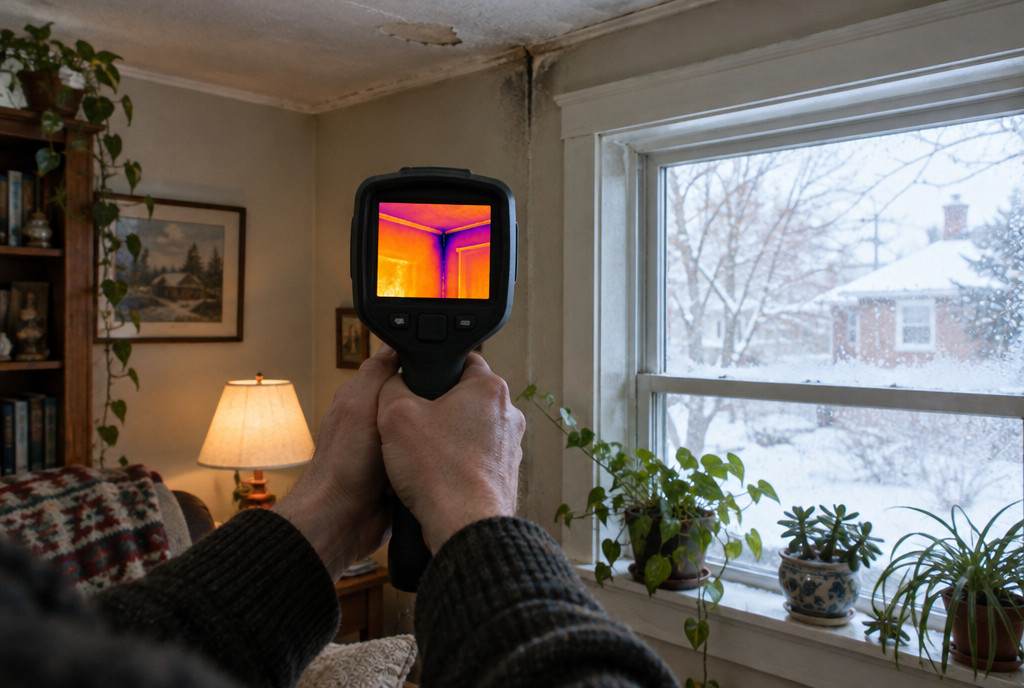
- Infrared (thermal) scan On a cold day, shows where heat escapes: missing insulation, air leaks and thermal bridges.
- Attic inspection Compares your attic insulation with ENERGY STAR’s level for your climate zone and looks for bypasses.
- Duct leakage test Ducts in attics, crawlspaces and garages can lose heat before it reaches a room.
- Combustion safety test Needed before and after air sealing in homes with gas, oil or propane appliances.
- Manual J load calculation A Manual J load calculation sizes new heating equipment for the house after the fixes.
Try first (cheap or free)
- Lower the thermostat at night and when you’re away, or set a schedule on a programmable or smart thermostat.
- Weatherstrip doors and the attic hatch, and seal gaps around pipes and wires where you can reach them.
- Replace the furnace filter, and keep supply vents and returns clear of furniture.
- With a heat pump, avoid deep setbacks that make it call for backup heat to recover, and make sure the emergency heat setting is off.
- Compare your bills with last year’s in similar weather: a sudden jump can mean equipment trouble.
The fix ladder
From the cheapest step to the biggest. Work up only as far as you need to, and test again after.
- A thermostat schedule, weatherstripping and filter changes
- Air seal the attic floor, rim joists and other leaks found with a blower door
- Seal and insulate ducts outside the heated space
- Add attic insulation to ENERGY STAR’s level for your zone; insulate rim joists and basement walls
- Dense-pack insulation in the empty walls of older homes
- Replace aging heating with a heat pump (a cold-climate model where winters are cold) or a high-efficiency furnace, sized by Manual J
When to call a pro
- Your home has a natural-draft furnace, boiler or water heater and you’re planning air sealing. Get a combustion safety test before and after.
- You smell gas or a carbon monoxide alarm sounds. Leave the house and call the gas utility or 911 from outside.
- A heat pump runs on backup heat in mild weather, or the outdoor unit ices up and doesn’t clear. Have a technician check the controls, defrost and refrigerant.
Common mistakes
- Replacing windows first: they’re usually the most expensive way to save heating energy. Air sealing and attic insulation save more for less.
- Sizing a new furnace or heat pump from the old one: get a load calculation after the envelope work.
Paying for the fixes
Utility programs often pay toward audits, duct sealing, insulation and heat pumps, and some require an audit first. Your metro guide lists the programs near you, and your state’s page covers state and federal rebates.
Words worth knowing
- Heating degree days (HDD)
- A measure of how cold a place is: each day adds how far its average temperature falls below 65°F. More degree days means more heating.
- Air sealing
- Blocking the hidden gaps where air leaks in and out of a house, which cuts drafts, heating and cooling costs, and moisture problems.
- Attic bypass
- A hidden opening from the living space into the attic, around chimneys, plumbing stacks, wiring, pot lights or wall tops, that leaks warm air.
- R-value
- How well a material resists heat flow; higher is better, and insulation is rated with it, such as R-20 for walls or R-50 for attics.
- AFUE (annual fuel utilization efficiency)
- The share of a furnace's or boiler's fuel that ends up as heat in your home over a year; a 95% furnace loses about 5% up the vent.
- HSPF / HSPF2
- A heat pump's heating efficiency averaged over a whole heating season; higher is better, and HSPF2 numbers can't be compared directly with older HSPF.
- Auxiliary / backup heat
- A second heat source — electric elements or a furnace — that helps a heat pump in very cold weather or during defrost.
- Electric resistance heat
- Heating with electric elements that turn electricity directly into heat, such as baseboards, electric furnaces and heat pump backup strips.
- Balance point
- The outdoor temperature where something changes: below the thermal balance point a heat pump needs help; below the economic one, fuel is cheaper.
- Cold-climate heat pump (ccASHP)
- An air-source heat pump built to keep heating efficiently in deep cold, usually verified by ENERGY STAR Cold Climate or the NEEP list.
- Dual-fuel (hybrid) system
- A heat pump paired with a gas, propane or oil furnace or boiler; controls switch to the fuel when it's colder or cheaper to do so.
The glossary explains every term on the site.
Common questions
What’s the first thing to fix for high heating bills?
In most homes, air sealing, especially at the attic floor and rim joists, then insulation. A blower door test shows how leaky the house is and where. In warm climates with electric heat, check the equipment first: a heat pump stuck on backup heat or an electric furnace is usually the cause.
Why is my heat pump bill so high in winter?
Common reasons are backup (auxiliary or emergency) electric heat running too often, deep thermostat setbacks that trigger backup heat on recovery, a refrigerant or defrost problem, and leaky ducts. Where winters are cold, choose a cold-climate model sized for your house.
Will new windows cut my heating bill?
Some, but windows are usually the most expensive way to save heating energy. Air sealing and attic insulation usually save more for less. Replace windows when they’re failing or for comfort.
Related problems
Sources
Where each problem is common comes from our regional climate research (NOAA climate normals, EPA, PNNL, FEMA and others), cited on each metro guide. The guidance on this page follows these sources, checked October 26, 2026:
- ENERGY STAR: seal and insulate ↗
- ENERGY STAR: recommended insulation levels ↗
- DOE Building Science Education: insulating and sealing rim joists ↗
- Building America Solution Center: combustion appliance zone test ↗
- NEEP cold-climate heat pump specification and list ↗
- National Weather Service Fort Worth: February 2021 winter storm ↗
Want it diagnosed properly?
Tell us your ZIP code and what you’re noticing. A person reads every message and replies with certified auditors who can test for this in your area.