Get your free plan → Six short steps for your house: what to fix first, the tests to ask for and the programs open to you. No email.
Common problems
Drafts and cold rooms
You feel cold air near outlets, baseboards, doors and windows, or one room stays colder than the rest of the house wherever you set the thermostat.
What it usually means
- A draft is outside air being pulled in. In winter, warm air rises and leaks out through the attic and upper floors, which pulls cold air in through gaps low in the house. This is the stack effect, and it’s why sealing the attic floor and basement rim joists often fixes drafts you feel in the living room.
- A room that stays cold is losing more heat than it gets: missing insulation, more outside walls or windows, a floor over a garage or crawlspace, or a duct that delivers too little air.
- Windows feel drafty partly because cold glass chills the air next to it, which then sinks. That’s a draft even without a leak, and better glass or storm windows help.
Where it’s most common
Our climate research lists this as a common problem in these metro areas. Each guide covers what homes there need, local audit programs and rebates.
- Mixed New York City · Washington, DC · Philadelphia · Baltimore · St. Louis
- Cold Chicago · Boston · Detroit · Minneapolis–St. Paul · Denver
- Marine and mild coastal Los Angeles · San Francisco · San Diego
Somewhere else? Find your metro guide.
Likely causes, by climate
The same symptom has different causes in Miami, Phoenix and Minneapolis. Find your climate below; the tag marks the climates where this problem is most common.
Hot and humid Florida, Texas and the Gulf Coast
Drafts are a rare complaint here, but the same leaks bring hot, humid air in all summer. Cold rooms show up in cold snaps, like February 2021 in Texas, in homes with leaky ducts, little insulation and electric heat that can’t keep up.
Hot and dry the desert Southwest and inland Southern California
Desert winter nights can be chilly, and homes with leaky attic ducts, single-pane windows or little insulation feel it. The same leaks let dust and summer heat in.
Mixed the Mid-Atlantic, St. Louis and the Southeast Piedmont Common here
Older rowhouses and homes with basements and crawlspaces leak at rim joists, around windows and into the attic. Rooms over garages and porches are the classic cold rooms.
Cold the Northeast, Great Lakes, Upper Midwest and Colorado Front Range Common here
The stack effect is strongest in long, cold winters, so leaks at the attic floor and rim joists drive drafts on the lower floors. Many older homes also have empty wall cavities and rooms over unheated garages or porches.
Marine and mild coastal the Pacific Northwest and coastal California Common here
Homes over vented crawlspaces with uninsulated floors feel cold underfoot, and older homes leak around windows and doors. In coastal California, a wall furnace heats the room it’s in and leaves far rooms cold.
Not sure which climate you’re in? Your metro guide says, and the climate zone entry explains the map builders use.
How an audit confirms it
Guessing is how people end up with new equipment that doesn’t fix the problem. These tests measure the cause. Ask for them by name when you book; each guide explains what the results mean and what to do next.
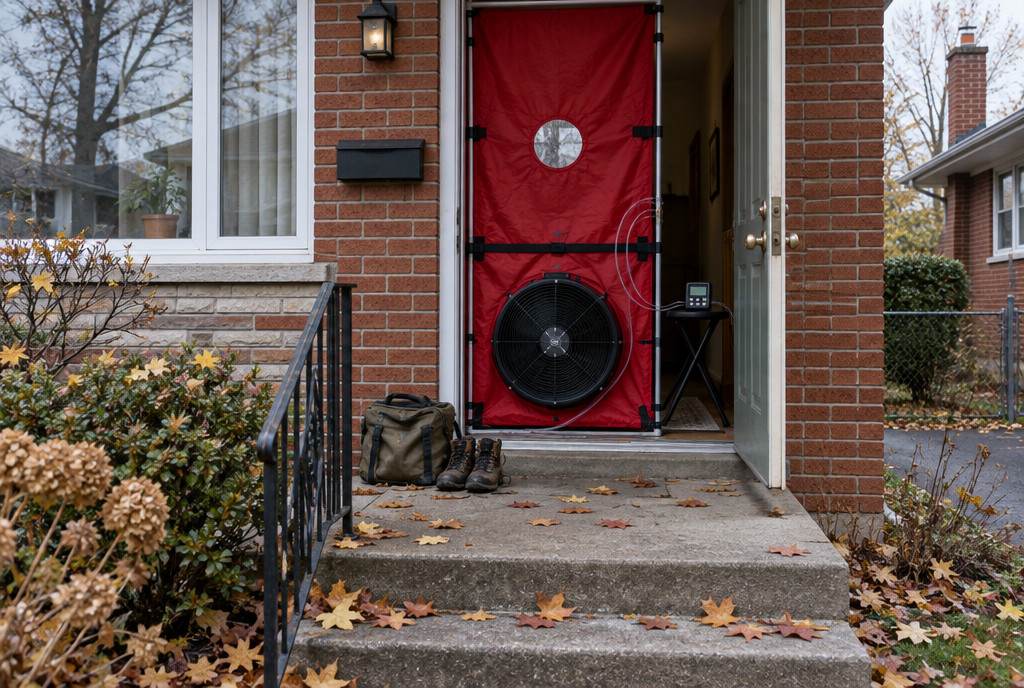
- Blower door test Measures how leaky the house is, and with the fan running you can feel and see each leak.
- Infrared (thermal) scan Under blower-door pressure, shows cold streaks where air leaks in and patches where insulation is missing.
- Duct leakage test Checks whether the ducts lose air before it reaches the cold room.
- Manual J load calculation Room-by-room loads show whether each room gets enough heat for what it loses.
- Combustion safety test Air sealing can change how gas, oil and propane appliances vent; this test checks them before and after.
Try first (cheap or free)
- On a cold, windy day, hold a lit incense stick near outlets, baseboards, window trim, the attic hatch and pipe openings. Where the smoke wavers, air is leaking. Keep it away from curtains.
- Weatherstrip doors and the attic hatch, add door sweeps, and fit foam gaskets behind outlet and switch covers on outside walls.
- Caulk gaps around window trim and where pipes and wires pass through walls and floors.
- Make sure the cold room’s vents are open and nothing blocks its return.
- Close heavy curtains at night over single-pane windows.
The fix ladder
From the cheapest step to the biggest. Work up only as far as you need to, and test again after.
- Weatherstripping, door sweeps, outlet gaskets and caulk
- Air seal the attic floor and rim joists, with a blower door guiding the work
- Seal and insulate ducts, and have airflow balanced to the cold rooms
- Insulate floors over garages, crawlspaces and porches, and empty walls
- A ductless heat pump for a room the system can’t reach, or new windows when the old ones are failing
When to call a pro
- You have a natural-draft furnace, boiler or water heater. Get a combustion safety test with any major air sealing.
- The cold room is over an attached garage. Sealing that floor also keeps car exhaust out of the house, and it’s best done by a pro.
- You find knob-and-tube wiring or vermiculite in the walls or attic. Get it assessed before anyone insulates.
Common mistakes
- Sealing up a house with natural-draft appliances without combustion testing.
- Insulating walls or an attic over live knob-and-tube wiring.
Paying for the fixes
Utility programs often pay toward audits, duct sealing, insulation and heat pumps, and some require an audit first. Your metro guide lists the programs near you, and your state’s page covers state and federal rebates.
Words worth knowing
- Air leakage
- Uncontrolled air moving in and out of a house through cracks and gaps, carrying heat, moisture and outdoor pollutants with it.
- Stack effect
- Warm indoor air rises and escapes near the top of a house, pulling cold outside air in near the bottom; it's strongest on cold days.
- Air sealing
- Blocking the hidden gaps where air leaks in and out of a house, which cuts drafts, heating and cooling costs, and moisture problems.
- Attic bypass
- A hidden opening from the living space into the attic, around chimneys, plumbing stacks, wiring, pot lights or wall tops, that leaks warm air.
- Rim joist (header)
- The band of framing on top of the foundation wall around the edge of the floor; it's prone to air leaks and often poorly insulated.
- ACH50
- An airtightness score: how many times an hour the house's whole volume of air leaks out while a test fan pulls on it; lower means tighter.
- CFM50
- The raw air-leakage result of a house's fan test: how many cubic feet of air per minute the fan must move to hold the house at test pressure.
- Thermal bridging
- Heat taking a shortcut through materials that insulate poorly, like wood studs, steel or concrete, running from the warm side to the cold side.
- Combustion appliance zone (CAZ)
- The room or area holding a fuel-burning appliance such as a furnace, boiler or water heater; it's the focus of combustion safety testing.
- Backdrafting and spillage
- When exhaust from a furnace, boiler, water heater or fireplace comes back into the house instead of going up the chimney or vent.
- Knob-and-tube wiring
- An early type of house wiring that runs separate wires on porcelain knobs and through porcelain tubes, with no ground wire; insulation must not cover it.
The glossary explains every term on the site.
Common questions
Why do I feel drafts when the windows are closed?
In winter, warm air rises and leaks out through the attic and upper floors, pulling cold air in through gaps lower down: around baseboards, outlets, rim joists and windows. That’s the stack effect. Sealing the attic floor and rim joists often does more than sealing the windows.
What does a blower door test show about drafts?
It measures how leaky the house is, as ACH50 or CFM50, and while the fan holds the house under pressure, the auditor can find each leak with an infrared camera or smoke. That turns “it’s drafty” into a list of leaks to seal.
Why is one room always colder than the rest?
It loses more heat (more outside walls or windows, a floor over a garage or crawlspace, missing insulation) or gets less heat (a long, leaky or crushed duct, or no return air). A room-by-room load calculation and a duct check tell you which.
Related problems
Sources
Where each problem is common comes from our regional climate research (NOAA climate normals, EPA, PNNL, FEMA and others), cited on each metro guide. The guidance on this page follows these sources, checked October 26, 2026:
- ENERGY STAR: seal and insulate ↗
- DOE Building Science Education: insulating and sealing rim joists ↗
- Building America Solution Center: combustion appliance zone test ↗
- Building America Solution Center: finding missing insulation with thermal imaging ↗
- Mass Save: pre-weatherization barriers (knob-and-tube, vermiculite) ↗
- National Weather Service Fort Worth: February 2021 winter storm ↗
Want it diagnosed properly?
Tell us your ZIP code and what you’re noticing. A person reads every message and replies with certified auditors who can test for this in your area.