Get your free plan → Six short steps for your house: what to fix first, the tests to ask for and the programs open to you. No email.
Common problems
Cold floors
Floors feel cold underfoot in winter, especially near outside walls or over a crawlspace, garage or porch, even when the air in the room is warm.
What it usually means
- A floor feels cold when the space under it is cold: a vented crawlspace, an unheated garage or porch, or the ground under a slab. Air leaking in at the rim joist, where the house frame sits on the foundation, chills floors near outside walls.
- Cold floors make a room feel colder than the thermostat says, so people turn the heat up. Fixing the floor often saves energy as well as improving comfort.
- In a crawlspace, moisture comes first: insulating the floor of a damp crawlspace can trap moisture against the wood.
Where it’s most common
Our climate research lists this as a common problem in these metro areas. Each guide covers what homes there need, local audit programs and rebates.
Somewhere else? Find your metro guide.
Likely causes, by climate
The same symptom has different causes in Miami, Phoenix and Minneapolis. Find your climate below; the tag marks the climates where this problem is most common.
Hot and humid Florida, Texas and the Gulf Coast
Most homes sit on slabs, which feel cool, not cold, in mild winters; tile on a slab can feel cold in a cold snap. Raised homes over vented crawlspaces are the exception, and there the crawlspace’s summer humidity is the bigger problem.
Hot and dry the desert Southwest and inland Southern California
Slab floors are common, and the edges near outside walls can feel cool on winter nights. Cold floors are rarely a big energy problem here.
Mixed the Mid-Atlantic, St. Louis and the Southeast Piedmont
Crawlspaces and basements under older homes are the usual cause, along with rooms over garages and porches. Sealing and insulating rim joists helps with both drafts and cold floors.
Cold the Northeast, Great Lakes, Upper Midwest and Colorado Front Range
Floors over unheated garages, cantilevers and porches, basement rim joists and uninsulated slab edges are the common culprits. In basements, insulating the walls and rim joists keeps the floor above warmer.
Marine and mild coastal the Pacific Northwest and coastal California Common here
Cold floors are a classic Pacific Northwest problem: many homes sit over vented crawlspaces with little or no floor insulation, and the cool, damp season is long. Fix crawlspace moisture first, with a ground vapor barrier, then insulate the floor or the crawlspace walls.
Not sure which climate you’re in? Your metro guide says, and the climate zone entry explains the map builders use.
How an audit confirms it
Guessing is how people end up with new equipment that doesn’t fix the problem. These tests measure the cause. Ask for them by name when you book; each guide explains what the results mean and what to do next.
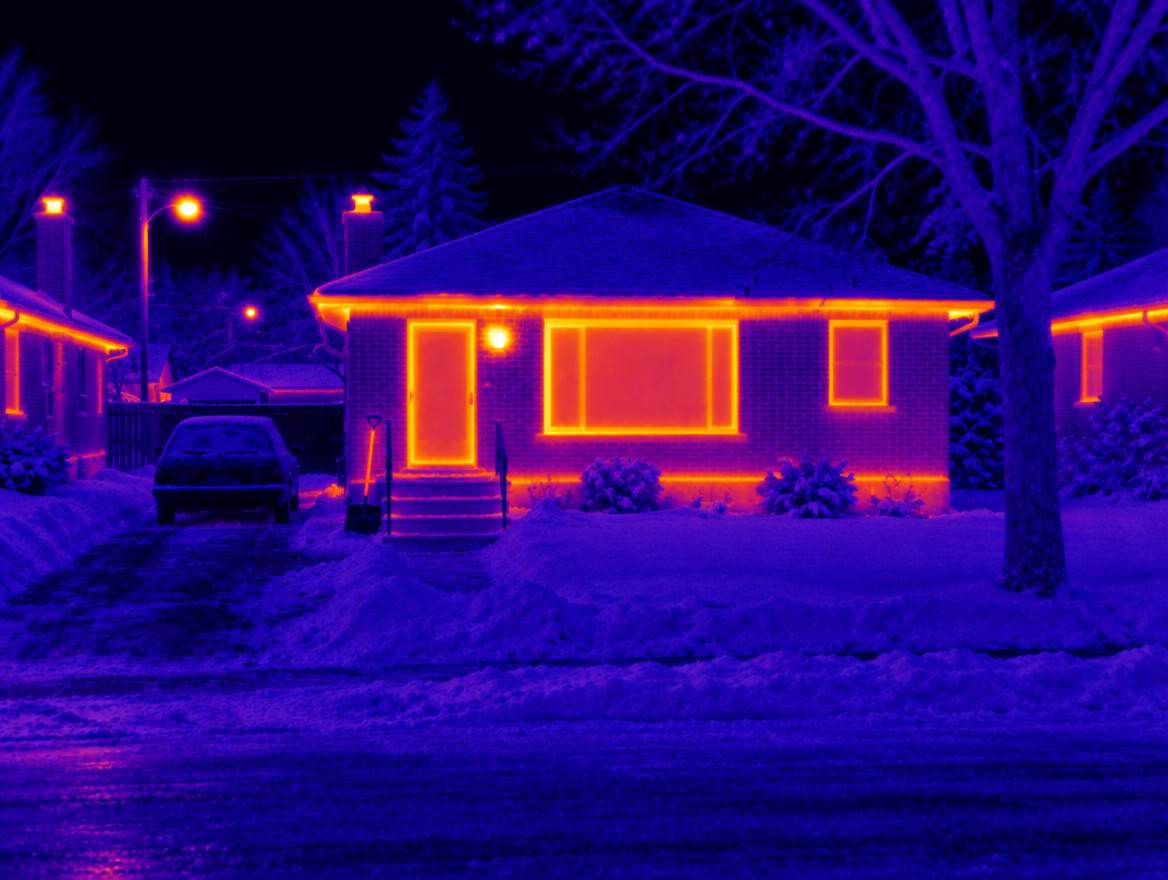
- Infrared (thermal) scan On a cold day, shows cold floor edges, rim joist leaks and missing insulation under floors.
- Blower door test Measures air leakage and shows the leaks at rim joists and around floor penetrations.
- Mold and humidity check Checks crawlspace or basement moisture before anyone insulates the floor.
- Duct leakage test Ducts in a crawlspace that leak or aren’t insulated chill the floors above and waste heat.
Try first (cheap or free)
- Look under the house: is there insulation between the floor joists, is it falling down, and is there a plastic vapor barrier on the ground?
- Seal gaps where pipes and wires pass through the floor.
- Put rugs on cold floors, and keep the crawlspace hatch closed tight.
- If ducts run through the crawlspace, look for disconnected or crushed sections.
The fix ladder
From the cheapest step to the biggest. Work up only as far as you need to, and test again after.
- Rugs, sealed floor penetrations and a tight crawlspace hatch
- A ground vapor barrier in the crawlspace, and drainage fixes
- Seal and insulate the rim joists
- Insulate the floor over a crawlspace, garage or porch, or the walls of a closed crawlspace
- Seal and insulate crawlspace ducts, or close and condition the crawlspace
When to call a pro
- The crawlspace has standing water, mold or pests. Fix those before insulating.
- The room is over an attached garage. Sealing that floor also keeps car exhaust and fumes out of the house.
- A furnace or water heater sits in the crawlspace or basement you’re closing in. Its combustion air and venting need checking.
Common mistakes
- Insulating a crawlspace floor before fixing the moisture.
- Plastic sheeting over fiberglass on basement walls: it can trap moisture against the wall.
Paying for the fixes
Utility programs often pay toward audits, duct sealing, insulation and heat pumps, and some require an audit first. Your metro guide lists the programs near you, and your state’s page covers state and federal rebates.
Words worth knowing
- Rim joist (header)
- The band of framing on top of the foundation wall around the edge of the floor; it's prone to air leaks and often poorly insulated.
- Thermal bridging
- Heat taking a shortcut through materials that insulate poorly, like wood studs, steel or concrete, running from the warm side to the cold side.
- R-value
- How well a material resists heat flow; higher is better, and insulation is rated with it, such as R-20 for walls or R-50 for attics.
- Rigid foam (EPS, XPS, polyiso)
- Stiff insulation boards made of foam plastic, used on foundations, under slabs and as a continuous layer over walls and roofs.
- Spray foam (open-cell and closed-cell)
- Liquid foam sprayed in place that expands to insulate and air seal in one step; closed-cell is denser and higher R, open-cell lighter.
- Vapor barrier / vapor retarder
- A layer that slows water vapor moving through walls and ceilings, to keep it from condensing inside the structure.
- Continuous insulation (ci)
- A layer of insulation running unbroken over the framing, usually rigid boards on the outside of walls, to stop heat escaping through studs.
- Building envelope
- Everything that separates inside from outside — foundation, walls, windows, doors and roof — and controls heat, air and moisture flow.
- Marine climate
- A mild coastal climate with cool, wet winters and dry summers, like the US Pacific Northwest and coastal British Columbia.
The glossary explains every term on the site.
Common questions
Why are my floors cold when the room is warm?
The floor is losing heat to a cold space below it: a vented crawlspace, a garage, a porch or the ground under a slab. Air leaking in at the rim joist chills floors near outside walls, too.
Should I insulate the crawlspace floor or close the crawlspace?
Either can work. Insulating between the floor joists is common for vented crawlspaces in mild climates. Closing the crawlspace, with sealed vents, a ground vapor barrier, insulated walls and a way to dry the air, works well in humid climates. Either way, fix water and moisture problems first.
Do rim joists matter?
Yes. The rim joist is where the house frame sits on the foundation, and it’s often uninsulated and leaky. DOE recommends sealing and insulating it, and it’s one of the cheaper fixes that helps with both cold floors and drafts.
Related problems
Sources
Where each problem is common comes from our regional climate research (NOAA climate normals, EPA, PNNL, FEMA and others), cited on each metro guide. The guidance on this page follows these sources, checked October 26, 2026:
Want it diagnosed properly?
Tell us your ZIP code and what you’re noticing. A person reads every message and replies with certified auditors who can test for this in your area.