Get your free plan → Six short steps for your house: what to fix first, the tests to ask for and the programs open to you. No email.
Common problems
Ice dams and icicles
Thick icicles and a ridge of ice along the roof edge after snow, sometimes with water stains on ceilings or walls near the outside walls.
What it usually means
- Ice dams form when heat from the house warms the roof: snow melts, runs down to the cold eaves and refreezes. Water then backs up behind the ice and can get under the shingles.
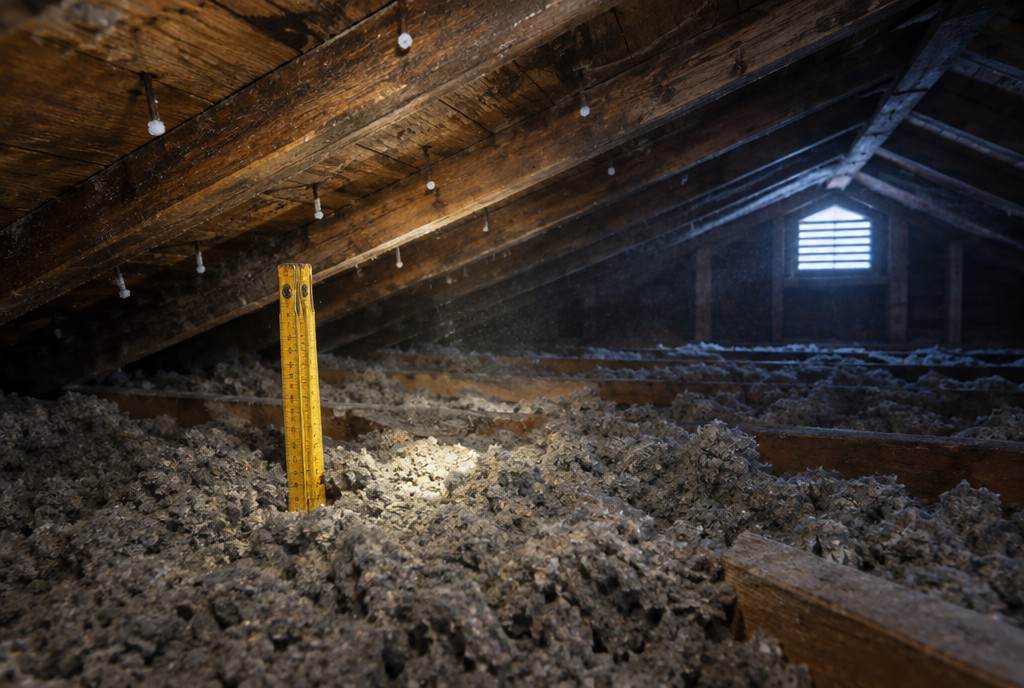
- The heat comes mostly from warm air leaking into the attic through gaps around lights, wiring, plumbing, chimneys and the attic hatch, plus thin insulation and ducts or bath fans that dump warm air into the attic.
- Icicles alone aren’t always a problem, but a ridge of ice with water stains inside means the attic needs work.
Where it’s most common
Our climate research lists this as a common problem in these metro areas. Each guide covers what homes there need, local audit programs and rebates.
- Cold Chicago · Boston · Detroit · Minneapolis–St. Paul
Somewhere else? Find your metro guide.
Likely causes, by climate
The same symptom has different causes in Miami, Phoenix and Minneapolis. Find your climate below; the tag marks the climates where this problem is most common.
Hot and humid Florida, Texas and the Gulf Coast
Ice dams are almost unheard of here. Water stains near the edges of ceilings usually mean a roof or flashing leak, condensation from the AC or its ducts, or wind-driven rain from a storm.
Hot and dry the desert Southwest and inland Southern California
Ice dams don’t form in desert winters. If you see water stains, look for roof leaks after monsoon storms, or condensation from the AC or an evaporative cooler.
Mixed the Mid-Atlantic, St. Louis and the Southeast Piedmont
Ice dams are occasional, after heavier snows followed by cold spells. When they form, the causes are the same as farther north: attic air leaks and thin insulation.
Cold the Northeast, Great Lakes, Upper Midwest and Colorado Front Range Common here
Long, snowy winters make ice dams common, especially on older homes with leaky attics, recessed lights, and finished attic rooms with knee walls and sloped ceilings.
Marine and mild coastal the Pacific Northwest and coastal California
Lasting snow is uncommon in the Pacific Northwest lowlands and coastal California, so ice dams are rare. Stains are more often roof or gutter leaks, or condensation in an attic where warm, moist house air leaks in.
Not sure which climate you’re in? Your metro guide says, and the climate zone entry explains the map builders use.
How an audit confirms it
Guessing is how people end up with new equipment that doesn’t fix the problem. These tests measure the cause. Ask for them by name when you book; each guide explains what the results mean and what to do next.
- Attic inspection Checks insulation depth, attic bypasses, the hatch, bath fan vents and roof ventilation.
- Blower door test Measures how much warm air leaks into the attic and, with an infrared camera, shows where.
- Infrared (thermal) scan On a cold day, shows warm spots on ceilings and the roof where heat escapes into the attic.
- Combustion safety test Air sealing the attic tightens the house, so homes with natural-draft appliances need this test before and after.
- Asbestos and vermiculite check If the attic has vermiculite insulation, EPA says to leave it alone and bring in a professional before anyone works up there.
Try first (cheap or free)
- After heavy snow, pull snow off the lower few feet of the roof with a roof rake, standing on the ground.
- Don’t chip or hammer at the ice: it damages shingles and gutters.
- Make sure bathroom and kitchen fans vent outdoors, not into the attic.
- Weatherstrip and insulate the attic hatch or pull-down stairs.
- Keep gutters and downspouts clear so meltwater can drain.
The fix ladder
From the cheapest step to the biggest. Work up only as far as you need to, and test again after.
- A roof rake, a sealed attic hatch and fans vented outdoors
- Air seal attic bypasses: around lights, wiring, plumbing, chimney chases and wall tops
- Seal and insulate ducts that run through the attic, or move them inside
- Add insulation to ENERGY STAR’s level for your zone, with baffles to keep the soffit vents open
- At the next reroof, add an ice-and-water membrane along the eaves
When to call a pro
- Water is coming inside, or ceilings and walls are stained. Get the roof and attic checked before mold sets in.
- Ice is heavy on the gutters or there’s a lot of snow on the roof. A roofing pro can remove it safely; roofs are dangerous in winter.
- The attic has vermiculite or knob-and-tube wiring. Both need a specialist before air sealing or insulating.
Common mistakes
- Adding insulation without sealing the bypasses first: air leaks right through most loose-fill insulation.
- Installing powered attic ventilators: they can pull conditioned air out of the house into the attic.
- Relying on heat cables: they treat the symptom, not the heat leak.
Paying for the fixes
Utility programs often pay toward audits, duct sealing, insulation and heat pumps, and some require an audit first. Your metro guide lists the programs near you, and your state’s page covers state and federal rebates.
Words worth knowing
- Ice dam
- A ridge of ice at the roof edge that traps melting snow behind it, which can back up under shingles and leak into the house.
- Attic bypass
- A hidden opening from the living space into the attic, around chimneys, plumbing stacks, wiring, pot lights or wall tops, that leaks warm air.
- Air sealing
- Blocking the hidden gaps where air leaks in and out of a house, which cuts drafts, heating and cooling costs, and moisture problems.
- R-value
- How well a material resists heat flow; higher is better, and insulation is rated with it, such as R-20 for walls or R-50 for attics.
- Blown-in insulation (cellulose, fiberglass)
- Loose fibers of cellulose, fiberglass or mineral wool blown into attics or wall cavities by machine; fast, and good at filling around obstacles.
- Soffit vent and baffle
- Soffit vents let outside air into the attic at the eaves, and baffles keep insulation from blocking that airflow.
- Stack effect
- Warm indoor air rises and escapes near the top of a house, pulling cold outside air in near the bottom; it's strongest on cold days.
- Vermiculite insulation (Zonolite)
- A pebbly, brownish or silvery loose-fill attic insulation that may contain asbestos from a Montana mine, so it shouldn't be disturbed.
- Knob-and-tube wiring
- An early type of house wiring that runs separate wires on porcelain knobs and through porcelain tubes, with no ground wire; insulation must not cover it.
The glossary explains every term on the site.
Common questions
What causes ice dams?
Heat leaking from the house into the attic warms the roof, the snow melts, and the water refreezes at the cold eaves. The ice holds back more meltwater, which can get under shingles. Most of the heat comes from air leaks into the attic, along with thin insulation and ducts or fans venting into the attic.
Will more insulation stop ice dams?
Only if the air leaks are sealed first. Warm air moves right through most loose-fill insulation, so seal the attic bypasses, then insulate to the level ENERGY STAR recommends for your zone, with baffles to keep the soffit vents open.
Are heat cables a fix?
They can keep a channel open where ice keeps forming, but they treat the symptom. Sealing and insulating the attic fixes the cause.
Related problems
Sources
Where each problem is common comes from our regional climate research (NOAA climate normals, EPA, PNNL, FEMA and others), cited on each metro guide. The guidance on this page follows these sources, checked October 26, 2026:
Want it diagnosed properly?
Tell us your ZIP code and what you’re noticing. A person reads every message and replies with certified auditors who can test for this in your area.