$500–$2,500
Fix the venting
A properly sized chimney liner (especially for orphaned water heaters), flue repairs, correct slope and connections. Often the whole fix.
Which tests does my home need?
Era, heating, water, symptoms in — your flagged tests out, in 30 seconds.
Run the screener →
Heat & energy
Air
Water & moisture
Your city, read like an auditor
70 Canadian cities, each with its climate, housing age and 16 local audit and testing services.
All 70 cities →
Across Canada
Ontario region guides
Energy test guide · verified October 2, 2026
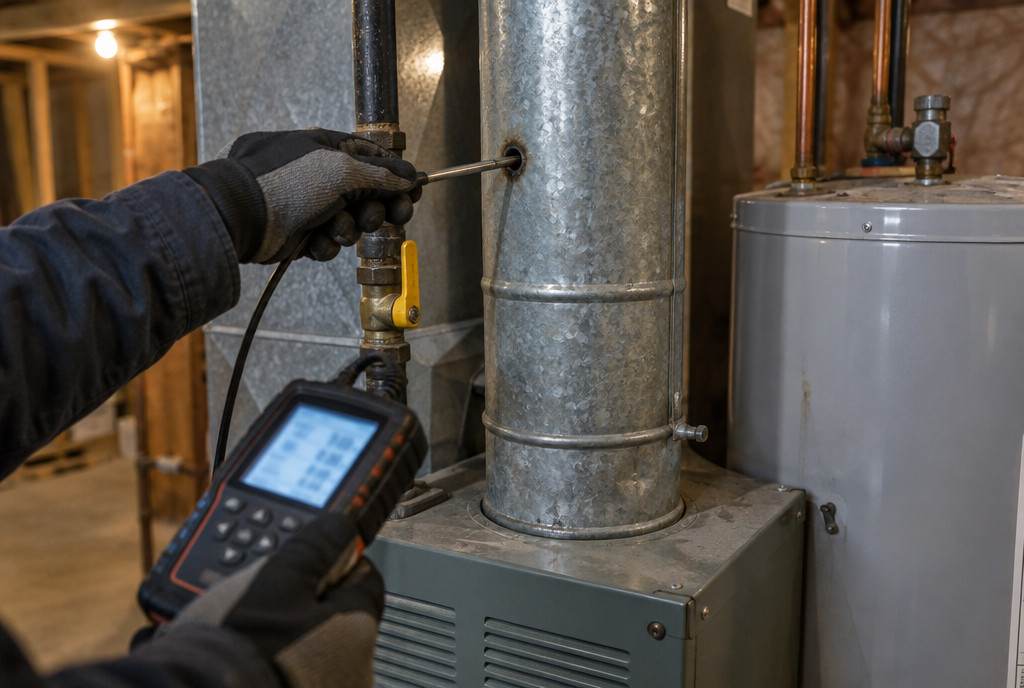
Furnaces, water heaters, and fireplaces that vent by natural draft rely on the house giving them air. Air-seal the house — the best energy move there is — and a bathroom fan or range hood can start winning the tug-of-war, pulling exhaust back inside. This check finds out before your CO alarm has to, and it's included in every audit of a home with combustion appliances.
Cost
Included with fuel appliances
When
At audit + after tightening
Checks
Draft, spillage, CO
End-game fix
Sealed combustion
House closed, and every exhaust device running at once — bath fans, range hood, dryer. The test asks: under maximum depressurization your own home can create, do the appliances still vent?
Does the water heater's flue establish upward draft promptly when it fires? The orphaned water heater — left alone in a big chimney after a furnace upgrade — is the classic failure here.
Smoke or a mirror at the draft hood shows whether combustion gases spill into the room during startup, and for how long. Brief startup spillage differs from sustained failure, and the protocol distinguishes them.
High carbon monoxide in the exhaust stream flags a combustion problem — burner, heat exchanger, or venting — worth a licensed gas technician's eyes regardless of draft.
The result either clears your air-sealing plans or sequences them: fix venting first, then tighten. After major envelope work, the check gets repeated — the house that passed at leaky may not pass at tight.
It's included in the EnerGuide assessment whenever you have combustion appliances — your job is just to make sure it happens and to ask for the results plainly. Fixes belong to licensed gas technicians (or WETT-certified specialists for wood). If you're air-sealing without an audit, book a gas tech to run the check anyway; it's the one test on this site with no safe DIY version.
A failed or marginal result has a clear options ladder — and one hard rule: no further tightening until it's resolved.
$500–$2,500
A properly sized chimney liner (especially for orphaned water heaters), flue repairs, correct slope and connections. Often the whole fix.
$300–$1,500
A dedicated air supply so exhaust fans stop competing with chimneys — engineered, not a hole in the wall.
At replacement time
Direct-vent and power-vented equipment (condensing furnaces, power-vent water heaters) bring their own air through a sealed pipe — the whole backdraft question disappears, and the house can be as tight as you like.
The end state
A heat pump and heat-pump water heater remove combustion from the house entirely — the path our planner maps, with the rebates that currently apply.
Meanwhile: working CO alarms adjacent to every sleeping area are Ontario law and your backstop — the CO guide covers placement and expiry dates. The alarm is the last line; this check is the first.
Alarms are the backstop that saves you when everything else fails — this check is what keeps them silent. Ontario's alarm law sets the floor, not the ceiling: prevention is the annual servicing plus this test, especially in the year you air-seal.
When a furnace gets replaced with a high-efficiency unit that vents out the wall, the old natural-draft water heater is left alone in a chimney sized for two appliances. The oversized, cool flue drafts poorly — it's the single most common spillage finding, and a liner is the usual fix.
The check: your energy advisor during the assessment (it's part of the protocol when combustion appliances are present). The fixes: a licensed gas technician — TSSA-registered contractors in Ontario — or a WETT-certified professional for wood-burning equipment.
We'll match you with a registered advisor who runs combustion safety as part of the assessment — before and after the house gets tighter.
Email us what you’re planning, your postal code and the type of building (a house, a duplex or triplex, or a larger multi-unit building) — we’ll reply with registered service organizations for your area and which rebates apply.
Email dave@clickshift.ca