Specialty test guide · verified October 2, 2026
Asbestos & vermiculite: the test that reorders the renovation
Undisturbed, asbestos-containing materials mostly just sit there. Disturbed — cut, drilled, swept, stuffed with new insulation — they release fibres linked to asbestosis, mesothelioma, and lung cancer, sometimes decades later. If your home predates about 1990, one rule protects you: sample before anything disturbs suspect material. It's a $50–$150 lab answer that decides whether your attic top-up is a Tuesday job or an abatement project.
Applies to
Pre-~1990 homes
Golden rule
Never disturb — sample
Lab sampling
$50–$150 / sample
If positive
Seal & manage, or abate
How to handle a suspect home
-
Date your home and your materials
Built before ~1990 puts you in the window; before 1980, squarely in it. Renovation layers count too — a 1970s rec-room ceiling in a 1940s house is its own suspect.
-
Look without touching
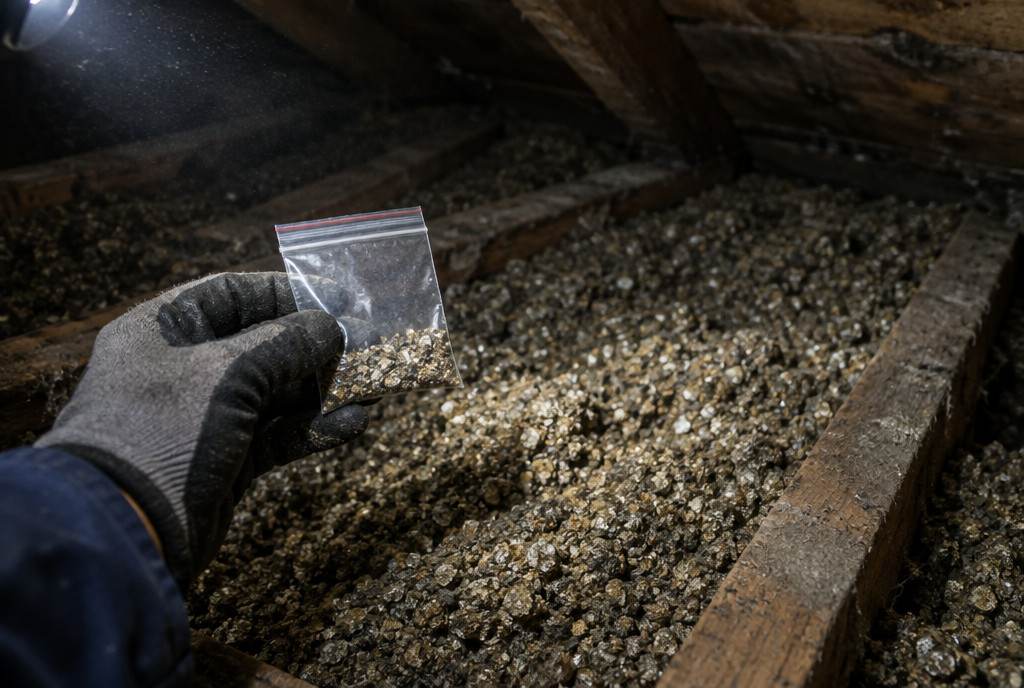
From the attic hatch, vermiculite reads as loose, pebbly, silver-gold or brown granules that glitter slightly — nothing like fluffy fibreglass or grey cellulose. Note duct wrap, old pipe insulation, and 9×9 floor tiles elsewhere. Photograph; don't poke, sweep, or vacuum.
-
Hire a licensed professional to sample
Bulk samples, taken wet, analyzed by an accredited lab. For renovations, ask for a pre-renovation designated-substances survey of every material the project will touch — in Ontario, contractors will ask you for it anyway.
-
Negative: proceed. Positive: choose manage or abate
Clean results unlock the normal retrofit sequence. Positive results mean either managing in place — seal, document, leave alone — or licensed abatement before the work that would disturb it. Get the lab report into your house file either way; it matters at resale.
-
Only then insulate, air-seal, or renovate
Post-abatement (or post-clearance), the attic is just an attic again — top it up, air-seal the ceiling plane, run the wiring. The audit's attic inspection is designed to flag vermiculite before any of this starts.
Why this test changes the whole plan
Attic insulation is usually the first big-win upgrade in an older home — and vermiculite sits exactly where that work happens. Discovering it mid-job shuts the site down; discovering it first just reorders the budget. That's why the planner flags this test for every pre-1990 era and why insulation rebate programs expect suspect material dealt with before top-ups. Sequence: sample → clear or abate → air-seal → insulate.
Common questions
Is all vermiculite insulation asbestos?
No — vermiculite itself is a harmless mineral. The problem is that most vermiculite insulation sold in Canada (much of it as Zonolite) came from a mine in Libby, Montana that was contaminated with amphibole asbestos. You cannot tell contaminated from clean by looking, which is why the federal guidance is blunt: treat vermiculite insulation as if it contains asbestos unless lab analysis says otherwise — and don't disturb it either way.
Can I take the sample myself?
Sampling is the one moment the material gets deliberately disturbed, so it's the wrong moment to improvise. A licensed professional wets the material, takes bulk samples to an accredited lab, and knows how many samples a space needs for a defensible answer. At $50–$150 per sample it's among the cheapest professional services in this whole process — and a DIY sample done dry from an attic hatch is exactly how fibres end up in your living space.
If it tests positive, does it have to come out?
Not always. Asbestos materials in good condition, sealed and left undisturbed, pose little risk — managing in place (sealing the attic hatch, documenting, and not renovating into it) is a legitimate strategy. It has to come out when you need the space it occupies: attic insulation top-ups, pot lights, wiring, air-sealing from the attic side, or any renovation that would disturb it. Removal is licensed-contractor work, typically costing thousands, quoted after the lab results.
Where else does asbestos hide besides the attic?
In pre-1990 construction: pipe and duct insulation wrap (the white "paper" on old ducts), 9×9-inch vinyl floor tiles and their mastic, plaster and drywall compound, ceiling textures, cement board, and some roofing and siding. The era check in our planner flags the likelihood; a pre-renovation hazmat survey checks the specific materials your project will touch.
Sources
Planning attic or renovation work in an older home?
We'll match you with a registered advisor whose attic inspection flags vermiculite before the work starts — with sampling contacts if you need them.
Email us what you’re planning, your postal code and the type of building (a house, a duplex or triplex, or a larger multi-unit building) — we’ll reply with registered service organizations for your area and which rebates apply.
Email dave@clickshift.ca