Specialty test guide · verified October 2, 2026
Radon: the one test every Canadian home needs
An invisible, odourless radioactive gas that seeps from the soil into basements, radon is the second-leading cause of lung cancer in Canada — behind roughly 16% of lung cancer deaths, more than 3,000 a year. About 1 in 5 homes sits above the guideline, and nothing about your house's age, price, or postal code tells you whether yours is one of them. A $30–$60 kit does.
Guideline
200 Bq/m³
Test length
3+ months, fall–winter
DIY cost
$30–$60
Fix if high
$2,000–$4,000
How to test properly
-
Get a long-term detector
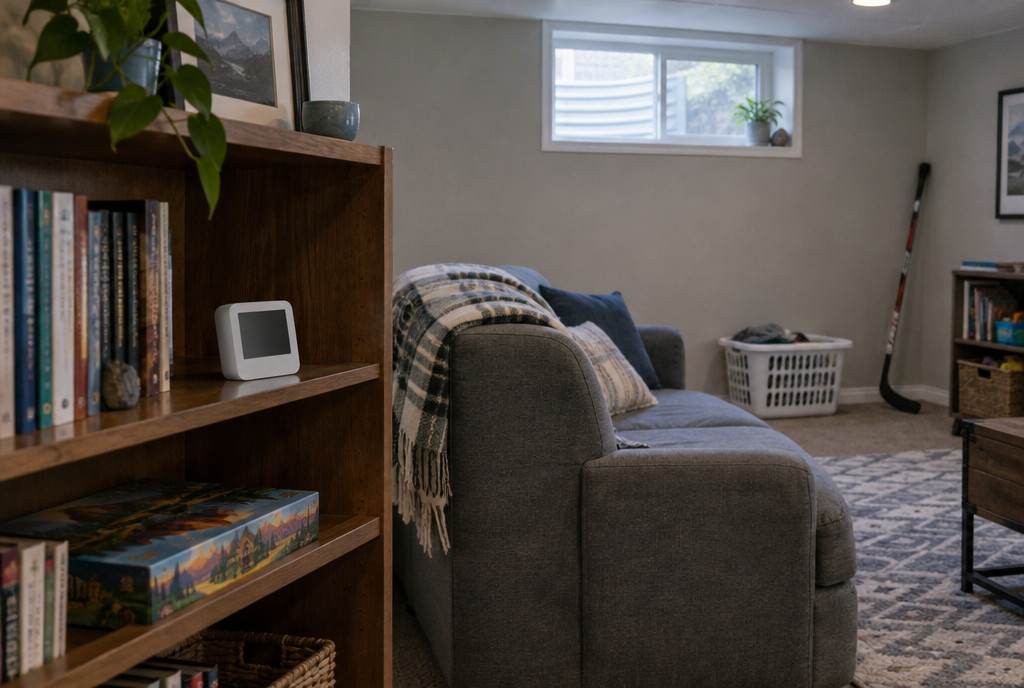
An alpha-track or electret kit from a hardware store or online — $30–$60 including lab analysis. Prefer devices listed under the C-NRPP program. Continuous digital monitors work too; treat their 3-month average, not the daily readout, as your number.
-
Place it where you actually live
Lowest lived-in level — a finished basement counts, a crawlspace doesn't. Roughly breathing height, away from exterior walls, windows, drafts, and heat sources. Then leave it alone.
-
Run it at least 3 months over the heating season
Fall through winter, with the house closed up, is when radon concentrates and when the average is most honest. Short tests swing wildly with weather — don't base a decision on one.
-
Send it to the lab and read the average
Your report gives a long-term average in Bq/m³. Under 200: you're within the guideline — retest after any major renovation, air-sealing work, or foundation change. Over 200: plan the fix — sooner the higher the number.
-
If it's high, get a C-NRPP mitigation quote
Sub-slab (active soil) depressurization — a sealed pipe through the slab with a quiet inline fan venting above the roof — typically runs $2,000–$4,000 and cuts levels by more than 80%. Retest afterward to confirm.
Radon and your retrofit — the order matters
Air sealing is the highest-return energy upgrade there is — and it changes your home's pressure balance and air exchange, which can move radon in either direction. Air-sealing a basement without knowing your radon number is doing it blind. Start the kit before or alongside your retrofit plan, and retest after major envelope work. If mitigation is needed, the fan system works regardless of how tight the house gets — tight house + mitigation is the healthy end state.
DIY kit or professional measurement?
For a first screen, the DIY long-term kit is exactly what Health Canada recommends and all most homes ever need. Hire a C-NRPP-certified measurement professional when a real-estate deal needs a defensible short-window protocol, when a mitigation system needs verification, or when you want placement and interpretation handled for you. Mitigation itself is its own C-NRPP certification — ask for it by name when getting quotes.
Common questions
My neighbour tested low. Is my house fine?
No — radon varies house to house, even between semis sharing a wall. Levels depend on the soil gas under your specific footing, the cracks and openings in your specific foundation, and your home's specific pressure balance. Health Canada found about 1 in 5 Canadian homes above the guideline, and the only way to know which fifth you're in is to test your own house.
Short-term or long-term test?
Long-term — at least 3 months, ideally over fall or winter when the house is closed up. Radon swings day to day with weather and pressure, so a 48-hour test can badly mislead in either direction. Health Canada's guidance and the C-NRPP protocol are both built around the 3-month average. Digital monitors are a fine supplement (and satisfying to watch), but base decisions on a long-term result.
Do new homes need testing too?
Yes. Age doesn't predict radon — new homes are often tighter, which can concentrate soil gas, and many are built with a passive radon rough-in that does nothing until tested and, if needed, activated with a fan. Test any home you live in, whatever the year on the permit.
Can't I just open windows or run an HRV?
Ventilation dilutes radon a little, but it doesn't address the source and the effect disappears the moment windows close. Sub-slab (active soil) depressurization — a sealed pipe and fan that vents soil gas above the roofline — is the standard fix because it stops radon entering at all, typically cutting levels by more than 80%.
Sources
Fold radon into a real plan
The planner flags radon and every other test your specific home calls for, then matches you with a registered advisor — with the test list already in your request.
Email us what you’re planning, your postal code and the type of building (a house, a duplex or triplex, or a larger multi-unit building) — we’ll reply with registered service organizations for your area and which rebates apply.
Email dave@clickshift.ca