Specialty test guide · verified October 2, 2026
Carbon monoxide: the alarm the law requires, and the check the audit adds
CO is what incomplete combustion makes — odourless, colourless, and lethal in a sealed house. Ontario answered a Woodstock family's death with the Hawkins-Gignac Act, which makes CO alarms mandatory near sleeping areas in any home with a fuel-burning appliance, fireplace, or attached garage. The alarm is your last line of defence; the audit's combustion spillage check works on the first line — whether your appliances backdraft at all.
Ontario law
Alarms near sleeping areas
Cost
$40–$80 per alarm
Alarm lifespan
~7–10 yrs (dated)
Spillage check
Included in audits
The 20-minute home CO check
-
Inventory your combustion sources
Furnace, boiler, gas or propane water heater, gas range, gas or wood fireplace, wood stove, attached garage. Any one of them puts your home under Ontario's CO alarm requirement — and on the list for the audit's spillage check.
-
Verify an alarm outside every sleeping area
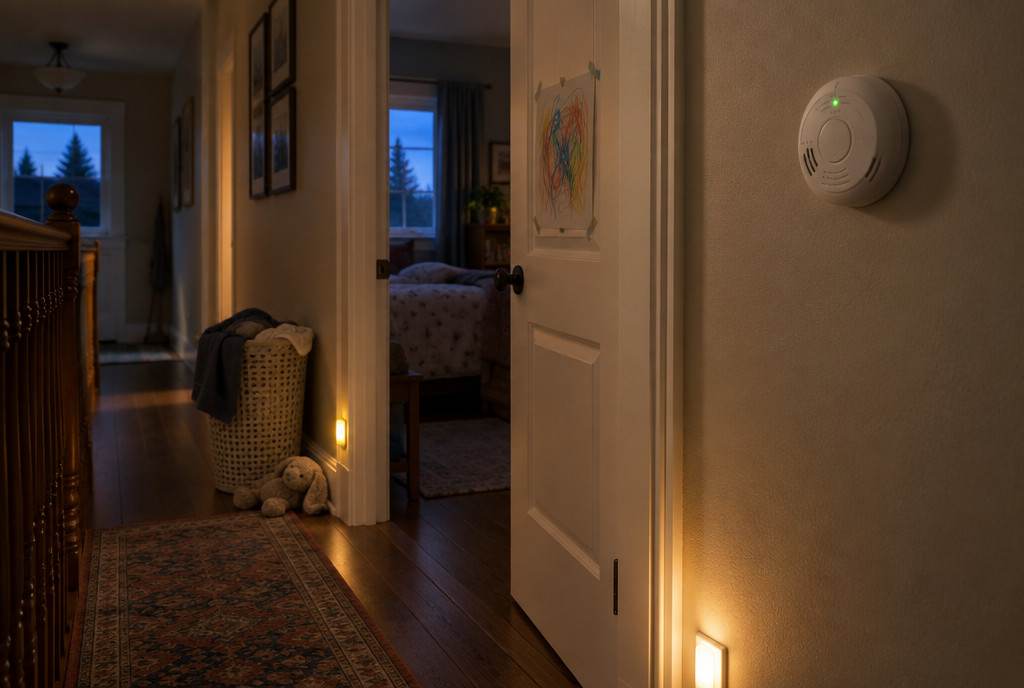
Hallway outside the bedrooms, per the law. CSA-6.19-certified units only. Combination smoke/CO units count. If bedrooms sit on multiple floors, each sleeping area needs coverage.
-
Check every end-of-life date
Flip each alarm over — the manufacture or replace-by date is printed on the back. Expired or undated (old) units get replaced today, not eventually. Test buttons monthly; batteries when the clocks change.
-
Book annual servicing for fuel appliances
A licensed gas technician (or WETT sweep for wood) confirms clean burn and clear venting once a year. Most CO incidents trace to blocked vents, cracked heat exchangers, or corroded flues — all findable before they matter.
-
Get the spillage check with your energy audit
During the assessment, your advisor checks whether water heater and furnace exhaust spills back into the house under depressurization — the exact condition air-sealing and big exhaust fans create. It's included when you have combustion appliances; make sure it happens.
Why tightening the house raises the stakes
Older, naturally-vented appliances rely on a leaky house for draft. Seal the leaks — the single best energy upgrade — and a bathroom fan, range hood, or dryer can now pull harder than the chimney, dragging exhaust back inside. This is why the retrofit sequence pairs air sealing with a combustion safety check, and why the cleanest long-term answer is sealed-combustion (direct-vent) equipment or a heat pump, which makes the whole question moot.
Common questions
Where exactly do CO alarms have to go?
Ontario's law requires a CO alarm adjacent to each sleeping area — practically, in the hallway outside the bedrooms, so it wakes you. If your fuel-burning appliance or attached garage is on another storey, adding an alarm there too is cheap insurance. Follow the manufacturer's height guidance; unlike smoke, CO mixes with air, so wall-outlet height is fine for plug-in models.
My home is all-electric. Do I still need one?
The law applies if you have any fuel-burning appliance, a fireplace, or an attached garage — a gas water heater, gas range, or wood stove counts even if your heat is electric. A truly all-electric home with no garage and no fireplace isn't required to have one, but at $40–$80 many owners keep one anyway for portable generators, future appliances, and resale simplicity.
Why do CO alarms expire?
The electrochemical sensor inside degrades whether or not it ever alarms. Every unit has an end-of-life date — typically 7–10 years from manufacture — after which it may fail silently. Check the date printed on the back of yours today; many homes are running alarms that expired years ago. Newer units chirp an end-of-life warning, older ones just stop protecting you.
What do I do if the alarm sounds?
Treat it as real: get everyone (pets included) outside or to fresh air, call 911 from outside, and don't re-enter until the fire service clears the home. Headache, dizziness, and nausea that improve outdoors are classic CO signs. Afterward, have a licensed gas technician find the source before the appliances run again.
Sources
Get the spillage check done right
Every registered advisor we match includes combustion safety when you have fuel appliances. The planner puts it in your audit request automatically.
Email us what you’re planning, your postal code and the type of building (a house, a duplex or triplex, or a larger multi-unit building) — we’ll reply with registered service organizations for your area and which rebates apply.
Email dave@clickshift.ca