Get your free plan → Six short steps for a home in the Portland area: what to fix first, the tests to ask for and the programs open to you. No email.

Oregon · Washington · #26 metro by population

Home energy audits in Portland

Where to get a home energy audit in the Portland area, what it costs, which rebates are open now and where Oregon and Washington stand on the federal Home Energy Rebates. Every program links to its official page and was checked on October 12, 2026.

Metro area: Portland-Vancouver-Hillsboro, OR-WA Metropolitan Statistical Area.

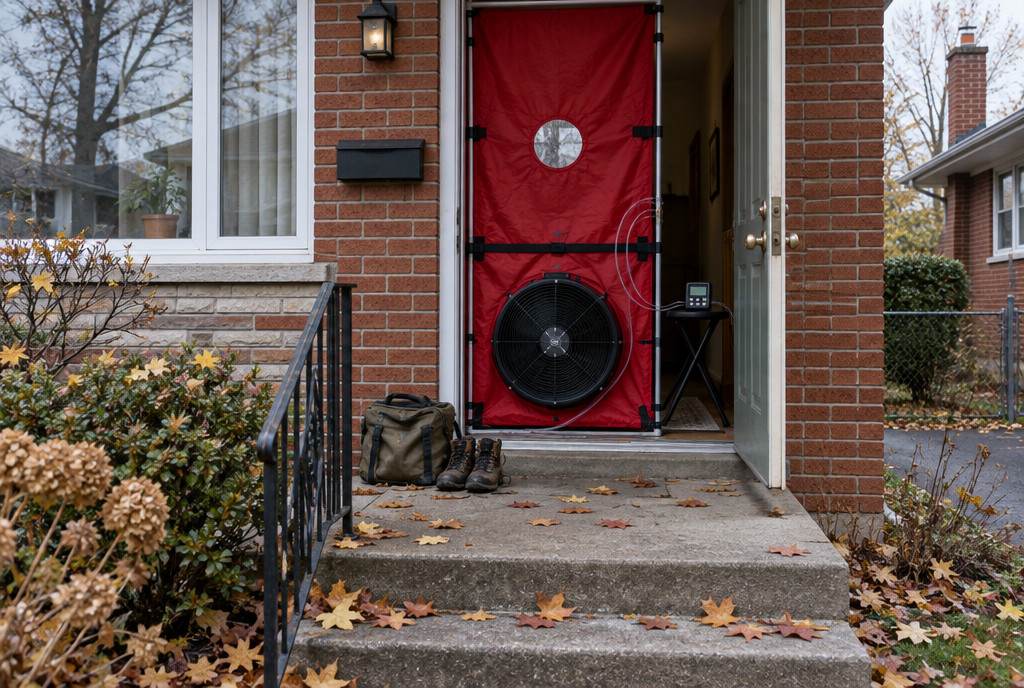
A red blower-door panel with a large fan fitted into the front doorway of a brick bungalow, a pressure gauge on a stool inside
Start here Set by each assessor Portland Home Energy Score (required at listing)
Rebates and incentives open now 6 of 11 4 closed or fully reserved; 1 not open yet or without a posted status
Federal Home Energy Rebates Not open yet What that means here

Portland at a glance

Climate zone 4C

IECC 2021 climate zone for Multnomah County, OR. PNNL ↗

What it means: Marine climate. A long, damp heating season, plus summer heat waves many homes aren't built for.

Heating and cooling 4,104 HDD · 508 CDD

Heating and cooling degree days, base 65°F, 1991–2020 normals at PORTLAND INTL AP, OR US (USW00024229). NOAA ↗

What it means: Heating drives the bills here, with mild summers; leaks and insulation matter most in winter.

Homes 1966 median year built

52.0% of occupied homes are owner-occupied. Portland city, Oregon, 2020–2024 ACS 5-year. Census ↗

What it means: Homes from this era usually have some insulation, but often thin attics, leaky ducts and original windows; air sealing and duct work tend to pay back first.

Radon EPA zone 2

moderate potential: predicted average 2–4 pCi/L (Multnomah County, OR). EPA says not to use the zone to decide whether to test: high levels turn up in all three zones, so test every home. Radon testing guide · EPA ↗

What energy costs here

State Electricity¢ per kWh · July 2026 Natural gas$ per therm · 2025 average
Oregon 16.0¢ $1.61 $16.71 per thousand cu ft
Washington 14.7¢ $1.70 $17.62 per thousand cu ft

What this means for your bills: Electricity in Oregon is cheaper than the US average (16.0¢ against 18.3¢ per kWh), which keeps air conditioning and heat pumps cheaper to run.

  • Electricity: EIA’s average residential price, July 2026 (preliminary; released September 24, 2026). The U.S. average was 18.3¢ per kWh. EIA ↗
  • Natural gas: EIA’s 2025 average residential price per thousand cubic feet, which EIA says includes taxes and delivery, divided by 10.36 therms per thousand cubic feet (EIA’s 2025 average heat content of 1,036 Btu per cubic foot). A full-year average is used because summer months run far higher. EIA ↗
  • EIA doesn’t survey heating oil or propane prices in these states; its weekly survey covers the states where those fuels are common for home heating.

Marine Pacific Northwest

What homes in Portland need

A long, damp heating season, plus summer heat waves many homes aren't built for.

Your heating season is long and damp, and many homes heat with electric baseboards. Summers are usually mild, but the 2021 heat dome showed how many homes have no way to cool. A heat pump can solve both, and a good audit also checks the crawlspace, the attic and ventilation.

In Portland: Portland reached 116°F on June 28, 2021, and its air quality index hit a record 477 in wildfire smoke on September 13, 2020. Energy Trust of Oregon offers PGE and NW Natural customers a free online home assessment and incentive matching.

What drives bills and comfort here

  • Heating leads: about 4,100 to 4,400 heating degree days a year, but only 265 to 510 cooling degree days.
  • Electric heat is common: about half of homes heat with electricity, much of it with baseboard heaters.
  • Heat waves are new: the June 2021 heat dome set all-time records across the region, and many homes have no AC.
  • Most houses sit over crawlspaces, so ground moisture, floor insulation and crawlspace ducts matter.

Local risks to plan for

  • Ice storms and winter weather: FEMA rates both relatively high.
  • Earthquakes: risk here is among the highest in the US.
  • Radon: Multnomah and Washington counties are Zone 2.
  • Summer heat: about 15 days a year reach 90°F or more.

What to check first, and why

  1. Switch to a heat pump that also cools

    Homes with baseboard heat or no AC gain the most. One heat pump replaces resistance heat and covers heat waves.

    Ask your auditor: Ask for a Manual J load calculation that sizes for winter heating and checks summer cooling capacity.

    Manual J load calculation

  2. Fix the crawlspace: drainage, ground cover, insulation

    Fix drainage first, then lay a sealed vapor barrier over the dirt. ENERGY STAR suggests an R-value of R30 for floor insulation in this zone.

    Ask your auditor: Ask the auditor to check crawlspace moisture, the ground cover and any ducts down there.

    Mold and humidity checkDuct leakage test

  3. Seal and insulate the attic

    A long heating season makes this a core upgrade. ENERGY STAR suggests R60 for an uninsulated attic in this zone.

    Ask your auditor: Ask for a blower door test with infrared imaging to find attic bypasses before insulating.

    Blower door testInfrared (thermal) scanAttic inspection

  4. Plan ventilation for a long damp season

    If air sealing brings your house to 5 ACH50 or tighter, the code calls for whole-house mechanical ventilation, such as an HRV or ERV.

    Ask your auditor: Ask what your blower door test result will be after sealing, and how the house will get fresh air.

    Blower door test

  5. Test radon and gas appliance venting

    EPA says every home should be tested for radon. In homes with gas heat, open-flue appliances can spill exhaust after air sealing.

    Ask your auditor: Ask for a radon test and, if you have gas, a combustion safety test before and after sealing.

    Radon testCombustion safety test

Tests that matter most here

  • Blower door test Measures air leakage; pair it with infrared to find attic bypasses and missing wall and floor insulation. Best timing: Winter mornings, when it's about 30°F colder outside than in. Summer is usually too mild for infrared.
  • Mold and humidity check A crawlspace check of moisture, ground cover and duct condition shows whether floor insulation or closing the crawlspace is safe. Best timing: Late winter or spring, when crawlspaces are wettest.
  • Duct leakage test Crawlspace and attic ducts leak and can pull in damp air. Best timing: Any season.
  • Combustion safety test Gas heats 40–46% of homes here, and open-flue appliances can spill exhaust after tightening. Best timing: Before and after air sealing.
  • Manual J load calculation A Manual J load calculation sizes for heating and checks cooling capacity for heat waves. Best timing: Before you get heat pump quotes.

Upgrades that usually pay off here

  1. Heat pumps replacing baseboard or old furnaces. Ductless or ducted, a heat pump gives efficient heat plus cooling for heat waves.
  2. Air sealing plus attic insulation. A long, mild heating season rewards it, and ENERGY STAR says sealing and insulating can save up to 10% on annual energy bills.
  3. Crawlspace vapor barrier and floor insulation. Most homes sit over crawlspaces. Fix drainage, lay a sealed ground cover, then insulate the floor to R30, or close the crawlspace.
  4. Duct sealing. Crawlspace ducts leak and can draw in damp air. Typical systems lose 20–30% of their air through leaks.
  5. Heat pump water heater. Mild garages and basements suit them, and they need a space that stays between 40°F and 90°F.

Heating and cooling equipment

  • North rules: at least 13.4 SEER2 for a split AC, and 14.3 SEER2 with 7.5 HSPF2 for a split heat pump.
  • Winters rarely reach 0°F, so a standard variable-speed heat pump handles most hours. A cold-climate heat pump adds margin for cold snaps and ice storms.
  • Size to the Manual J heating load, but confirm the system has enough cooling capacity for heat-dome events.

Health and comfort

  • Wildfire smoke can reach hazardous levels: use MERV 13 filters, recirculate indoor air and run portable air cleaners.
  • Winter condensation and mold: keep indoor relative humidity below 60%, ideally 30–50%.
  • Heat waves are a health risk in homes without AC.
  • Radon turns up in every EPA zone. EPA says to test every home.

Common mistakes in this climate

  • Insulating crawlspace floors before fixing moisture. Without a ground cover and moisture control, new floor insulation can stay damp and grow mold.
  • Air sealing without a ventilation plan. A tight house needs fresh air, especially in a long damp season. At 5 ACH50 or tighter, the code calls for mechanical ventilation.
  • Sizing a heat pump for heating only. Recent heat waves mean you need enough cooling capacity, too.
  • Ignoring vapor-retarder rules in this zone. The code sets specific vapor-retarder rules for this marine zone. Ask how any wall upgrade will meet them.

When to book: Book in winter for the clearest blower door and infrared results. Check the crawlspace in late winter or spring, and settle cooling plans before summer heat waves.

Sources for this climate guide · checked October 26, 2026

Common problems in Portland homes

What each one usually means in this climate, the tests that confirm it and the fixes, cheapest first.

Utilities in the Portland area

Utility efficiency programs follow the company that delivers your power or gas, so check your bill before you book anything.

Electric

  • Portland General Electric (PGE) Oregon electric utility; says it 'powers nearly half of Oregon's population'. Efficiency incentives for its Oregon customers come from Energy Trust of Oregon. Source ↗
  • Pacific Power 820,000 customers in 243 communities across Oregon, Washington and California; Oregon customers' efficiency incentives come from Energy Trust Source ↗
  • Clark Public Utilities Clark County, Washington (Vancouver area) Source ↗

Natural gas

  • NW Natural About two million people across the Pacific Northwest, including Oregon and Southwest Washington; Energy Trust incentives cover NW Natural customers in both states Source ↗

Energy Trust of Oregon is not a utility but runs efficiency incentives for Oregon customers of PGE, Pacific Power, NW Natural, Cascade Natural Gas and Avista, and for Southwest Washington customers of NW Natural. In Clark County, WA, electric efficiency programs come from Clark Public Utilities.

How to get a home energy audit in Portland

4 programs we track, open ones first. Prices are as each program publishes them. If you want a full diagnostic audit outside these programs, look for a certified auditor: how to find one and what audits cost.

Portland Home Energy Score (required at listing)

City of Portland Bureau of Planning and Sustainability; helpdesk run by Earth Advantage (hesinfo@earthadvantage.org, 503-278-5347); assessments by independent authorized Home Energy Assessors

Open in force (program and helpdesk active)
Set by each assessor

Cost, as published Set by each independent assessor (the City recommends calling more than one to compare cost and scheduling)

Official page ↗ · verified October 12, 2026

Who qualifies
Required for sellers publicly advertising most homes within Portland's jurisdictional boundary (some Clackamas and Washington county addresses are inside it); any homeowner may get one voluntarily
What you get
About 45 minutes to an hour on site including attic and crawl spaces; 70+ data points modeled into a U.S. DOE Home Energy Score and Report, posted to the Green Building Registry; a score can be reused for up to eight years if nothing assessed has changed
How to book
Contact an authorized Home Energy Assessor (list linked from the City's HES for Home Sellers page) before listing

Energy Friendly Homes (PCEF single-family program) - walk-through and energy assessment

Funded by the Portland Clean Energy Community Benefits Fund (PCEF); administrator not named on the site

Open open (online application live; site modified July 30, 2026)
No-cost or low-cost Income-qualified

Cost, as published No-cost or low-cost (site does not say which items are free)

Official page ↗ · verified October 12, 2026

Who qualifies
Homeowners in Portland city limits with household income below 150% of area median income; renter opportunities expected in late 2026
What you get
Walk-through with an Energy Specialist, then an on-site energy assessment by a contractor to build an upgrade plan (insulation, ducted or ductless heat pumps, heat pump water heaters; up to 30% of project funds can cover related repairs such as radon or asbestos mitigation, roof, electrical, dry rot or pests); typical project takes 4-6 months
How to book
Apply online at energyfriendlyhomes.com or call 971-399-7742 (info@EnergyFriendlyHomes.com); the program warns of phishing impersonators

Energy Trust of Oregon online home energy assessment

Energy Trust of Oregon

Open
Free Online tool

Official page ↗ · verified October 12, 2026

Who qualifies
Anyone; designed for Energy Trust-served homes
What you get
A short online questionnaire that returns personalized recommendations (no in-home visit)
How to book
Online via the 'Take our home energy assessment' link on Energy Trust's Home Upgrades + Incentives page

Clark Public Utilities free in-home energy review (Clark County, WA)

Clark Public Utilities

Open
Free

Official page ↗ · verified October 12, 2026

Who qualifies
Clark Public Utilities customers, including gas-heated homes
What you get
60-90 minute visit by an Energy Counselor reviewing usage, systems, insulation levels and duct leakage (no blower door or infrared camera), with advice on upgrades
How to book
Call 360-992-3355 (Monday-Friday business hours)

Rebates and incentives now

11 offers we track for the Portland metro; 6 are open as of October 12, 2026. Many require the program’s own contractor or an audit first, so read the terms before you buy.

Insulation and air sealing 1 open of 1

Energy Trust insulation incentives

Energy Trust of Oregon

Open

Official page ↗ · verified October 12, 2026

Amount Oregon owner-occupied single-family: attic $1.25/sq ft (existing R-18 or less, insulate to R-38+), wall $1.50/sq ft, floor $0.75/sq ft; Savings Within Reach (income-qualified), rental and attached homes get more (attic $1.50, wall $2.25, floor $1.00/sq ft). SW Washington (NW Natural gas-heated): attic, wall and floor $1.25/sq ft, more for Savings Within Reach

Who qualifies Homes primarily heated by fuel from PGE, Pacific Power, NW Natural, Cascade Natural Gas or Avista (Oregon) or NW Natural (SW Washington); some measures may be self-installed

Heat pumps 4 open of 7

Energy Trust heat pump incentives

Energy Trust of Oregon

Open

Official page ↗ · verified October 12, 2026

Amount Ducted heat pump replacing an electric forced-air furnace: $1,000 (Oregon owner, single-family/manufactured) or $3,000 (Savings Within Reach, rentals, attached homes); extended-capacity heat pump with no gas backup: $1,000 or $2,000; ductless heat pump replacing electric resistance heat in the main living space: $800 or $1,800

Who qualifies Energy Trust-served Oregon homes; equipment and installation requirements on the incentive table

Energy Trust heat pump water heater instant discounts

Energy Trust of Oregon

Open

Official page ↗ · verified October 12, 2026

Amount $1,200 instant discount when a licensed contractor buys a Tier 3+ unit through a participating distributor (replacing a standard electric water heater); $1,000 instant discount for in-store purchase at participating retailers (limit one)

Who qualifies Oregon customers served by PGE, Pacific Power, NW Natural, Cascade Natural Gas or Avista; existing homes only; no post-purchase application

Clark Public Utilities residential rebates (Clark County, WA)

Clark Public Utilities

Open open ('Rebates Available')

Official page ↗ · verified October 19, 2026

Amount Ductless heat pump $900 (replacing cable, baseboard, wall heaters or electric furnace); heat pump water heater (Tier 3 or 4) $1,500; smart thermostat $140 (instant via online marketplace); weatherization (windows, insulation) and income-qualified insulation rebates (amounts not shown on summary page)

Who qualifies Clark Public Utilities customers; ductless heat pumps must be rated at least 7.5 HSPF2 and installed by a contractor licensed in Washington (self-installs don't qualify); weatherization rebates for electrically heated single-family and manufactured homes

Clark Public Utilities Heat Pump Program (Clark County, WA)

Clark Public Utilities

Open open; Clark Public Utilities says requirements and rebate amounts are 'subject to change without notice'

Official page ↗ · verified October 19, 2026

Amount Converting an electric forced-air furnace to a central heat pump $1,000, or to a central variable-speed heat pump $1,250; replacing a heat pump or electric zonal heat with a central variable-speed heat pump $500

Who qualifies Clark Public Utilities customers in electrically heated homes; heat pumps must be rated at least 7.5 HSPF2 and installed by a contractor in the utility's Contractor Network; new construction qualifies unless it is in the New Homes Performance program

Oregon Heat Pump Purchase Program (HP3)

Oregon Department of Energy (EPA Climate Pollution Reduction Grant funds)

Closed owner-occupied homes: Round 1 and Round 2 funding fully reserved; rental property and new construction funding still available (ODOE accepting reservations and applications)

Official page ↗ · verified October 12, 2026

Amount $2,000 per heat pump, taken off the price by an approved contractor

Who qualifies Owner-occupied homes, rentals and new construction in Oregon; HSPF2 8.1+ and SEER2 16+

Community Heat Pump Deployment Program (regional administrators)

Oregon Department of Energy via regional administrators (Earth Advantage for the Metro, North Coast and Mid-Valley regions)

Closed Metro region (Clackamas, Multnomah, Washington counties) and Mid-Valley (incl. Yamhill County): funding fully reserved, not accepting applications; North Coast (incl. Columbia County): funding available, accepting applications

Official page ↗ · verified October 12, 2026

Amount Up to $5,000 (minimum efficiency) or $7,000 (higher efficiency) per heat pump, plus up to $4,000 grant for panel, weatherization or structural repairs

Who qualifies Owner-occupied homes in each region

Oregon Rental Home Heat Pump Program

Oregon Department of Energy

Closed closed: general program funding completely reserved; not accepting applications (separate tribal allocations still open)

Official page ↗ · verified October 12, 2026

Amount Not published

Who qualifies Rental dwellings and rented manufactured-home/RV spaces

Income-qualified offers 1 open of 3

Energy Friendly Homes (PCEF Strategic Program 3)

City of Portland, Portland Clean Energy Community Benefits Fund

Open

Official page ↗ · verified October 12, 2026

Amount No-cost or low-cost upgrades; program budget $140 million over five years for more than 3,000 single-family homes

Who qualifies Portland homeowners below 150% AMI

Washington State HEAR - City of Vancouver (WA) administrator

City of Vancouver, Washington, with Washington Commerce Climate Commitment Act funds

Unconfirmed awarded; Commerce lists the City of Vancouver, Washington, among 40 local administrators (page updated September 8, 2026)

Official page ↗ · verified October 12, 2026

Amount City of Vancouver (WA) award $500,000; rebate amounts set by the local administrator (not published by Commerce)

Who qualifies Households at or below 150% AMI (eligibility varies by administrator)

Cooling Portland (PCEF portable heat pump cooling units)

City of Portland PCEF (Earth Advantage as equipment purchasing partner)

Closed closed to new applications; previous applicants are on a waitlist

Official page ↗ · verified October 12, 2026

Amount Free portable heat pump cooling/heating unit installed

Who qualifies Low-income Portlanders at high risk of heat illness (priority to people over 60, with medical conditions, or living alone)

Statewide rebate programs and federal options: rebates and programs.

Heat pumps in Portland → What a heat pump costs to run here for cooling and heating, each heat pump rebate with the equipment rule that decides which models qualify, and the certified systems and brands that suit the climate.

Federal Home Energy Rebates in Oregon and Washington

The two federal rebate programs, HOMES (whole-home efficiency) and the high-efficiency electric home rebates (HEAR, renamed HEEHR in 2026), are run by each state, so availability depends on the state. DOE rewrote the rules effective May 29, 2026 (Program Notice 26-2 ↗): no more federal rebates for switching from gas, oil or propane to electric equipment, and insulation and air sealing come before heating and cooling upgrades unless a home already meets a state-set level.

Status for the Portland metro
Not open yet Oregon hasn't launched either federal Home Energy Rebate program: HEEHR for electric appliances or HOMES for whole-home upgrades. Official page ↗ verified October 12, 2026

Program: Oregon Home Energy Rebate Programs: Home Efficiency Rebates (HOMES) and Home Electrification and Appliance Rebates (HEAR)

Run by: Oregon Department of Energy; delivered by Energy Trust of Oregon (investor-owned utility areas) and Earth Advantage (consumer-owned utility areas)

ODOE was awarded over $113 million in September 2024. HOMES will pay performance-based rebates for whole-home efficiency at all income levels (50-100% of project cost up to $10,000, depending on savings and income). HEAR will pay 50-100% of costs up to $14,000 for households at or below 150% AMI for heat pumps, heat pump water heaters, electric cooking, dryers and related electrical work (heat pump water heaters, stoves and dryers must replace existing electric appliances). Washington-side Clark County residents fall under Washington's IRA programs, which also have not launched (Commerce says it is in the final stage of DOE authorization).

StateHEAR / HEEHR (electric appliances)HOMES (whole-home efficiency)
Oregon Oregon rebate guide
Not open yet not launched (no application date; contractor enrollment opens Oct. 12, 2026; awaiting DOE launch approval) Official page ↗ verified October 12, 2026
Not open yet not launched (same as HEAR) Official page ↗ verified October 12, 2026
Washington Washington rebate guide
Not open yet not launched (program operation preparation; awaiting DOE approval to launch) Official page ↗ verified October 12, 2026

How the programs work: Home Energy Rebates explained · every state’s status.

Help for lower-income households

Multnomah County Weatherization: Free Home Energy Upgrades

Multnomah County Department of County Human Services (503-988-7423, weatherization.team@multco.us)

Free energy audit and cost-effective weatherization for eligible households; apply online (owners of apartment buildings apply for their buildings). The County warned of high pre-screen volume and up to 4 weeks for a response (page reviewed August 21, 2026).

Official page ↗ · verified October 12, 2026

Oregon Weatherization Assistance Program (statewide)

Oregon Housing and Community Services through local subgrantee agencies

Free weatherization for households at or below 200% of the federal poverty level; households may be placed on a waiting list; apply with your county's local agency.

Official page ↗ · verified October 12, 2026

Clark County Weatherization Program (Washington side)

Clark County (855-353-4328), listed by Washington Commerce

Free weatherization for Clark County households up to 200% FPL, 60% of state median income or 80% AMI.

Official page ↗ · verified October 12, 2026

Energy Trust Savings Within Reach

Energy Trust of Oregon

Higher cash incentives for income-qualified homeowners (e.g., $3,000 instead of $1,000 for a ducted heat pump replacing an electric furnace; $1.50 vs $1.25/sq ft attic insulation).

Official page ↗ · verified October 12, 2026

Energy Friendly Homes (PCEF)

City of Portland PCEF

No- or low-cost insulation, heat pump and heat pump water heater upgrades for Portland homeowners below 150% AMI.

Official page ↗ · verified October 12, 2026

Income-Qualified Bill Discount (PGE and Pacific Power)

Portland General Electric; Pacific Power

Monthly bill discount for households at or below State Median Income; Energy Trust says no financial documents are required to apply.

Official page ↗ · verified October 12, 2026

Community Energy Project

Community Energy Project (nonprofit, described on Energy Trust's community resources page)

In-home weatherization and safety repairs for low-income seniors and people with disabilities, plus free workshops.

Official page ↗ · verified October 12, 2026

Local energy rules

2 of the 6 rules we found reach ordinary homeowners in some way; they’re listed first.

Affects homeowners

Portland Home Energy Score ordinance

Who it applies to Ordinary homeowners: sellers who publicly advertise most single-family homes within Portland's jurisdictional boundary (townhome-style condos included; stacked units, mobile, manufactured and floating homes excepted); private sales never advertised are exempt

Sellers must obtain a Home Energy Score and Report before listing and include it in all advertisements; reports stay valid up to eight years if no assessed changes were made; exemptions for financial distress or uninhabitable homes; assistance is offered for income-qualified sellers.

Official page ↗ · verified October 12, 2026

Affects homeowners

City of Milwaukie Home Energy Score requirement

Who it applies to Home sellers in Milwaukie (details on Milwaukie's website)

Portland's HES page says 'The City of Milwaukie also has Home Energy Score requirements'; Milwaukie's own rules were not reviewed.

Official page ↗ · verified October 12, 2026

Not for ordinary homes

Portland Commercial Building Energy Reporting

Who it applies to Commercial buildings 20,000 sq ft and larger; not homes

Owners track and report energy performance by April 22 each year.

Official page ↗ · verified October 12, 2026

Not for ordinary homes

Oregon Building Performance Standard (HB 3409, 2023)

Who it applies to Commercial buildings (size thresholds not quoted on the page reviewed); not single-family homes

Statewide energy performance standard for existing commercial buildings; compliance data now goes through ODOE's BEAM portal, and ODOE is taking applications for its Building Energy Reduction Incentive Program.

Official page ↗ · verified October 12, 2026

Not for ordinary homes

Washington Clean Buildings Performance Standard (Clark and Skamania counties)

Who it applies to Washington buildings over 20,000 sq ft, including multifamily over 20,000 sq ft; not single-family homes

Tier 1 reporting deadlines June 1, 2026-June 1, 2028 by size; Tier 2 reporting due July 1, 2027.

Official page ↗ · verified October 12, 2026

Proposed · not in force

Portland Multifamily Energy Reporting and Tenant Notice (proposal)

Who it applies to Multifamily buildings (proposed); not single-family homes

BPS took public comment on a 2024 proposal to expand energy reporting and tenant notice in multifamily buildings and then ran a pilot; the project page does not show it as adopted.

Official page ↗ · verified October 12, 2026
Notes worth knowing

  • Portland's Home Energy Score requirement at listing remains in force and is the main rule that touches ordinary homeowners in this metro.
  • Oregon's IRA rebates are still not available, but contractor enrollment opened on October 12, 2026.
  • Several state heat pump programs are exhausted for Portland homeowners: HP3's owner-occupied funds are fully reserved, the Community Heat Pump Deployment Program's Metro region is fully reserved, and the Rental Home Heat Pump Program's general funds are reserved.
  • PCEF's Climate Investment Plan now funds 37 strategic programs, including city operations such as streetcar replacement, LED streetlighting and hydroelectric relicensing, alongside home programs like Energy Friendly Homes ($140 million) and Cooling Portland (closed to new applications).
  • We found no in-home assessment offer on Energy Trust's residential pages; its assessment is online.
  • Washington Commerce lists CAC of Lewis, Mason and Thurston for Skamania.
  • Check your bill or the utility’s website to confirm it serves your address.

Portland: common questions

How do I get a home energy audit in Portland?

Start with Portland Home Energy Score (required at listing). Run by: City of Portland Bureau of Planning and Sustainability; helpdesk run by Earth Advantage (hesinfo@earthadvantage.org, 503-278-5347); assessments by independent authorized Home Energy Assessors. Cost: Set by each independent assessor (the City recommends calling more than one to compare cost and scheduling). Who qualifies: Required for sellers publicly advertising most homes within Portland's jurisdictional boundary (some Clackamas and Washington county addresses are inside it); any homeowner may get one voluntarily. How to book: Contact an authorized Home Energy Assessor (list linked from the City's HES for Home Sellers page) before listing. We track 4 audit programs for the Portland metro, checked October 12, 2026; all of them are on this page.

Are the federal Home Energy Rebates available in Portland?

Oregon hasn't launched either federal Home Energy Rebate program: HEEHR for electric appliances or HOMES for whole-home upgrades. Checked October 12, 2026. Nationally, DOE rewrote the rules effective May 29, 2026: federal appliance rebates no longer pay for switching from gas, oil or propane to electric equipment, and homes must get insulation and air sealing before heating and cooling upgrades unless they already meet a state-set level.

Is there help for lower-income households in Portland?

Yes. Programs for income-qualified households in the Portland metro include Multnomah County Weatherization: Free Home Energy Upgrades, Oregon Weatherization Assistance Program (statewide), Clark County Weatherization Program (Washington side), Energy Trust Savings Within Reach, Energy Friendly Homes (PCEF), Income-Qualified Bill Discount (PGE and Pacific Power) and Community Energy Project. Each one’s rules and contacts are listed on this page, with a link to its official page.

Which local energy rules affect homeowners in Portland?

2 rules reach ordinary homeowners. Portland Home Energy Score ordinance. Who it applies to: Sellers who publicly advertise most single-family homes within Portland's jurisdictional boundary (townhome-style condos included; stacked units, mobile, manufactured and floating homes excepted); private sales never advertised are exempt. City of Milwaukie Home Energy Score requirement. Who it applies to: Home sellers in Milwaukie (details on Milwaukie's website). 3 other rules apply only to larger buildings. Proposed, not in force: Portland Multifamily Energy Reporting and Tenant Notice (proposal).

Can I claim a federal tax credit for an energy audit in Portland?

Not for an audit done in 2026. The federal credit of up to $150 for a home energy audit was part of the Energy Efficient Home Improvement Credit (25C), and the IRS says it can’t be claimed for audits paid for or done after December 31, 2025. Public Law 119-21 ended 25C and the Residential Clean Energy Credit (25D) for 2026 work. An audit done in 2025 is claimed on the 2025 return (Form 5695).

Sources and checks

Every source below was opened and checked on October 12, 2026.

Planning upgrades in Portland?

Tell us your ZIP code, the kind of home you have and what you’re planning. A person reads every message and replies with the certified auditors and utility programs that serve your area.

A person replies by email. We don’t sell your details or share them with contractors. See our privacy note.