Get your free plan → Six short steps for a home in the Philadelphia area: what to fix first, the tests to ask for and the programs open to you. No email.

Pennsylvania · New Jersey · Delaware · Maryland · #9 metro by population

Home energy audits in Philadelphia

Where to get a home energy audit in the Philadelphia area, what it costs, which rebates are open now and where Pennsylvania, New Jersey, Delaware and Maryland stand on the federal Home Energy Rebates. Every program links to its official page and was checked on October 12, 2026.

Metro area: Philadelphia-Camden-Wilmington, PA-NJ-DE-MD Metropolitan Statistical Area.

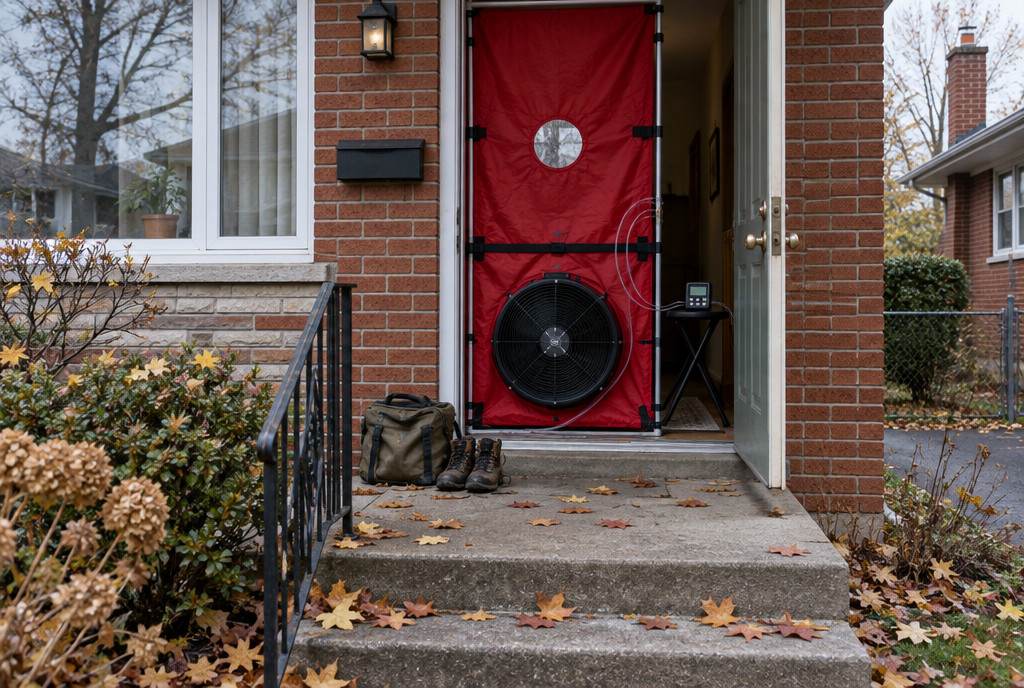
A red blower-door panel with a large fan fitted into the front doorway of a brick bungalow, a pressure gauge on a stool inside
Start here Free Whole Home Energy Assessment (NJ side)
Rebates and incentives open now 5 of 7 2 not open yet or without a posted status
Federal Home Energy Rebates Not open yet What that means here

Philadelphia at a glance

Climate zone 4A

IECC 2021 climate zone for Philadelphia County, PA. PNNL ↗

What it means: Mixed-humid climate. You pay to heat and to cool, and muggy summers make basements and AC health matter.

Heating and cooling 4,510 HDD · 1,358 CDD

Heating and cooling degree days, base 65°F, 1991–2020 normals at PHILADELPHIA INTL AP, PA US (USW00013739). NOAA ↗

What it means: Both seasons count here: real winters and humid summers, so fixes should help heating and cooling.

Homes 1949 median year built

51.8% of occupied homes are owner-occupied. Philadelphia city, Pennsylvania, 2020–2024 ACS 5-year. Census ↗

What it means: Most homes here are old enough that walls may be uninsulated and wiring, lead paint or vermiculite need checking before insulation work; an audit sorts out what to do first.

Radon EPA zone 3

low potential: predicted average below 2 pCi/L (Philadelphia County, PA). EPA says not to use the zone to decide whether to test: high levels turn up in all three zones, so test every home. Radon testing guide · EPA ↗

What energy costs here

State Electricity¢ per kWh · July 2026 Natural gas$ per therm · 2025 average Heating oil$ per gallon · week of Oct 5, 2026 Propane$ per gallon · week of Oct 5, 2026
Pennsylvania 21.7¢ $1.45 $15.04 per thousand cu ft $5.83 $3.15
New Jersey 25.2¢ $1.37 $14.21 per thousand cu ft $6.04 $3.95
Delaware 18.5¢ $1.54 $15.97 per thousand cu ft $6.04 $3.67
Maryland 21.4¢ $1.56* $16.14 per thousand cu ft $6.11 $3.80

What this means for your bills: Electricity in Pennsylvania costs more than the US average (21.7¢ against 18.3¢ per kWh), so every kWh an upgrade saves is worth more here, and it's worth checking a heat pump's running cost against gas before you switch.

  • Electricity: EIA’s average residential price, July 2026 (preliminary; released September 24, 2026). The U.S. average was 18.3¢ per kWh. EIA ↗
  • Natural gas: EIA’s 2025 average residential price per thousand cubic feet, which EIA says includes taxes and delivery, divided by 10.36 therms per thousand cubic feet (EIA’s 2025 average heat content of 1,036 Btu per cubic foot). A full-year average is used because summer months run far higher. EIA ↗ *Maryland: 2024 average; EIA published no 2025 average.
  • Heating oil and propane: EIA’s weekly residential prices, excluding taxes, for the week of October 5, 2026. EIA surveys them only in some states. EIA ↗

Mixed-humid Mid-Atlantic and St. Louis

What homes in Philadelphia need

You pay to heat and to cool, and muggy summers make basements and AC health matter.

You pay to heat in winter and to cool and dry the air in muggy summers. Many homes are old, with basements that can get damp and lead paint to plan around. A good audit covers air sealing and attic insulation, basement moisture, safe venting of fuel-burning equipment and AC health.

In Philadelphia: Half of Philadelphia's homes were built in 1949 or earlier, so plan for lead paint and asbestos before work starts. The city is radon Zone 3, but Bucks, Montgomery and Delaware counties are all Zone 1.

What drives bills and comfort here

  • Two real seasons: about 3,800 to 4,500 heating degree days and 1,300 to 1,700 cooling degree days a year.
  • Muggy summers: July dew points average 63–67°F, so your AC has to remove moisture as well as heat.
  • Old housing: in the core cities, the median home was built between 1938 (St. Louis) and 1958 (Washington, DC).
  • Power is pricey along the Northeast corridor, about 21 to 29 cents/kWh in August 2026, against 16 cents in Missouri.

Local risks to plan for

  • Heat waves: heat-wave risk to people here is among the highest in the US.
  • Summer heat: about 30 days a year reach 90°F or more.
  • Wildfire smoke reached the region in June 2023.
  • Hard freezes: 77 nights a year at or below 32°F.

What to check first, and why

  1. Seal and insulate for both seasons

    Air sealing and attic insulation cut both heating and cooling bills. ENERGY STAR suggests an R-value of R60 for an uninsulated attic in this zone.

    Ask your auditor: Ask for a blower door test with infrared imaging, and a sealing plan for the attic and top-floor ceilings.

    Blower door testInfrared (thermal) scanAttic inspection

  2. Fix basement water, then seal and dehumidify

    Most houses here have basements. Fix water entry first, then seal rim joists and keep summer relative humidity below 60%.

    Ask your auditor: Ask the auditor to measure basement humidity and look for water staining before anything is insulated.

    Mold and humidity checkInfrared (thermal) scan

  3. Check boilers, furnaces and water heaters vent safely

    Open-flue boilers, furnaces and water heaters risk backdrafting once a house is tightened. EPA guidance includes CO testing and alarms.

    Ask your auditor: Ask for a combustion safety test before and after air sealing, including any oil or steam system.

    Combustion safety testCarbon monoxide check

  4. Plan for lead, asbestos and old wiring

    Most homes in these core cities were built before 1980. Paid work that disturbs paint in pre-1978 homes must follow EPA lead-safe rules, and vermiculite or knob-and-tube needs handling before insulation.

    Ask your auditor: Ask whether the work will disturb paint, and have suspect materials checked before the scope is final.

    Lead paint testAsbestos and vermiculite check

  5. Test for radon, especially in the suburbs

    DC, Philadelphia and New York City are radon Zone 3, but suburban counties such as Montgomery (MD), Fairfax (VA), Bucks and Baltimore County are Zone 1.

    Ask your auditor: Test before work and again after air sealing, even if your city's zone is low.

    Radon test

  6. Keep the AC healthy and the ducts tight

    AC breakdowns are the most common reason homes here get too hot. Typical duct systems lose 20–30% of their air through leaks, and an oversized AC leaves humidity high.

    Ask your auditor: Ask for a duct leakage test and a check of your AC's size against a Manual J load calculation.

    Duct leakage testManual J load calculation

Tests that matter most here

  • Blower door test Measures air leakage and guides sealing; pair it with infrared to find attic bypasses. Best timing: Winter is best. Hot afternoons with the AC running can also work.
  • Infrared (thermal) scan Finds missing insulation and hidden air leaks. Best timing: Winter, or a hot afternoon with the AC on. Scan from inside and skip walls that just had sun.
  • Combustion safety test Checks boilers, furnaces and water heaters for spillage and carbon monoxide in a tightened house. Best timing: Before and after air sealing.
  • Mold and humidity check A basement moisture check, with humidity readings and a look for water stains, shows whether it's safe to insulate. Aim for below 60% relative humidity. Best timing: Mid-summer, when dew points peak.
  • Radon test Suburban counties around DC, Baltimore and Philadelphia are Zone 1. Best timing: With the house closed up, before and after air sealing.

Upgrades that usually pay off here

  1. Air sealing plus attic insulation. It cuts both heating and cooling loads, and ENERGY STAR says sealing and insulating can save up to 10% on annual energy bills.
  2. Basement water fixes, rim sealing, dehumidification. Controls summer basement humidity and mold, and closes a common air leak at the rim joists.
  3. Duct sealing, or moving ducts inside. Where ducts run through an unconditioned attic, they can lose 10–45% of the heating and cooling energy they carry. Sealing, insulating or moving them inside cuts that loss.
  4. Heat pumps, ducted or ductless. These cities average 0–1 nights a year at or below 0°F, so a standard variable-speed heat pump can carry most hours. Ductless units suit radiator homes. A cold-climate heat pump adds margin for cold snaps.
  5. Heat pump water heater in the basement. It cools and dehumidifies the space around it, which helps in a muggy basement.

Heating and cooling equipment

  • Federal AC rules differ here: Baltimore and DC follow Southeast rules (14.3 SEER2 for most split ACs), while New York, Philadelphia and St. Louis follow North rules (13.4 SEER2).
  • Split heat pumps must meet at least 14.3 SEER2 and 7.5 HSPF2. ENERGY STAR models start at 15.2 SEER2 and 7.8 HSPF2.
  • A cold-climate heat pump is optional, since winters rarely reach 0°F. Still check capacity at 17°F and 5°F for the coldest days.
  • Size with Manual J. An oversized AC short-cycles and leaves your house cool but clammy.

Health and comfort

  • Wildfire smoke: in June 2023, New York City's fine-particle AQI topped 175, a record, and DC had some of its smokiest air in 25 years. Use MERV 13 filters and recirculate.
  • Heat waves are a serious health risk in these cities, especially in homes without working AC.
  • Keep basement relative humidity below 60% to limit mold; a dehumidifier helps in summer.
  • Older homes may hold lead paint and asbestos, and suburban homes may have high radon. Test before work starts.

Common mistakes in this climate

  • Plastic vapor barriers on above-grade walls. The code doesn't require interior vapor retarders in this zone, and low-perm layers can trap summer moisture driven inward.
  • Disturbing lead paint without lead-safe practices. Paid work that disturbs paint in pre-1978 homes must follow EPA's Renovation, Repair and Painting rule.
  • An oversized AC. It cools fast but shuts off before removing moisture, so rooms feel clammy.
  • Insulating a basement that still takes on water. Fix drainage and leaks first, or the insulation can trap moisture and grow mold.

When to book: Winter gives the clearest blower door and infrared results and good closed-house radon testing. Check basement humidity in mid-summer, and have AC problems fixed before heat waves.

Sources for this climate guide · checked October 26, 2026

Common problems in Philadelphia homes

What each one usually means in this climate, the tests that confirm it and the fixes, cheapest first.

Utilities in the Philadelphia area

Utility efficiency programs follow the company that delivers your power or gas, so check your bill before you book anything.

Electric

  • PECO (PECO Energy Company, an Exelon company) Electric distribution for Philadelphia and its Pennsylvania suburbs. PECO's Act 129 Phase V plan counts about 1,400,000 residential customers. Check your bill or the utility’s website to confirm it serves your address. Source ↗
  • PSE&G New Jersey side. PSE&G's assessment scheduler includes Burlington, Camden and Gloucester counties. Source ↗
  • Atlantic City Electric (ACE, an Exelon company) New Jersey side (South Jersey). It is one of the four NJ electric utilities listed by the NJ Board of Public Utilities. Source ↗

Natural gas

  • Philadelphia Gas Works (PGW) City of Philadelphia. PGW is 'the largest municipally owned gas utility in the country', with about 500,000 customers. Source ↗
  • PECO Gas Listed by the PA PUC as a natural gas distribution company. It serves suburban Pennsylvania counties, not the City of Philadelphia, but no PECO page confirming the territory could be opened. Source ↗
  • South Jersey Gas, PSE&G (gas), Elizabethtown Gas, New Jersey Natural Gas New Jersey gas utilities as listed by the NJ BPU. South Jersey Gas is the main one on the Camden side. Source ↗

Pennsylvania has electric retail choice: customers can pick a supplier through the PUC's PAPowerSwitch site, and the utility still delivers. PGW runs a 'Gas Choice' program. New Jersey's supply is open to third-party suppliers. Efficiency programs follow the delivery utility. Pennsylvania's electric efficiency programs are mandated by Act 129. Phase V runs five years from June 1, 2026, and the PUC approved PECO's Phase V plan by order entered March 26, 2026. puc.pa.gov ↗ puc.pa.gov ↗ puc.pa.gov ↗

How to get a home energy audit in Philadelphia

4 programs we track, open ones first. Prices are as each program publishes them. If you want a full diagnostic audit outside these programs, look for a certified auditor: how to find one and what audits cost.

Whole Home Energy Assessment (NJ side)

PSE&G

Open
Free

Official page ↗ · verified October 12, 2026

Who qualifies
PSE&G residential gas and/or electric customers in a single-family home or a building with fewer than five units. Covers Burlington, Camden and Gloucester counties. Limited to one per year per account and residence.
What you get
About a one-hour walkthrough, a customized report, and no-cost installs (smart thermostat, LEDs, aerators, door sweeps, attic hatch insulation and similar)
How to book
Online portal, or 1-855-846-2895 for Burlington, Camden and Gloucester counties

Whole Home Energy Assessment (NJ side)

Atlantic City Electric

Open
Free

Cost, as published 'At no additional cost to you'

Official page ↗ · verified October 12, 2026

Who qualifies
Atlantic City Electric residential customers
What you get
A certified Energy Analyst walks through the home (insulation, air leakage, HVAC, windows and doors, lighting, appliances, water heating) and may install energy-saving products at no additional cost
How to book
Request an appointment online or call 1-866-353-0007

PECO In-Home Energy Assessments: Energy Assessment and Energy Assessment Plus

PECO (Act 129 Residential program, delivered by a conservation service provider)

Unconfirmed Phase V began June 1, 2026 (PUC order entered March 26, 2026; revised plan filed May 1, 2026). Ask the program whether it is taking applications now.
Not published

Official page ↗ · verified October 12, 2026

Who qualifies
PECO residential electric customers, both single-family and individually metered multifamily units
What you get
Per PECO's PUC-approved Phase V plan, the Energy Assessment is an in-depth walkthrough with whole-house recommendations and installation of energy-saving products. The Energy Assessment Plus follows BPI standards and adds diagnostics such as building tightness (blower-door) testing and infrared thermography, plus a detailed summary report with available incentives. The plan describes the component as 'no-cost and low-cost in-home energy assessments'.

PECO Free Energy Checkup / Free Energy Check Up Plus (low-income)

PECO (Act 129 Residential Low-Income subprogram)

Unconfirmed Included in the approved Phase V plan from June 1, 2026. Ask the program whether it is taking applications now.
Free Income-qualified

Official page ↗ · verified October 12, 2026

Who qualifies
Low-income PECO customers. The BPI-standard 'Check Up Plus' (air-flow diagnostics, infrared, combustion safety) is limited to low-income customers with permanently installed electric systems. All other low-income customers get the standard Free Energy Checkup.
What you get
In-depth home inspection, energy-use analysis, direct-install measures, energy education and a customer report

Rebates and incentives now

7 offers we track for the Philadelphia metro; 5 are open as of October 12, 2026. Many require the program’s own contractor or an audit first, so read the terms before you buy.

Whole-home upgrades 1 open of 1

Whole Home Energy Solutions (NJ side)

Atlantic City Electric; PSE&G

Open Open. ACE says it is 'actively working on increasing the number of Participating Contractors in this new program'.

Official page ↗ · verified October 12, 2026

Amount ACE: rebates 'up to $7,500', based on energy savings achieved and not exceeding 50% of project cost, with 0% interest financing. PSE&G: up to $7,500 in rebates plus up to $25,000 in interest-free on-bill repayment. Contractor assessment fees vary.

Who qualifies ACE: active residential account holders in a single-family residence (not a condo or apartment). PSE&G: residential customers using BPI-certified participating contractors.

Insulation and air sealing 1 open of 1

PGW EnergySense residential air sealing and insulation

Philadelphia Gas Works

Open Open through 08/31/2027, subject to funds

Official page ↗ · verified October 12, 2026

Amount Roof insulation to R-49 or better: $0.65/sq ft with air sealing, $0.60/sq ft without (Affordable tier $0.95 and $0.90). To R-38 or better: $0.35/sq ft with air sealing, $0.30/sq ft without (Affordable $0.50 and $0.40).

Who qualifies PGW residential customers heating with natural gas. Retrofits only (no gut rehabs or new construction). Work must be done by a BPI-certified contractor after 9/1/2024.

Heat pumps 1 open of 2

Building Decarbonization heat pump rebates (NJ side)

PSE&G

Open

Official page ↗ · verified October 19, 2026

Amount PSE&G's current page advertises 'up to $1,050 in instant savings', plus 'an additional $300 per eligible measure' for low- to moderate-income customers. The amounts PSE&G listed in early October 2026 could not be re-confirmed there: full displacement with a cold-climate ASHP, lesser of $10,000 or 50% of project cost (low/moderate income: lesser of $12,000 or 60%), plus up to $2,000 for decommissioning, $2,000 for re-ducting, and $2,000 per additional ccASHP; dual-fuel, lesser of $5,000 or 50% (LMI $6,000 or 60%); interest-free on-bill repayment up to $50,000 for decarbonization.

Who qualifies PSE&G residential electric customers who own 1–4 unit homes, working through a participating contractor

PECO Home Rebates: heat pumps, heat pump water heaters, insulation, air sealing

PECO (Act 129 Phase V)

Unconfirmed Phase V started June 1, 2026. The plan lists eligible measures, including ASHP, ductless mini-split, HPWH, air sealing and attic, wall, floor and rim-joist insulation, but gives only incentive ranges up to incremental cost (e.g., ASHP '$0.00 - $2,192.34' per unit), not the customer-facing rebate amounts.

Official page ↗ · verified October 12, 2026

Amount Not published

Who qualifies PECO residential customers. Customers or contractors apply, and some HVAC rebates may be paid on invoices through trade allies and distributors. The plan sets a 180-day maximum to submit an application.

Appliances and equipment 2 open of 2

PGW smart thermostat instant rebate

Philadelphia Gas Works

Open

Official page ↗ · verified October 12, 2026

Amount $70 instant rebate on PGW Marketplace (limit three per account)

Who qualifies PGW residential customers who heat with PGW natural gas

PGW EnergySense residential equipment rebates

Philadelphia Gas Works

Open · limits apply Open. Rebates run 09/01/2024 to 08/31/2027, first-come first-served and subject to funds. The site notes that 'rebate check processing is currently delayed'.

Official page ↗ · verified October 12, 2026

Amount First unit (additional units in parentheses): furnace, 95% AFUE, $400 ($250); boiler, 94% AFUE, $1,000 ($700); combi boiler, 94% AFUE, $1,400 ($1,000); ENERGY STAR tankless water heater $400 ($350). 'Affordable EnergySense' first-unit amounts: furnace $800, boiler $1,400, combi $2,000, tankless $700. pgworks.com separately summarizes these as 'up to $500 on furnaces and $1,500 on boilers'.

Who qualifies PGW residential customers who are current on their bills. The Affordable tier requires, within the last year, CRP enrollment, a Hardship Fund grant, or a Low Income Home Energy Assistance Program (LIHEAP) grant assigned to PGW.

Financing 0 open of 1

Financing referenced by PGW: Keystone HELP and Philadelphia Home Improvement Loan (PHIL)

Third-party lenders, as described by PGW

Unconfirmed Ask the program whether it is taking applications now.

Official page ↗ · verified October 12, 2026

Amount Per PGW: Keystone HELP loans 'currently starting as low as 0.99% with terms of up to 20 years'. PHIL has 'low fixed rates (3-5%), terms of up to 20 years, no equity or appraisal requirements and no fees'.

Who qualifies Homeowners. Lender criteria apply.

Statewide rebate programs and federal options: rebates and programs.

Heat pumps in Philadelphia → What a heat pump costs to run here for cooling and heating, each heat pump rebate with the equipment rule that decides which models qualify, and the certified systems and brands that suit the climate.

Federal Home Energy Rebates in Pennsylvania, New Jersey, Delaware and Maryland

The two federal rebate programs, HOMES (whole-home efficiency) and the high-efficiency electric home rebates (HEAR, renamed HEEHR in 2026), are run by each state, so availability depends on the state. DOE rewrote the rules effective May 29, 2026 (Program Notice 26-2 ↗): no more federal rebates for switching from gas, oil or propane to electric equipment, and insulation and air sealing come before heating and cooling upgrades unless a home already meets a state-set level.

Status for the Philadelphia metro
Not open yet Pennsylvania hasn't launched either federal Home Energy Rebate program: HEEHR for electric appliances or HOMES for whole-home upgrades. Official page ↗ verified October 12, 2026

Program: PA: Penn Energy Savers (HOMES and HEEHR). NJ: Home Efficiency Rebates (HER) and Home Electrification and Appliance Rebates (HEAR).

Run by: PA: Department of Environmental Protection, Energy Programs Office. NJ: NJ Board of Public Utilities (NJ Clean Energy Program).

Penn Energy Savers will offer point-of-sale rebates for low- and moderate-income households. Below 80% of AMI, rebates can cover up to 100% of project costs up to the maximum; at 81–150% of AMI they cover 50%. Multifamily buildings qualify if at least 50% of residents meet the income limits. DEP says that after DOE's June 1, 2026 guidance it is 'working to understand these changes, make the necessary changes to program design to be in compliance, and launch the program'. Residents can only sign up for updates. That guidance (Program Notice 26-2, effective May 29, 2026) removes federal rebates for switching from fossil fuels and requires insulation and air sealing first. PECO's revised Phase V plan says its heat pump and HPWH rebates can be 'braided' with HEAR once available.

StateHEAR / HEEHR (electric appliances)HOMES (whole-home efficiency)
Pennsylvania Pennsylvania rebate guide
Not open yet not launched (awaiting final DOE approval as of September 2026) Official page ↗ verified October 12, 2026
New Jersey New Jersey rebate guide
Not open yet not launched (under development) Official page ↗ verified October 12, 2026
Delaware Delaware rebate guide
Not open yet not launched (state page last updated Oct. 16, 2024 said launch expected once DOE approves; BPA June 2026 map shows not launched) Official page ↗ verified October 12, 2026
Not open yet not launched (same) Official page ↗ verified October 12, 2026
Maryland Maryland rebate guide
Not open yet not launched (updated application submitted to DOE Sept. 30, 2026) Official page ↗ verified October 12, 2026

How the programs work: Home Energy Rebates explained · every state’s status.

Help for lower-income households

Weatherization Assistance Program (Philadelphia)

Philadelphia Housing Development Corporation (PHDC), the City's Weatherization Assistance Program (WAP) provider. Statewide, WAP is run by the PA Department of Community & Economic Development (DCED).

Free energy audit and weatherization for income-eligible owner-occupied homes and tenant-occupied rental units in Philadelphia: air sealing, roof insulation, heating-system repair, water heater and refrigerator replacement, thermostats and energy education. Income limit is $66,000 for a household of 4. A property can be served once every 15 years. Intake is by email to phdc.intake@phdc.phila.gov or the Weatherization Assistance Program (WAP) Hotline at 215-448-2130. The page says applicants are served 'when additional funding is received and it is your turn', which effectively means a queue.

Official page ↗ · verified October 12, 2026

Basic Systems Repair Program (BSRP) and Heater Hotline

PHDC for the City of Philadelphia

Free emergency repairs (electrical, plumbing, heating, roofing, limited structural) for owner-occupants of single-family Philadelphia homes who own no other city property and are current on taxes and water bills. Income limit is $122,700 for a household of 4. Apply through the One Philly Front Door portal or call 215-448-2160. For heater repairs only, call the Heater Hotline at 215-568-7190.

Official page ↗ · verified October 12, 2026

Built to Last

Philadelphia Energy Authority (independent municipal authority)

Coordinated whole-home repairs, health and safety work and energy upgrades for underserved low-income homeowners. PEA is an ENERGY STAR Home Upgrade partner. Eligibility is screened through One Philly Front Door.

Official page ↗ · verified October 12, 2026

PECO low-income efficiency: Act 129 Low-Income subprogram and LIURP

PECO

Free Energy Checkups and direct-install measures under Act 129 Phase V. PECO's plan says these coordinate with its Low-Income Usage Reduction Program (LIURP), its Customer Assistance Program (CAP), Low Income Home Energy Assistance Program (LIHEAP), Weatherization Assistance Program (WAP) and the City's Basic Systems Repair Program.

Official page ↗ · verified October 12, 2026

PGW Customer Responsibility Program (CRP) and Affordable EnergySense

Philadelphia Gas Works

CRP is a bill discount based on household size, income and average gas bill. CRP enrollment, a Hardship Fund grant, or a Low Income Home Energy Assistance Program (LIHEAP) grant assigned to PGW unlocks higher 'Affordable EnergySense' equipment and insulation rebates. PGW's low-income weatherization (LIURP) was not found on the pages checked.

Official page ↗ · verified October 12, 2026

Comfort Partners and NJ WAP (NJ side)

NJ BPU with the utilities (Comfort Partners); NJ DCA through county agencies (WAP)

Comfort Partners provides a free assessment and all recommended measures for NJ households at or below 250% of federal poverty guidelines, or receiving TANF, Section 8, SNAP, SSI or GA. Registration is open and rolling; call 866-378-4345. Oil, propane and kerosene-heated homes go to the DCA Office of Weatherization (800-510-3102).

Official page ↗ · verified October 12, 2026
Local energy rules

None of the 3 rules we found reach ordinary homes.

Not for ordinary homes

Philadelphia Building Energy Benchmarking

Who it applies to Commercial and multifamily buildings of 50,000 sq ft and larger. Does not affect ordinary homeowners.

Annual energy and water reporting through ENERGY STAR Portfolio Manager, due June 30 for the previous calendar year. The fine is $300 after 30 days late, then $100 per day.

Official page ↗ · verified October 12, 2026

Not for ordinary homes

Philadelphia Building Energy Performance Policy (BEPP, 'building tune-ups')

Who it applies to Non-residential buildings of 50,000 sq ft or more. Does not affect homeowners.

Owners must complete a tune-up by an approved specialist, certify as high-performance, or get an exemption, and repeat every five years. The fine is $2,000, then $500 per day after the first 30 days past the deadline.

Official page ↗ · verified October 12, 2026

Not for ordinary homes

New Jersey energy and water benchmarking (NJ side)

Who it applies to Commercial buildings over 25,000 sq ft. Does not affect homeowners.

Annual benchmarking; the first submissions were due October 1, 2023

Official page ↗ · verified October 12, 2026

Notes worth knowing

  • PECO facts here come from its Act 129 Phase V plan as approved by the PA PUC (order entered March 26, 2026) and revised May 1, 2026.
  • Phase V runs June 1, 2026 to May 31, 2031.
  • Pennsylvania's IRA rebates (Penn Energy Savers) were still not launched as of DEP's September 2026 update, now reworked for DOE's May 29, 2026 rules, which remove federal rebates for switching from gas or oil to heat pumps.
  • Check your bill or the utility’s website to confirm it serves your address.

Philadelphia: common questions

How do I get a home energy audit in Philadelphia?

Start with Whole Home Energy Assessment (NJ side). Run by: PSE&G. Cost: Free. Who qualifies: PSE&G residential gas and/or electric customers in a single-family home or a building with fewer than five units. Covers Burlington, Camden and Gloucester counties. Limited to one per year per account and residence. How to book: Online portal, or 1-855-846-2895 for Burlington, Camden and Gloucester counties. We track 4 audit programs for the Philadelphia metro, checked October 12, 2026; all of them are on this page.

Are the federal Home Energy Rebates available in Philadelphia?

Pennsylvania hasn't launched either federal Home Energy Rebate program: HEEHR for electric appliances or HOMES for whole-home upgrades. Checked October 12, 2026. Nationally, DOE rewrote the rules effective May 29, 2026: federal appliance rebates no longer pay for switching from gas, oil or propane to electric equipment, and homes must get insulation and air sealing before heating and cooling upgrades unless they already meet a state-set level.

Is there help for lower-income households in Philadelphia?

Yes. Programs for income-qualified households in the Philadelphia metro include Weatherization Assistance Program (Philadelphia), Basic Systems Repair Program (BSRP) and Heater Hotline, Built to Last, PECO low-income efficiency: Act 129 Low-Income subprogram and LIURP, PGW Customer Responsibility Program (CRP) and Affordable EnergySense and Comfort Partners and NJ WAP (NJ side). Each one’s rules and contacts are listed on this page, with a link to its official page.

Which local energy rules affect homeowners in Philadelphia?

None of the local energy rules we track applies to ordinary existing homes. 3 rules apply only to larger buildings.

Can I claim a federal tax credit for an energy audit in Philadelphia?

Not for an audit done in 2026. The federal credit of up to $150 for a home energy audit was part of the Energy Efficient Home Improvement Credit (25C), and the IRS says it can’t be claimed for audits paid for or done after December 31, 2025. Public Law 119-21 ended 25C and the Residential Clean Energy Credit (25D) for 2026 work. An audit done in 2025 is claimed on the 2025 return (Form 5695).

Sources and checks

Every source below was opened and checked on October 12, 2026.

Planning upgrades in Philadelphia?

Tell us your ZIP code, the kind of home you have and what you’re planning. A person reads every message and replies with the certified auditors and utility programs that serve your area.

A person replies by email. We don’t sell your details or share them with contractors. See our privacy note.