Get your free plan → Six short steps for a home in the San Francisco area: what to fix first, the tests to ask for and the programs open to you. No email.

California · #13 metro by population

Home energy audits in San Francisco

Where to get a home energy audit in the San Francisco area, what it costs, which rebates are open now and where California stands on the federal Home Energy Rebates. Every program links to its official page and was checked on October 12, 2026.

Metro area: San Francisco-Oakland-Fremont, CA Metropolitan Statistical Area.

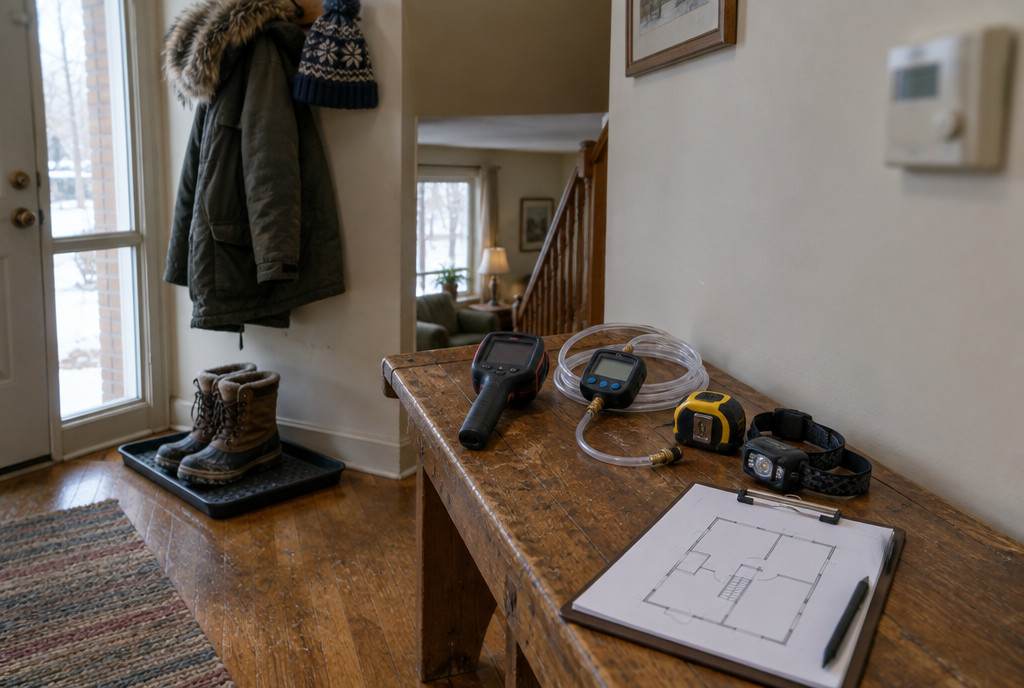
An energy advisor’s kit on a front-hall bench: infrared camera, pressure gauge with tubing, tape measure, headlamp and a floor sketch
Start here Assessor’s price less a $250 rebate Home Energy Score California / BayREN Home Energy Score rebate
Rebates and incentives open now 4 of 10 5 closed or fully reserved; 1 not open yet or without a posted status
Federal Home Energy Rebates Closed What that means here

San Francisco at a glance

Climate zone 3C

IECC 2021 climate zone for San Francisco County, CA. PNNL ↗

What it means: Mild coastal climate. Small loads and high power prices, plus heat waves in homes built without AC.

Heating and cooling 2,475 HDD · 200 CDD

Heating and cooling degree days, base 65°F, 1991–2020 normals at SAN FRANCISCO INTL AP, CA US (USW00023234). NOAA ↗

What it means: Mild winters and modest summers: comfort fixes and efficient equipment matter more than big heating savings.

Homes 1946 median year built

38.2% of occupied homes are owner-occupied. San Francisco city, California, 2020–2024 ACS 5-year. Census ↗

What it means: Most homes here are old enough that walls may be uninsulated and wiring, lead paint or vermiculite need checking before insulation work; an audit sorts out what to do first.

Radon EPA zone 2

moderate potential: predicted average 2–4 pCi/L (San Francisco County, CA). EPA says not to use the zone to decide whether to test: high levels turn up in all three zones, so test every home. Radon testing guide · EPA ↗

What energy costs here

State Electricity¢ per kWh · July 2026 Natural gas$ per therm · 2025 average
California 33.6¢ $2.12 $22.01 per thousand cu ft

What this means for your bills: Electricity in California costs more than the US average (33.6¢ against 18.3¢ per kWh), so every kWh an upgrade saves is worth more here, and it's worth checking a heat pump's running cost against gas before you switch.

  • Electricity: EIA’s average residential price, July 2026 (preliminary; released September 24, 2026). The U.S. average was 18.3¢ per kWh. EIA ↗
  • Natural gas: EIA’s 2025 average residential price per thousand cubic feet, which EIA says includes taxes and delivery, divided by 10.36 therms per thousand cubic feet (EIA’s 2025 average heat content of 1,036 Btu per cubic foot). A full-year average is used because summer months run far higher. EIA ↗
  • EIA doesn’t survey heating oil or propane prices in this state; its weekly survey covers the states where those fuels are common for home heating.

Mild coastal Coastal California

What homes in San Francisco need

Small loads and high power prices, plus heat waves in homes built without AC.

Your heating and cooling loads are small, but California electricity costs far more than the national average, so waste still adds up. Many homes have no AC, and many older ones heat with wall or floor furnaces, so heat-wave planning and safe venting matter most. A good audit seals and insulates the attic, tests fuel-burning equipment and sizes any cooling for heat waves without oversizing.

In San Francisco: San Francisco is IECC climate zone 3C (marine) with tiny cooling loads, but about half of Bay Area homes have no AC, so plan for the occasional heat spell. Half of the city's homes were built in 1946 or earlier.

What drives bills and comfort here

  • Small loads: the coastal airports log only about 200 to 900 cooling degree days and 1,000 to 2,500 heating degree days a year.
  • High prices: California electricity averaged about 30 cents/kWh in August 2026, against about 18 cents nationally.
  • Many homes lack AC: about half of San Francisco-area homes and nearly 1 in 5 Los Angeles-area homes have none.
  • Inland is different: hotter valleys behave like the Hot and dry climate, with many more 90°F days than the coast.

Local risks to plan for

  • Earthquakes: risk here is among the highest in the US; state law requires a strapped water heater.
  • Heat spells: about 1 in 7 Bay Area households got too hot for a day or more.
  • Radon: San Francisco County is Zone 2, so test your home.

What to check first, and why

  1. Seal and insulate the attic

    ENERGY STAR suggests an R-value of R49 for an uninsulated attic in this zone. A well-insulated attic helps in winter and keeps homes without AC cooler in heat waves.

    Ask your auditor: Ask for a blower door test with infrared imaging, and a list of ceiling leaks to seal before insulating.

    Blower door testInfrared (thermal) scanAttic inspection

  2. Check wall furnaces and water heaters vent safely

    Wall and floor furnaces are common in older Los Angeles and San Francisco homes. Check them for spillage and carbon monoxide, especially before air sealing.

    Ask your auditor: Ask for a combustion safety test before and after air sealing, and keep CO alarms working.

    Combustion safety testCarbon monoxide check

  3. Prepare for heat waves without oversizing

    Many homes lack AC, and the top reason people here give for being too hot is not enough cooling capacity. A right-sized heat pump adds efficient cooling and can replace a wall furnace.

    Ask your auditor: Ask for a Manual J load calculation that sizes cooling for heat waves, not a rule of thumb.

    Manual J load calculation

  4. Check ducts in attics and under floors

    Ducts here often run through attics or crawlspaces under raised floors, and typical systems lose 20–30% of their air through leaks.

    Ask your auditor: Ask for a duct leakage test if you have a forced-air furnace.

    Duct leakage test

  5. Brace the water heater for earthquakes

    California law requires water heaters to be braced, anchored or strapped, and Los Angeles and San Francisco face some of the highest earthquake risk in the US.

    Ask your auditor: Ask the auditor to check the water heater's strapping and gas connector.

    Combustion safety test

Tests that matter most here

  • Blower door test Measures air leakage and guides attic and ceiling sealing. Best timing: Any season; pair it with infrared on a winter morning.
  • Infrared (thermal) scan Finds missing insulation and ceiling bypasses. Best timing: Winter mornings with the heat on, when it's about 18–24°F cooler outside. Coastal summers rarely give enough contrast.
  • Combustion safety test Checks wall furnaces, floor furnaces and water heaters for spillage and carbon monoxide. Best timing: Heating season, before and after air sealing.
  • Duct leakage test Finds leaks in ducts that run through attics or under raised floors. Best timing: Any season.
  • Manual J load calculation A Manual J load calculation sizes a heat pump for heat waves without oversizing it. Best timing: Before you buy cooling or a heat pump.

Upgrades that usually pay off here

  1. Air sealing plus attic insulation. In Los Angeles, inadequate insulation is one of the top reasons people give for being too cold. ENERGY STAR says sealing and insulating can save up to 10% on annual energy bills.
  2. Heat pump to replace a wall furnace. A ducted or ductless heat pump adds cooling for heat waves and heats efficiently. Cold-climate models aren't needed: the coastal airports almost never freeze.
  3. Duct sealing. Typical systems lose 20–30% of their air through leaks, and ducts here often run through attics or under raised floors.
  4. Heat pump water heater. It moves heat instead of making it, and it needs a space that stays between 40°F and 90°F.
  5. Attic heat control for inland homes. In hotter inland neighborhoods, a radiant barrier cuts attic heat during heat waves. At the cool coast, it does much less.

Heating and cooling equipment

  • Southwest rules apply statewide: a new split AC needs at least 14.3 SEER2 plus an EER2 minimum, based on installation date.
  • A standard heat pump is enough here. The coastal airports average almost no nights at or below freezing, so you don't need a cold-climate heat pump.
  • Size cooling for heat waves with a Manual J load calculation, without oversizing.

Health and comfort

  • Wildfire smoke: on smoky days, use MERV 13 filters, recirculate indoor air and run a portable air cleaner.
  • Wall furnaces and water heaters can produce carbon monoxide if they vent poorly. Keep CO alarms working.
  • Heat waves are a health risk in homes without AC. Plan how you'll keep at least one room cool.
  • Radon turns up in every EPA zone, so test. In pre-1978 homes, use lead-safe certified firms for paint work.

Common mistakes in this climate

  • Desert-style oversized cooling at the coast. Your loads are small. An oversized system costs more and short-cycles, and you don't need cold-climate heating either.
  • Tightening a house with wall furnaces, untested. Open-flue wall furnaces risk backdrafting in a tighter house. Test before and after air sealing.
  • Skipping water heater strapping. California law requires it, and an unstrapped water heater can tip and break its gas line in an earthquake.

When to book: Book in winter, when the heat is on, for the best blower door and infrared results. Plan any cooling upgrade before summer heat waves.

Sources for this climate guide · checked October 26, 2026

Common problems in San Francisco homes

What each one usually means in this climate, the tests that confirm it and the fixes, cheapest first.

Utilities in the San Francisco area

Utility efficiency programs follow the company that delivers your power or gas, so check your bill before you book anything.

Electric

  • Pacific Gas and Electric Company (PG&E) Delivers electricity and gas across the metro; about 16 million people in a 70,000 sq mi service area in northern and central California Source ↗
  • CleanPowerSF (community choice aggregator) San Francisco; 'powered by the San Francisco Public Utilities Commission' (PG&E still delivers) Source ↗
  • Ava Community Energy (community choice aggregator) Default electricity provider for most of Alameda County (and San Joaquin County) Source ↗
  • WestLight Energy (formerly Peninsula Clean Energy; community choice aggregator) San Mateo County (launched as Peninsula Clean Energy; renamed WestLight Energy in 2026) Source ↗

Natural gas

  • Pacific Gas and Electric Company (PG&E) Natural gas across the metro (4.5 million gas customer accounts systemwide) Source ↗

In community choice aggregator areas (CleanPowerSF, Ava, WestLight, MCE) the CCA buys the power while PG&E delivers electricity and gas and runs the IOU programs. Peninsula Clean Energy's website now redirects to WestLight Energy. Check your bill or the utility’s website to confirm it serves your address.

How to get a home energy audit in San Francisco

5 programs we track, open ones first. Prices are as each program publishes them. If you want a full diagnostic audit outside these programs, look for a certified auditor: how to find one and what audits cost.

BayREN EASE Home (Efficiency and Sustainable Energy) program

Bay Area Regional Energy Network (BayREN)

Open
Free site visit Income-qualified

Cost, as published Complimentary in-home site visit; for the upgrades BayREN covers 80% of essential weatherization costs and the homeowner co-pay is capped at 20% of the project cost

Official page ↗ · verified October 12, 2026

Who qualifies
PG&E customers in a single-family home (4 or fewer units) built before 2010 with household income at or under 120% of area median income; tenants need owner permission; the project must include insulation, duct work or induction cooking
What you get
Site visit and dedicated Energy Advisor, fixed-price weatherization (insulation, duct sealing or replacement, air sealing), smart thermostat, weatherstripping, induction cooking upgrades (replacing gas) and required health-and-safety work; 1-year installation warranty
How to book
Check eligibility with BayREN's online income tool and apply at bayren.org/ease-home

PG&E HomeIntel (free online energy analysis and energy coach)

HEA, administered through PG&E under CPUC oversight

Open
Free Online tool

Cost, as published Free for eligible PG&E customers

Official page ↗ · verified October 12, 2026

Who qualifies
Residential customers with a PG&E electric smart meter, including CCA customers; gas-only PG&E customers are not eligible
What you get
Smart-meter-based online energy analysis, custom recommendations, a personal energy coach by email and phone, and monthly progress reports (not an in-home audit)
How to book
Sign up with name, email and ZIP code at join.hea.com

Home Energy Score California / BayREN Home Energy Score rebate

Bay Area Regional Energy Network (BayREN) and Earth Advantage; funded by PG&E, SDG&E, SoCalGas and SCE ratepayers under the CPUC

Open · limits apply open (statewide program page live; no closing date stated)
Assessor’s price less a $250 rebate

Cost, as published Cost varies by assessor (BayREN says it depends on factors such as location and home size); the program FAQ says customers who get gas and/or electricity from a CCA or investor-owned utility are eligible for a $250 rebate toward it (Berkeley residents excepted because of BESO)

Official page ↗ · verified October 12, 2026

Who qualifies
Any homeowner can hire an assessor; the $250 rebate is for customers whose gas and/or electricity comes from PG&E or a community choice aggregator, except Berkeley residents (BESO already requires scores at sale)
What you get
Certified assessor walk-through (most take 45-90 minutes, including attic and crawlspace), a U.S. DOE 1-10 Home Energy Score, a report with energy-use, cost and emissions estimates, and prioritized upgrade recommendations
How to book
Find a certified assessor through BayREN's or homescoreca.org's directory, ask about the $250 rebate (assessors bring the rebate form to the appointment)

PG&E Empower My Home (pilot)

PG&E

Open · limits apply open in pilot areas only
Free Income-qualified

Cost, as published Free for households under the free-tier income limits (e.g., $80,375 or less for 4 people); reduced cost up to $128,600 for 4 people, with PG&E covering up to 50% (cooking/drying), 80% (space and water heating) or 90% (whole-home electrification)

Official page ↗ · verified October 12, 2026

Who qualifies
Income-qualified PG&E customers in select areas; BayREN lists the pilot in select neighborhoods of Oakland and San Francisco (plus Stockton, Fresno and Bakersfield)
What you get
Home energy assessment, a contractor-prepared upgrade plan, and installation of heat pump water heater, heat pump HVAC, induction stove, dryer, insulation, duct sealing and panel upgrades as eligible
How to book
Apply online through the Empower My Home site's eligibility form

Equitable Building Decarbonization (EBD) Direct Install - Northern California

Association for Energy Affordability (AEA) as Northern Region administrator for the California Energy Commission

Unconfirmed AEA invites property reviews; CEC expected first focus-area retrofits in Summer 2026 and a community application process in late 2026
Free Income-qualified

Cost, as published No cost to eligible households

Official page ↗ · verified October 12, 2026

Who qualifies
Households up to 80% AMI in fossil-fuel-heated homes built before 2020 in initial focus areas; metro focus areas include East and West Oakland, Richmond, the Contra Costa Refinery Corridor, East San Francisco and East Palo Alto
What you get
Home assessment and no-cost heat pump and/or heat pump water heater plus possible insulation, air sealing and other electrification measures
How to book
AEA property eligibility form (aea.us.org/ebd-northern), (510) 831-6820 or ebd@aeacleanenergy.org

Rebates and incentives now

10 offers we track for the San Francisco metro; 4 are open as of October 12, 2026. Many require the program’s own contractor or an audit first, so read the terms before you buy.

Insulation and air sealing 1 open of 1

BayREN EASE Home weatherization subsidy

BayREN

Open

Official page ↗ · verified October 12, 2026

Amount BayREN covers 80% of essential weatherization upgrades; homeowner pays at most 20% of project cost (fixed pricing)

Who qualifies PG&E customers, homes of 4 or fewer units built before 2010, income at or under 120% AMI

Heat pumps 1 open of 3

CleanPowerSF Electrify Your Home bill credits

CleanPowerSF (San Francisco Public Utilities Commission)

Open

Official page ↗ · verified October 12, 2026

Amount $50/month bill credits: heat pump water heater up to $1,200 (24 months); heat pump heating up to $1,200 (24 months); electric cooking up to $150; electric dryer up to $300; extra $600 (12 more months) for CARE/FERA customers upgrading water or space heating; extra $300 for removing the gas meter after full electrification

Who qualifies CleanPowerSF residential customers; heat pump water heaters installed on or after March 15, 2025, other appliances and meter removal on or after April 14, 2026; DBI permits; water and space heating credits require an electrification rate such as EV2-A or E-ELEC

BAAQMD Clean HEET (wood stove to heat pump)

Bay Area Air District

Closed closed: application period closed July 14, 2026 (per BayREN, updated July 2026)

Official page ↗ · verified October 12, 2026

Amount $3,000-$10,500 for one wood stove or insert; $6,000-$13,500 for two

Who qualifies Bay Area homeowners replacing operational freestanding wood stoves or wood-burning inserts with electric heat pumps

TECH Clean California single-family heat pump HVAC and heat pump water heater incentives

TECH Clean California (Energy Solutions, under contract with SCE on behalf of California utilities, CPUC oversight)

Closed fully reserved since November 14, 2025; not accepting new reservations

Official page ↗ · verified October 12, 2026

Amount Not published

Who qualifies California single-family homes through enrolled contractors

Appliances and equipment 0 open of 2

Electrify Marin rebates

County of Marin

Closed closed: 'the Electrify Marin Rebate Program is now closed and will not accept new applications' (page updated July 28, 2026)

Official page ↗ · verified October 12, 2026

Amount Not published

Who qualifies Marin County residents

Golden State Rebates (instant retail rebate coupons)

CLEAResult under a contract awarded by SDG&E, supported by PG&E, SoCalGas and SCE

Closed ended: SDG&E's rebates page states 'The Golden State Rebates Program's retail rebate offerings have ended' (goldenstaterebates.com returned 404 on 2026-10-12); some utility and county pages still list it

Official page ↗ · verified October 12, 2026

Amount Not published

Who qualifies California IOU customers buying qualifying products at participating retailers

Income-qualified offers 0 open of 2

SF Climate Equity Hub free heat pump water heater

SF Environment Department with Bay View Hunters Point Community Advocates

Paused paused: the program is 'currently paused as we work to secure additional funding' and the sign-up form is closed; staff still offer technical assistance

Official page ↗ · verified October 12, 2026

Amount Full cost of replacing a gas water heater with a heat pump water heater

Who qualifies San Francisco single-family homes or buildings of 4 units or less, household income at or below 80% AMI (e.g., under $124,700 for 4 people), gas water heater more than 8 years old

HEEHRA Phase I heat pump rebates (California's IRA Home Electrification and Appliance Rebates)

California Energy Commission, delivered through TECH Clean California

Closed closed to new applicants: single-family rebates fully reserved statewide since February 24, 2026 (unapproved requests waitlisted; no new income verifications); multifamily fully reserved since September 1, 2026 per TECH

Official page ↗ · verified October 12, 2026

Amount Single-family: up to $8,000 (household income under 80% AMI) or up to $4,000 (80-150% AMI) for a qualifying heat pump HVAC system; multifamily up to $14,000 per unit

Who qualifies Income-qualified owners (or landlords renting to income-qualified households) replacing a non-heat-pump heating system; only through HEEHRA-trained, TECH-certified contractors with a pre-approved reservation

Financing 2 open of 2

WestLight Energy 0% electrification loan and rebates (San Mateo County)

WestLight Energy (formerly Peninsula Clean Energy)

Open

Official page ↗ · verified October 12, 2026

Amount 0% APR loans up to $10,000, no fees, no credit check, 2-5 year terms repaid on the electric bill; separate exclusive rebates for heat pump water heaters and heat pump HVAC (amounts not shown on the page text)

Who qualifies Active WestLight residential customers who own the home, have the PG&E bill in their name with no past-due balance on the last three bills, and use a loan-approved contractor for a heat pump water heater, heat pump HVAC or panel upgrade

GoGreen Home Energy Financing

State of California GoGreen Financing program (the page links to the State Treasurer's residential portal); utilities named do not lend

Open open (page modified October 6, 2026)

Official page ↗ · verified October 12, 2026

Amount Loan amounts and rates not stated on the page; it advertises below-market rates, extended terms, no property lien, up to 30% of financing for other improvements, and 0% financing for heat pump heating, cooling and water heating in qualifying communities

Who qualifies Owners (and tenants with owner permission) of single-family homes, townhomes, condos, 2-4 unit buildings and manufactured homes on a site-built foundation who are customers of PG&E, SDG&E, SCE, SoCalGas or City of Palo Alto Utilities; customers of other publicly owned utilities 'may finance most measures'

Statewide rebate programs and federal options: rebates and programs.

Heat pumps in San Francisco → What a heat pump costs to run here for cooling and heating, each heat pump rebate with the equipment rule that decides which models qualify, and the certified systems and brands that suit the climate.

Federal Home Energy Rebates in California

The two federal rebate programs, HOMES (whole-home efficiency) and the high-efficiency electric home rebates (HEAR, renamed HEEHR in 2026), are run by each state, so availability depends on the state. DOE rewrote the rules effective May 29, 2026 (Program Notice 26-2 ↗): no more federal rebates for switching from gas, oil or propane to electric equipment, and insulation and air sealing come before heating and cooling upgrades unless a home already meets a state-set level.

Status for the San Francisco metro
Closed In California, HEEHR rebates for electric appliances are closed to new applicants, and HOMES rebates for whole-home upgrades haven't launched. Official page ↗ verified October 12, 2026

Program: HEEHRA (Home Electrification and Appliance Rebates) and HOMES (Home Owner Managing Energy Savings)

Run by: California Energy Commission (HEEHRA Phase I delivered by TECH Clean California; EBD Direct Install run by three regional administrators)

California received $590 million in total for Home Energy Rebates ($290 million HEEHRA awarded June 2024; $291 million HOMES approved January 2025). HEEHRA Phase I paid up to $8,000 (under 80% AMI) or $4,000 (80-150% AMI) toward a heat pump HVAC system through TECH-certified contractors; it launched October 2024, paused February 2025, resumed March 2025, was fully reserved in June 2025, reopened October 2025 and was fully reserved again on February 24, 2026. The HOMES award is split between EBD Direct Install ($130.3 million, no-cost retrofits for low-income households, projects must model at least 20% savings) and a statewide Pay for Performance program ($90.8 million) that has not launched (solicitation concept workshop held August 8, 2025). The CEC Q&A still says multifamily HEEHRA rebates are available, but TECH's incentives page says they were fully reserved as of September 1, 2026.

StateHEAR / HEEHR (electric appliances)HOMES (whole-home efficiency)
California California rebate guide
Closed closed to new applicants (waitlist only): HEEHRA Phase I single-family fully reserved statewide since 2026-02-24 and multifamily since 2026-09-01 (per TECH); HEEHRA Phase II not yet available; HOMES not available as rebates (some HOMES funds pay for no-cost EBD Direct Install retrofits in selected low-income communities) Official page ↗ verified October 12, 2026
Not open yet not launched ('HOMES rebates are not yet available') Official page ↗ verified October 12, 2026

How the programs work: Home Energy Rebates explained · every state’s status.

Help for lower-income households

Weatherization Assistance Program / LIHEAP (by county)

CSD local providers: San Francisco Peninsula Energy Programs (San Francisco, 415-416-6660 ext. 402); Spectrum Community Services (Alameda County, 510-881-0300); Contra Costa Employment & Human Services Department Community Services Bureau (925-267-6624); Central Coast Energy Services (San Mateo County, 888-728-3637); Community Action Marin (415-526-7550, listed by CSD for bill and crisis assistance only)

Free weatherization (sealing, insulation, window, heating and water heater repair or replacement) and bill assistance for income-eligible owners and renters. CSD's directory lists no weatherization service for Community Action Marin.

Official page ↗ · verified October 12, 2026

PG&E Energy Savings Assistance (ESA)

PG&E

No-charge upgrades and repairs (heat pump water heaters, furnaces, lighting, refrigerators and more) after an in-home assessment; home must be at least five years old; income guidelines valid through May 31, 2027, or enrollment in programs such as CalFresh, Medi-Cal, Low Income Home Energy Assistance Program (LIHEAP) or SSI. Call 1-800-933-9555.

Official page ↗ · verified October 12, 2026

PG&E Empower My Home (pilot neighborhoods)

PG&E

Free or reduced-cost electrification with a home energy assessment for income-qualified customers in select Oakland and San Francisco neighborhoods.

Official page ↗ · verified October 12, 2026

Equitable Building Decarbonization Direct Install (Northern California)

Association for Energy Affordability for the California Energy Commission

No-cost retrofits for households up to 80% AMI in East/West Oakland, Richmond, Contra Costa Refinery Corridor, East San Francisco and East Palo Alto focus areas.

Official page ↗ · verified October 12, 2026

CleanPowerSF CARE/FERA bonus

CleanPowerSF

CARE or FERA customers get 12 extra months ($600) of bill credits when they electrify water or space heating.

Official page ↗ · verified October 12, 2026

SF Climate Equity Hub (paused)

SF Environment Department

Free heat pump water heater for San Francisco households at or below 80% AMI; paused pending funding.

Official page ↗ · verified October 12, 2026

Local energy rules

2 of the 4 rules we found reach ordinary homeowners in some way; they’re listed first.

Affects homeowners

Berkeley Building Emissions Saving Ordinance (BESO) - time of sale, small residential

Who it applies to Ordinary homeowners selling in Berkeley: single-family homes and duplexes since January 1, 2026; triplexes and fourplexes from January 1, 2028 (assessment-only until then); condos and ADUs excluded

Before listing, sellers must get a Home Energy Score from a registered BESO assessor, post it in the MLS listing and include the report in disclosures ($500 fee for non-compliance; reports valid 5 years). Before closing, sellers must either complete upgrades earning six 'Resilience Standard' credits ($150 filing fee), qualify for a heat pump exemption, or defer upgrades to the buyer by depositing $5,000 with the City ($2,500 each from seller and buyer), refunded to the buyer after upgrades are completed within two years. All-electric homes and income-qualified first-time buyers can be exempt. Larger buildings face assessments, benchmarking or both depending on size.

Official page ↗ · verified October 12, 2026

Affects homeowners

Bay Area Air District Rules 9-4 and 9-6 (zero-NOx furnaces and water heaters)

Who it applies to Ordinary homeowners when an existing gas furnace or water heater burns out and is replaced; equipment manufactured after the dates must meet the standard

Adopted March 15, 2023: zero-NOx emission standards phase in from 2027, 2029 and 2031 depending on size and equipment type, applying only on burnout of current equipment. On November 4, 2026 the Air District Board will consider amendments to Rule 9-6 (small water heaters under 75,000 BTU/hour) that would add some exemptions and extend the compliance date; public comment closes November 1 at 6 PM.

Official page ↗ · verified October 12, 2026

Not for ordinary homes

San Francisco Existing Buildings Energy Ordinance (Environment Code)

Who it applies to Large buildings only: non-residential buildings with 10,000 sq ft or more of conditioned space and multifamily buildings with 50,000 sq ft or more. Does not affect ordinary homeowners.

Annual ENERGY STAR Portfolio Manager benchmark due May 1 (the 2025 benchmark was due May 1, 2026); commercial buildings also need an energy audit every 5 years; one San Francisco report also satisfies state AB 802.

Official page ↗ · verified October 12, 2026

Not for ordinary homes

California Building Energy Benchmarking Program (AB 802)

Who it applies to Large buildings only: commercial buildings over 50,000 sq ft with no residential utility accounts, and multifamily buildings over 50,000 sq ft with 17 or more utility accounts. Does not affect ordinary homeowners.

Owners report energy use to the California Energy Commission by June 1 every year.

Official page ↗ · verified October 12, 2026

Notes worth knowing

  • PG&E's own residential rebates page now lists no home-efficiency rebates (only backup power, EVs and clean-energy incentives); PG&E's listed energy-saving programs include ESA, HomeIntel, Home Energy Checkup (online), AC upgrade financing and GoGreen financing, plus the Empower My Home pilot.
  • Marin County's page still lists Golden State Rebates ($400-$700 for gas-to-heat-pump water heaters), but SDG&E, which holds that contract, says the retail offerings have ended.
  • Ask the program whether it is taking applications now.
  • Check your bill or the utility’s website to confirm it serves your address.

San Francisco: common questions

How do I get a home energy audit in San Francisco?

Start with Home Energy Score California / BayREN Home Energy Score rebate. Run by: Bay Area Regional Energy Network (BayREN) and Earth Advantage; funded by PG&E, SDG&E, SoCalGas and SCE ratepayers under the CPUC. Cost: Cost varies by assessor (BayREN says it depends on factors such as location and home size); the program FAQ says customers who get gas and/or electricity from a CCA or investor-owned utility are eligible for a $250 rebate toward it (Berkeley residents excepted because of BESO). Who qualifies: Any homeowner can hire an assessor; the $250 rebate is for customers whose gas and/or electricity comes from PG&E or a community choice aggregator, except Berkeley residents (BESO already requires scores at sale). How to book: Find a certified assessor through BayREN's or homescoreca.org's directory, ask about the $250 rebate (assessors bring the rebate form to the appointment). We track 5 audit programs for the San Francisco metro, checked October 12, 2026; all of them are on this page.

Are the federal Home Energy Rebates available in San Francisco?

In California, HEEHR rebates for electric appliances are closed to new applicants, and HOMES rebates for whole-home upgrades haven't launched. Checked October 12, 2026. Nationally, DOE rewrote the rules effective May 29, 2026: federal appliance rebates no longer pay for switching from gas, oil or propane to electric equipment, and homes must get insulation and air sealing before heating and cooling upgrades unless they already meet a state-set level.

Is there help for lower-income households in San Francisco?

Yes. Programs for income-qualified households in the San Francisco metro include Weatherization Assistance Program / LIHEAP (by county), PG&E Energy Savings Assistance (ESA), PG&E Empower My Home (pilot neighborhoods), Equitable Building Decarbonization Direct Install (Northern California), CleanPowerSF CARE/FERA bonus and SF Climate Equity Hub (paused). Each one’s rules and contacts are listed on this page, with a link to its official page.

Which local energy rules affect homeowners in San Francisco?

2 rules reach ordinary homeowners. Berkeley Building Emissions Saving Ordinance (BESO) - time of sale, small residential. Who it applies to: Ordinary homeowners selling in Berkeley: single-family homes and duplexes since January 1, 2026; triplexes and fourplexes from January 1, 2028 (assessment-only until then); condos and ADUs excluded. Bay Area Air District Rules 9-4 and 9-6 (zero-NOx furnaces and water heaters). Who it applies to: Ordinary homeowners when an existing gas furnace or water heater burns out and is replaced; equipment manufactured after the dates must meet the standard. 2 other rules apply only to larger buildings.

Can I claim a federal tax credit for an energy audit in San Francisco?

Not for an audit done in 2026. The federal credit of up to $150 for a home energy audit was part of the Energy Efficient Home Improvement Credit (25C), and the IRS says it can’t be claimed for audits paid for or done after December 31, 2025. Public Law 119-21 ended 25C and the Residential Clean Energy Credit (25D) for 2026 work. An audit done in 2025 is claimed on the 2025 return (Form 5695).

Sources and checks

Every source below was opened and checked on October 12, 2026.

Planning upgrades in San Francisco?

Tell us your ZIP code, the kind of home you have and what you’re planning. A person reads every message and replies with the certified auditors and utility programs that serve your area.

A person replies by email. We don’t sell your details or share them with contractors. See our privacy note.