Get your free plan → Six short steps for your house: what to fix first, the tests to ask for and the programs open to you. No email.
Common problems
Musty smell
A damp, earthy odor that’s stronger when the AC or heat starts, in the basement, or after rain. A musty smell is a moisture problem first: find the water and you’ve found the fix.
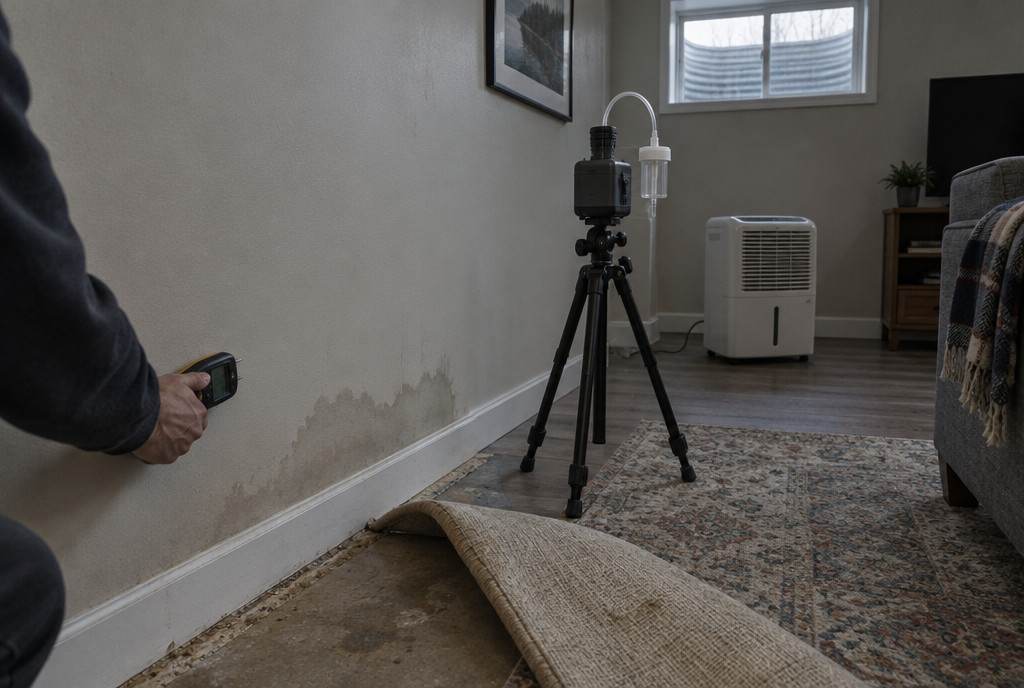
What it usually means
- Musty odors come from mold and bacteria growing where something stays damp. EPA’s advice is to fix the moisture source, then clean, because cleaning without stopping the water doesn’t last.
- If the smell gets stronger when the system starts, look at the air handler: the drain pan, the coil, and return ducts that may pull air from a damp crawlspace, basement or wall cavity.
- If it’s strongest in the basement or after rain, look for water getting in, and for humidity above 60%.
Where it’s most common
Our climate research lists this as a common problem in these metro areas. Each guide covers what homes there need, local audit programs and rebates.
- Hot and humid Dallas–Fort Worth · Greater Houston · Miami · Tampa · Orlando · San Antonio · Austin
- Mixed New York City · Atlanta · Washington, DC · Philadelphia · Charlotte · Baltimore · St. Louis
- Cold Chicago · Boston · Detroit
- Marine and mild coastal Seattle · Portland
Somewhere else? Find your metro guide.
Likely causes, by climate
The same symptom has different causes in Miami, Phoenix and Minneapolis. Find your climate below; the tag marks the climates where this problem is most common.
Hot and humid Florida, Texas and the Gulf Coast Common here
Humid outdoor air, condensation on cold ducts and air handlers, slow-draining AC pans and vented crawlspaces are the common sources. Water from storms or flooding can also hide in walls and under floors.
Hot and dry the desert Southwest and inland Southern California
Less common in dry air. Check the evaporative cooler (wet pads and standing water, especially when it sits idle), plumbing leaks, roof leaks after monsoon storms and the AC drain.
Mixed the Mid-Atlantic, St. Louis and the Southeast Piedmont Common here
Damp basements and crawlspaces are the usual source, especially in summer, along with AC drain pans and leaky return ducts in crawlspaces.
Cold the Northeast, Great Lakes, Upper Midwest and Colorado Front Range Common here
Basements are the usual source: humid summer air condenses on cool foundation walls, and water seeps in after rain. Finished basements with carpet or drywall against concrete can hold moisture out of sight.
Marine and mild coastal the Pacific Northwest and coastal California Common here
Long, damp winters and vented crawlspaces make mold in crawlspaces, closets and corners on outside walls common. Bath and kitchen fans that aren’t used, or don’t vent outdoors, make it worse.
Not sure which climate you’re in? Your metro guide says, and the climate zone entry explains the map builders use.
How an audit confirms it
Guessing is how people end up with new equipment that doesn’t fix the problem. These tests measure the cause. Ask for them by name when you book; each guide explains what the results mean and what to do next.
- Mold and humidity check A moisture and humidity check: moisture meter readings, humidity, and a look at the crawlspace or basement, drain pans and ventilation.
- Duct leakage test Return-duct leaks in a crawlspace, basement or wall cavity can pull musty air into the system and spread it through the house.
- Blower door test Shows where air enters from the crawlspace or basement when the house is under pressure.
- Infrared (thermal) scan Can point to damp spots, which often show up cooler than the surface around them, but a moisture meter has to confirm them.
Try first (cheap or free)
- Follow your nose: check under sinks, around the water heater and washer, at the AC drain pan and in the crawlspace or basement.
- Measure humidity with a digital hygrometer and keep it below 60%, ideally 30–50%.
- Run a dehumidifier in a damp basement, and make gutters and downspouts carry roof water away from the foundation.
- Replace the AC filter, and make sure the condensate drain flows.
- Clean small mold patches, under about 10 square feet, with detergent and water and dry them completely, as EPA describes. Wear gloves, goggles and an N-95 respirator.
The fix ladder
From the cheapest step to the biggest. Work up only as far as you need to, and test again after.
- Find and stop the water: plumbing and roof leaks, gutters and downspouts, the AC drain
- Dehumidify the basement or crawlspace; clean small mold areas
- Seal return ducts in the crawlspace or basement; have the coil and drain pan cleaned
- Fix foundation drainage and water entry before finishing or insulating a basement
- Close and condition a vented crawlspace, or professional cleanup of larger mold areas
When to call a pro
- Mold covers more than about 10 square feet, the house has had flooding or a sewage backup, or the smell comes from inside the ducts. EPA points to professional remediation guidance for larger jobs.
- Anyone in the home has allergies, asthma or other health concerns. Talk to a doctor as well as fixing the source.
- Cleanup would disturb insulation, ceiling texture or old flooring in an older home. Have those materials checked for asbestos first.
Common mistakes
- Painting or caulking over mold: it keeps growing underneath. Clean and dry the surface first.
- Insulating a basement or crawlspace that still takes on water.
Paying for the fixes
Utility programs often pay toward audits, duct sealing, insulation and heat pumps, and some require an audit first. Your metro guide lists the programs near you, and your state’s page covers state and federal rebates.
Words worth knowing
- Mold
- Fungi that grow on damp surfaces indoors; they can damage materials and affect health, and moisture is always the root cause.
- Relative humidity (RH)
- How much moisture the air holds compared with the most it could hold at that temperature, shown as a percentage.
- Hygrometer
- An inexpensive gauge, often combined with a thermometer, that shows a room's relative humidity so you can keep it in a healthy range.
- Dehumidifier
- An appliance that removes moisture from indoor air, most often used in basements and humid summers to keep humidity in a healthy range.
- Condensation
- Water that forms when humid air touches a surface colder than its dew point, on windows, cold pipes or hidden inside walls and attics.
- Dew point
- The temperature at which air becomes saturated and water starts to condense on surfaces, like water beading on a cold glass.
- Indoor air quality (IAQ)
- How clean and healthy the air inside a home is, affected by ventilation, humidity, combustion gases, particles, chemicals and radon.
- Vapor barrier / vapor retarder
- A layer that slows water vapor moving through walls and ceilings, to keep it from condensing inside the structure.
The glossary explains every term on the site.
Common questions
Should I test for mold?
Usually not, if you can see or smell it. EPA says sampling is usually unnecessary when mold is visible, and there are no federal limits to compare a result against. Finding and fixing the moisture is what solves it.
Why does my house smell musty when the AC turns on?
Common causes are a slow-draining or dirty drain pan, a damp coil, or return ducts that leak and pull air from a damp crawlspace, basement or wall cavity. A technician can clean the coil and pan, and a duct leakage test finds the return leaks.
Can I clean mold myself?
For areas under about 10 square feet, EPA says you can usually handle it yourself: scrub hard surfaces with detergent and water, dry them completely, and wear gloves, goggles and an N-95 respirator. Fix the moisture source first, or it will come back.
Related problems
Sources
Where each problem is common comes from our regional climate research (NOAA climate normals, EPA, PNNL, FEMA and others), cited on each metro guide. The guidance on this page follows these sources, checked October 26, 2026:
Want it diagnosed properly?
Tell us your ZIP code and what you’re noticing. A person reads every message and replies with certified auditors who can test for this in your area.