How Yellowknife is built
- Before 1961 3%
- 1961–1990 54%
- 1991–2000 21%
- 2001 or later 22%
What inspections find in Yellowknife attics
Of Yellowknife's 5,225 houses (single-detached, semi-detached, row houses and duplexes), 3% were built before 1961 and 57% before 1991, according to the 2021 Census. Attics in older houses commonly have a fraction of today's recommended insulation, and top-ups done over the years often buried air leaks instead of sealing them first.
Yellowknife gets about 7,856 heating degree-days a year and has a winter design temperature of −39.2°C, according to NRCan's HOT2000 climate data for Yellowknife. That's the highest heating demand of the 70 cities we cover. The colder the climate, the faster added attic insulation pays for itself.
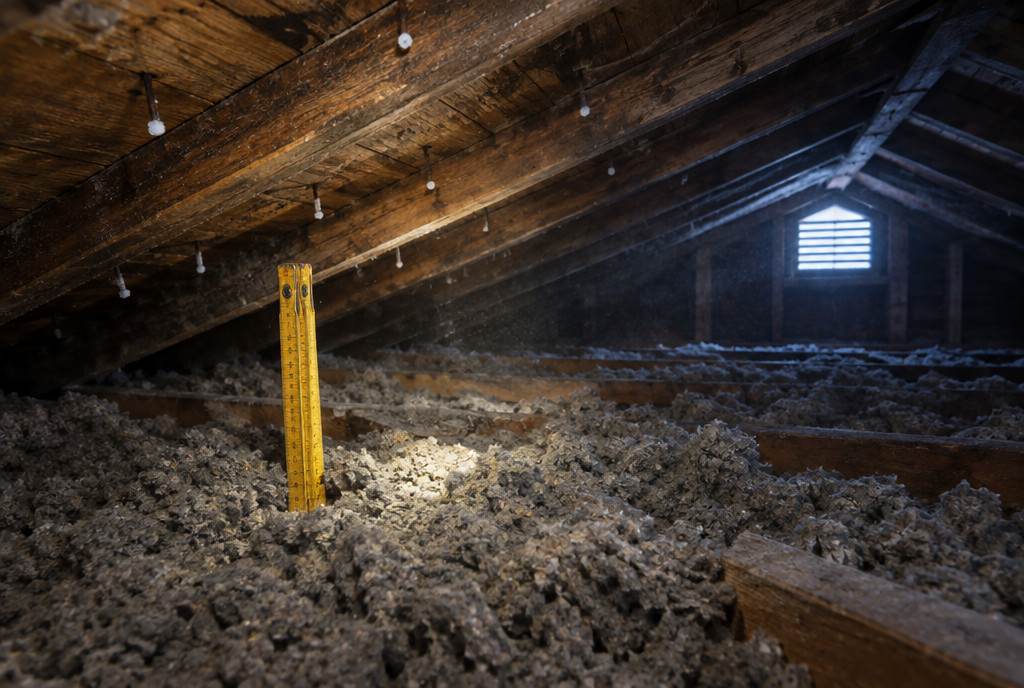
Vermiculite. Loose, pebbly, grey-brown or silver-gold insulation may contain asbestos. Health Canada's advice is not to disturb it; have it sampled before any attic work. Asbestos and vermiculite testing in Yellowknife
The right order for the work
- Seal the air leaks first: top plates, pot lights, plumbing stacks, the hatch.
- Fix ventilation baffles so new insulation doesn't block soffit vents.
- Then top up the insulation. Burying unsealed leaks under new insulation wastes much of the benefit.
NRCan-licensed service organizations serving Yellowknife
In the Northwest Territories, the Arctic Energy Alliance, a non-profit, is the licensed service organization for Yellowknife.
Every EnerGuide evaluation includes an attic inspection: insulation depth, air leaks and red flags such as vermiculite or knob-and-tube wiring.
- Arctic Energy Alliance
Insulation programs in Yellowknife
Attic insulation inspection in Yellowknife: common questions
How much attic insulation should a Yellowknife house have?
Advisors commonly target around R-50 to R-60 in attics. Your EnerGuide report gives the recommendation for your house.
Can I top up the insulation myself?
Only after the air leaks are sealed and you've confirmed there is no vermiculite. The inspection tells you both.
Will more insulation stop ice dams?
Insulation helps, but ice dams are mostly caused by warm air leaking into the attic. Air sealing is the bigger fix.