$200–$600
Re-duct and terminate properly
Fans that vent into attics or through crushed duct get smooth, insulated runs to a real exterior termination. The single most common fix, and it protects the roof as much as the air.
Which tests does my home need?
Era, heating, water, symptoms in — your flagged tests out, in 30 seconds.
Run the screener →
Heat & energy
Air
Water & moisture
Your city, read like an auditor
70 Canadian cities, each with its climate, housing age and 16 local audit and testing services.
All 70 cities →
Across Canada
Ontario region guides
Energy test guide · verified October 2, 2026
Condensation on windows, musty rooms, stale air — these get blamed on windows and cured with expensive glass, when the real question is whether the house exhausts the moisture its occupants make. This assessment measures what your fans actually move, where that air actually goes, and whether your air exchange matches your household — the diagnosis that decides between a $400 fan fix and a $20,000 mistake.
Cost
Included in assessment
Measures
Real fan CFM, RH, exchange
Winter target
~30–50% RH
Fixes
$200 re-duct → HRV
A flow box over each bath fan and the range hood reads delivered airflow. The routine finding: fans moving a fraction of their label — grille clogged, duct crushed, run too long, or termination flapper stuck.
Into the attic is the classic failure — a bath fan that empties into insulation is a mould machine for the roof deck. Terminations must reach outside, damped, and actually open.
Readings by floor and season against the winter target band (roughly 30–50% RH). Which rooms run wet, when, and whether the pattern tracks showers, cooking, a crowd, or a damp foundation.
People, showers, cooking, plants, and laundry all add moisture; the house's air exchange (from your blower door number plus mechanical ventilation) either keeps up or doesn't. Tight house + full household + label-only fans = the math that grows mould.
Under-ventilation (fix: exhaust and air exchange) versus cold-surface condensation (fix: insulation and air sealing at that assembly). The two get confused constantly, cost very different money, and this is the measurement that tells them apart.
The observations come with an EnerGuide assessment; ask the advisor to put numbers on the fans rather than eyeballing grilles. HRV sizing and installation is HVAC-contractor work (HRAI-trained contractors in Canada) — but sized from measurements, not from a catalogue default.
The fixes ladder from an afternoon to a system — and the diagnosis decides which rung:
$200–$600
Fans that vent into attics or through crushed duct get smooth, insulated runs to a real exterior termination. The single most common fix, and it protects the roof as much as the air.
$300–$800 installed
Quiet, capable fans (measured, not just rated) on timers or humidistats — running 20–30 minutes past every shower without anyone remembering to bother.
$3,000–$5,500 typical
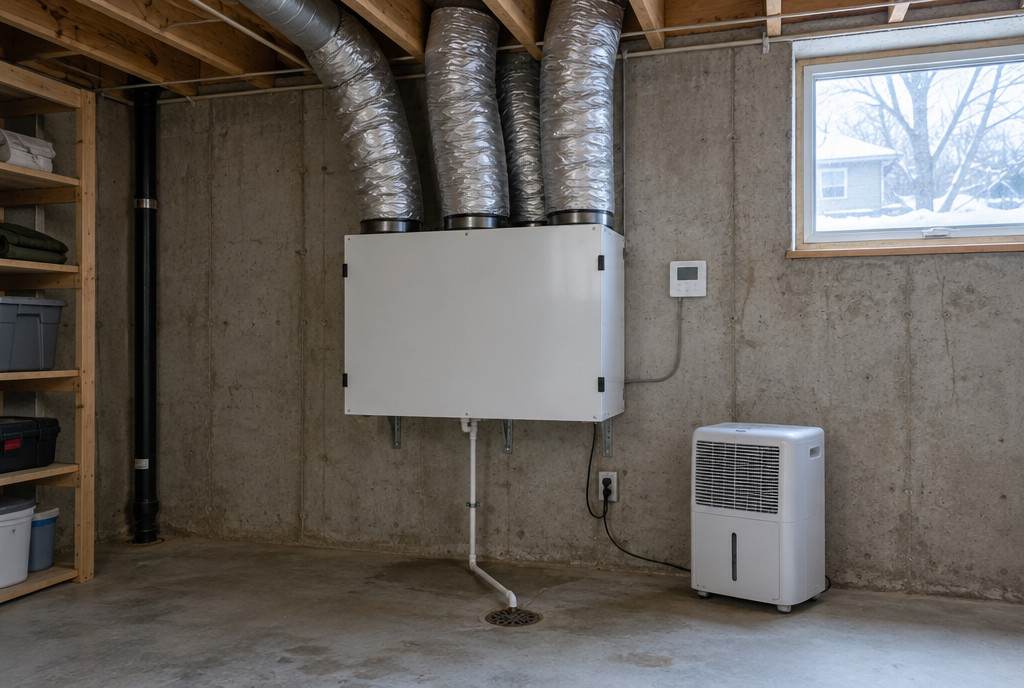
For tight homes — including homes you just made tight — a heat-recovery ventilator exchanges stale humid air for fresh, keeping most of the heat. This is the proper companion to serious air sealing, and sizing comes from the assessment's numbers.
See gear guide
Seasonal basement humidity is a dehumidifier's job, not a ventilation system's — summer air brought in is wetter than the air below grade. Hygrometer first, then size the unit.
If the verdict was cold-surface condensation instead, the money goes to insulation and air sealing at the offending assembly — and the mold guide covers what to do about any growth that already happened.
Both recover heat; an ERV also exchanges some moisture, which can help homes that run too dry in deep winter and eases humidity load in shoulder seasons. The right answer depends on your climate zone, household size, and measured humidity pattern — it's a sizing decision from your assessment, not a brand preference.
The old leaky windows were accidental ventilation, and their cold glass was also condensing and signalling moisture. New tight windows removed the leakage and the warning sign — same household moisture, less air exchange. The house didn't get worse; it got tighter than its ventilation. That's the HRV conversation.
It works — that's what it's replacing — but you pay full price to heat the replacement air, it's unfiltered, and nobody does it reliably in February. Mechanical ventilation with heat recovery is the version of window-cracking that shows up every day and keeps most of the heat.
Tell us the symptoms — we'll match you with an advisor whose measurements settle the ventilation-vs-insulation question before you spend.
Email us what you’re planning, your postal code and the type of building (a house, a duplex or triplex, or a larger multi-unit building) — we’ll reply with registered service organizations for your area and which rebates apply.
Email dave@clickshift.ca