HRSP (with assessment)
Active · limits applyUp to $10,000 per home for insulation, windows and air sealing, plus $600 back on your assessments — if the follow-up assessment is done by December 31, 2026
Audit required
Which tests does my home need?
Era, heating, water, symptoms in — your flagged tests out, in 30 seconds.
Run the screener →
Heat & energy
Air
Water & moisture
Your city, read like an auditor
70 Canadian cities, each with its climate, housing age and 16 local audit and testing services.
All 70 cities →
Across Canada
Ontario region guides
Regional guide · updated October 2, 2026
London's snow-belt winters and older-than-average housing stock make it one of the highest-return audit cities in southwestern Ontario — the gap between a leaky house and a sealed one shows up hard on Forest City gas bills.
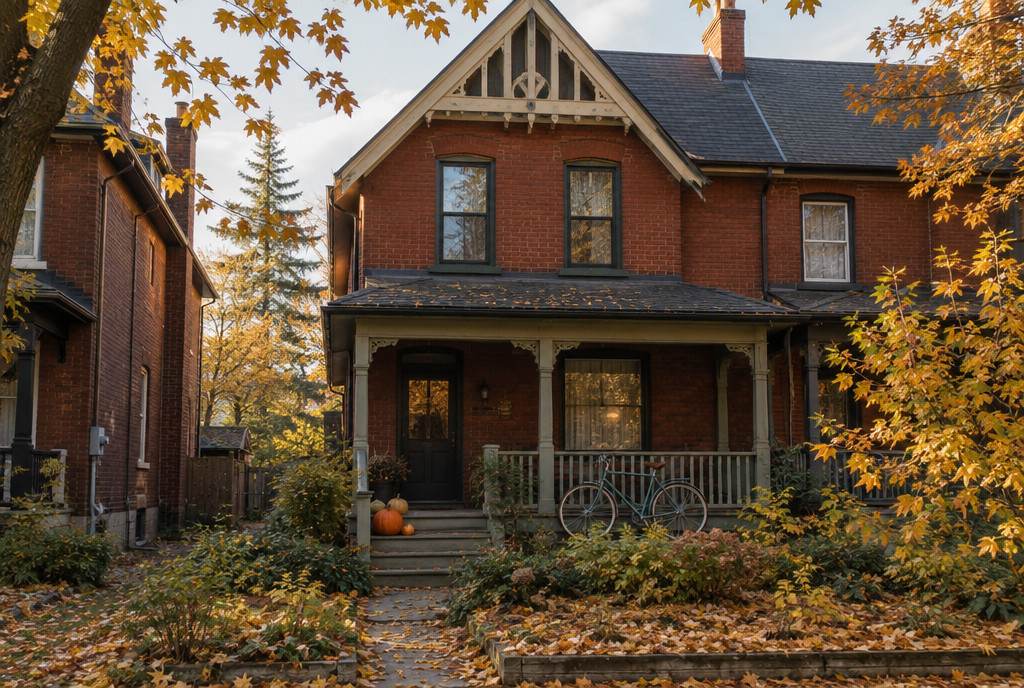
Old North, Old East, and Wortley Village hold London's century stock — yellow-brick homes with empty walls and original attics. The post-war expansion filled Byron, Oakridge, and the east end with 1950s–70s bungalows and ranches: thin batts, bare basements, aging mid-efficiency furnaces. Lake-effect snow loads make attic bypasses especially visible here — ice dams are a London specialty.
Run the planner for the full test list matched to your house — it carries into your audit request automatically.
Home Renovation Savings runs the standard stack — $600 toward assessments, insulation to $7,700, windows at $100 per opening on the two-upgrade path. London's freeze-thaw pattern makes the air-sealing + attic combination the classic qualifying pair, often largely covered by rebates after the assessment credit.
Up to $10,000 per home for insulation, windows and air sealing, plus $600 back on your assessments — if the follow-up assessment is done by December 31, 2026
Audit required
Heat pumps up to $7,500 ($12,000 ground-source), solar with battery up to $10,000, plus attic, thermostat and appliance rebates — no assessment needed
No audit required
25% back on your CMHC mortgage insurance premium after $20,000 of energy renovations
No audit required
Beyond energy, every area has its own home-health checklist — driven by local geology, water sources, housing eras, and weather. Here's London's, each item linked to its full guide. The 30-second screener personalizes this to your exact house.
London summers are among Ontario's most humid, and the city's post-war basements feel it first. Hygrometer first, then a properly sized dehumidifier with the drain hose actually connected.
Southwestern Ontario homes turn up above the guideline often enough that the region's health units push testing. One kit, three winter months, done.
Oakridge, Old North, and the post-war ring sit in the vermiculite/asbestos era — sample before attic work, and swab pre-1960 trim before any window project.
Middlesex's townships around the city run on wells in farm country — free bacterial testing plus periodic nitrate checks is the rhythm.
The gear side — monitors, alarms, kits — lives in the gear guides.
Your street's construction era predicts what an audit will find. Jump to yours — then run the planner with your exact profile.
West-end ranches and bungalows from London's post-war expansion: thin original batts, attics that started at R-10, and bare basements now being finished. The classic Oakridge audit finds an attic top-up and rim-joist sealing paying back faster than anything else — and flags aluminum wiring in the later builds before insulation work.
North London two-storeys from the poly-vapour-barrier era around the mall and university lands: nominal insulation is decent, so audits here chase comfort instead — unbalanced ducts, bonus rooms over garages, and ventilation that lags the airtightness. Duct testing is the add-on to request by name in Masonville.
London's newer executive stock at the city's north edge: code-era envelopes with big volumes to condition. Sunningdale audits are optimization audits — verifying the builder delivered the insulation you paid for, balancing long duct runs, sizing the eventual heat-pump swap with a proper F280 calculation, and assessing newer roofs for the solar + battery rebate.
London's yellow-brick century neighbourhoods. Solid-brick and balloon-frame construction means the thermal scan decides the wall strategy — and blower-door numbers here routinely reorder the whole renovation plan toward air sealing, attic, and basement first. Knob-and-tube and vermiculite checks come standard before any insulation work.
Southwest ranches and side-splits toward the ski hill and ravine lots: split-levels leak at their many wall-roof junctions, and the neighbourhood's mature-tree shading changes the solar math. Air sealing plus attic work is the reliable Byron pairing, with ice-dam diagnostics in snowy winters.
Southwest London's planned community, laid out from the late 1960s around the Westmount Shopping Centre (opened 1971): detached homes, townhomes and apartments from the 1970s and 1980s. Attic top-ups and rim-joist sealing lead the list, townhouses add party-wall and shared-attic leaks, and aging furnaces and air conditioners often come due together — the moment to size a heat pump properly.
South London's townhome and starter-home stock, including significant rental holdings: cheap, fast envelope wins — attic top-ups, weatherstripping, rim joists — that show up directly on utility-included operating costs. Landlords here can run the HRSP assessment path across multiple qualifying upgrades.
All 7 are NRCan-licensed service organizations — with direct links to their Google, HomeStars, and BBB reviews. Only assessments from the seven HRSP-approved organizations qualify for the $600 Home Renovation Savings rebate; each card says whether the provider is one of them. Full directory view →
NRCan-registered service organization
Province-wide Ontario coverage; also active in BC, AB, SK, MB and several US states
NRCan-registered service organization
Ontario-wide on NRCan's registry, from a Richmond Hill head office; also active in BC
NRCan-licensed for EnerGuide since 2001
National home-inspection franchise; EnerGuide services vary by local franchise
NRCan-registered service organization
Most of Ontario through four regional lines: Eastern 613-518-3901, Southern 647-479-8542, Southwestern 519-914-5472, and North & Central 705-998-2563
NRCan-registered service organization
Regional offices across Ontario: Toronto 416-558-8546, Eastern Ontario 613-686-5949, Niagara and Haldimand 289-267-2803, plus Mississauga, Southwestern Ontario, Windsor and the North
NRCan-registered service organization
Ontario-wide from a Markham office, with local lines for the GTA (647-792-0276) and Ottawa (613-417-0432); its own list includes Kingston, Peterborough, Barrie, Waterloo, London, Niagara, Hamilton–Halton and Windsor–Essex
NRCan-registered service organization
Ontario-wide on NRCan's registry; also Alberta, BC and Manitoba
Almost always an attic problem: warm indoor air leaking up, melting snow that refreezes at the cold eaves. The audit's thermal scan finds the exact bypasses; sealing them plus a top-up beats heat cables every time.
Typical Ontario prices are about $500–$700 for the initial evaluation and $200–$450 for the follow-up, plus HST where it applies; the City's BetterHomes London program quotes $500–$700 as typical for the first visit. The $600 Home Renovation Savings rebate covers most of that, but only for assessments from the seven HRSP-approved organizations, and only once you install two or more recommended upgrades.
Tell us about your home and we'll match you with a registered service organization — with the right tests flagged for your situation.
Email us what you’re planning, your postal code and the type of building (a house, a duplex or triplex, or a larger multi-unit building) — we’ll reply with registered service organizations for your area and which rebates apply.
Email dave@clickshift.ca