HRSP (with assessment)
Active · limits applyUp to $10,000 per home for insulation, windows and air sealing, plus $600 back on your assessments — if the follow-up assessment is done by December 31, 2026
Audit required
Which tests does my home need?
Era, heating, water, symptoms in — your flagged tests out, in 30 seconds.
Run the screener →
Heat & energy
Air
Water & moisture
Your city, read like an auditor
70 Canadian cities, each with its climate, housing age and 16 local audit and testing services.
All 70 cities →
Across Canada
Ontario region guides
Regional guide · updated October 2, 2026
Brampton's housing is newer and larger than most of the GTA — which means fewer empty walls, but bigger heating bills per household and comfort problems that scale with square footage.
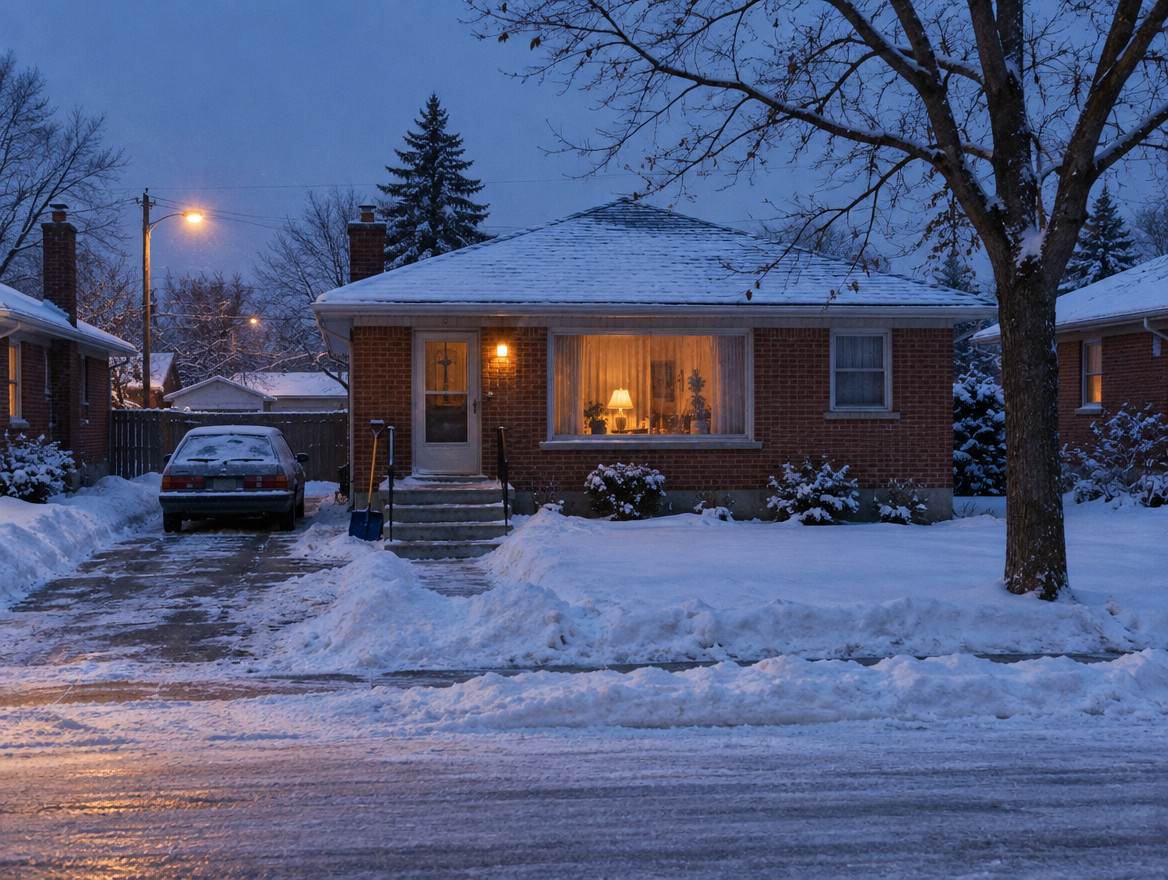
Most of Brampton went up after 1980, much of it after 2000: code-insulated walls, R-32+ attics, and two-storey layouts that concentrate problems upstairs. Large homes and multigenerational households push consumption up even when the envelope is decent — basement apartments and finished lower levels add their own comfort and ventilation questions. The audit's job here is less 'find the missing insulation' and more 'balance, size, and optimize.'
Run the planner for the full test list matched to your house — it carries into your audit request automatically.
The no-assessment stream fits many Brampton situations — heat pumps to $7,500 (or $2,000 in a gas-heated home) and attic insulation at $800–$1,250 through a participating contractor, depending on how much insulation is there now, without the two-upgrade requirement — while larger retrofit plans (insulation + windows on bigger homes) justify the assessment path and its $600 rebate. For homes with basement units, the audit also documents ventilation and safety details that matter for legal second suites.
Up to $10,000 per home for insulation, windows and air sealing, plus $600 back on your assessments — if the follow-up assessment is done by December 31, 2026
Audit required
Heat pumps up to $7,500 ($12,000 ground-source), solar with battery up to $10,000, plus attic, thermostat and appliance rebates — no assessment needed
No audit required
25% back on your CMHC mortgage insurance premium after $20,000 of energy renovations
No audit required
Beyond energy, every area has its own home-health checklist — driven by local geology, water sources, housing eras, and weather. Here's Brampton's, each item linked to its full guide. The 30-second screener personalizes this to your exact house.
New subdivisions test high often enough that Health Canada makes no exception for them — tight envelopes can concentrate what the soil delivers. One winter kit answers it.
Brampton's large households push CO₂ and humidity harder than the ventilation in many builder-spec homes was sized for. A CO₂ monitor makes the case for an HRV with data.
Basement apartments and rec rooms mean people breathing basement air full-time. Musty smell = diagnose the moisture cause first; don't just run a purifier at it.
Gas heat plus attached garages: the alarm law applies nearly everywhere in Brampton. Check the printed expiry dates — many alarms installed at build are past theirs.
The gear side — monitors, alarms, kits — lives in the gear guides.
All 6 are NRCan-licensed service organizations — with direct links to their Google, HomeStars, and BBB reviews. Only assessments from the seven HRSP-approved organizations qualify for the $600 Home Renovation Savings rebate; each card says whether the provider is one of them. Full directory view →
NRCan-licensed service organization
Toronto, York, Durham and Peel regions, from its office in Aurora
$500 + HST initial · $250 + HST follow-up
NRCan-registered service organization
Province-wide Ontario coverage; also active in BC, AB, SK, MB and several US states
NRCan-registered service organization
Ontario-wide on NRCan's registry, from a Richmond Hill head office; also active in BC
NRCan-registered service organization
Most of Ontario through four regional lines: Eastern 613-518-3901, Southern 647-479-8542, Southwestern 519-914-5472, and North & Central 705-998-2563
NRCan-registered service organization
Ontario-wide from a Markham office, with local lines for the GTA (647-792-0276) and Ottawa (613-417-0432); its own list includes Kingston, Peterborough, Barrie, Waterloo, London, Niagara, Hamilton–Halton and Windsor–Essex
NRCan-registered service organization
Ontario-wide on NRCan's registry; also Alberta, BC and Manitoba
Typically: duct imbalance, a missed insulation bay or two, ventilation running below occupancy needs, and oversized equipment. Newer-home audits are optimization audits — smaller fixes, but cheap ones with quick paybacks, plus proper sizing for your eventual heat pump.
It changes what to ask for: ventilation assessment and combustion safety matter more with more occupants and closed-off zones, and the audit's documentation helps with second-unit compliance conversations.
Tell us about your home and we'll match you with a registered service organization — with the right tests flagged for your situation.
Email us what you’re planning, your postal code and the type of building (a house, a duplex or triplex, or a larger multi-unit building) — we’ll reply with registered service organizations for your area and which rebates apply.
Email dave@clickshift.ca