How Northern BC is built
- Before 1961 11%
- 1961–1990 58%
- 1991–2000 13%
- 2001 or later 18%
This page covers Prince George and the Regional District of Fraser-Fort George, and Dawson Creek, Fort St. John and the Peace River Regional District. No city we cover is within 390 km, so the energy advisors listed here come straight from NRCan's list for Prince George, Dawson Creek and Fort St. John postal codes.
Testing a well in Northern BC
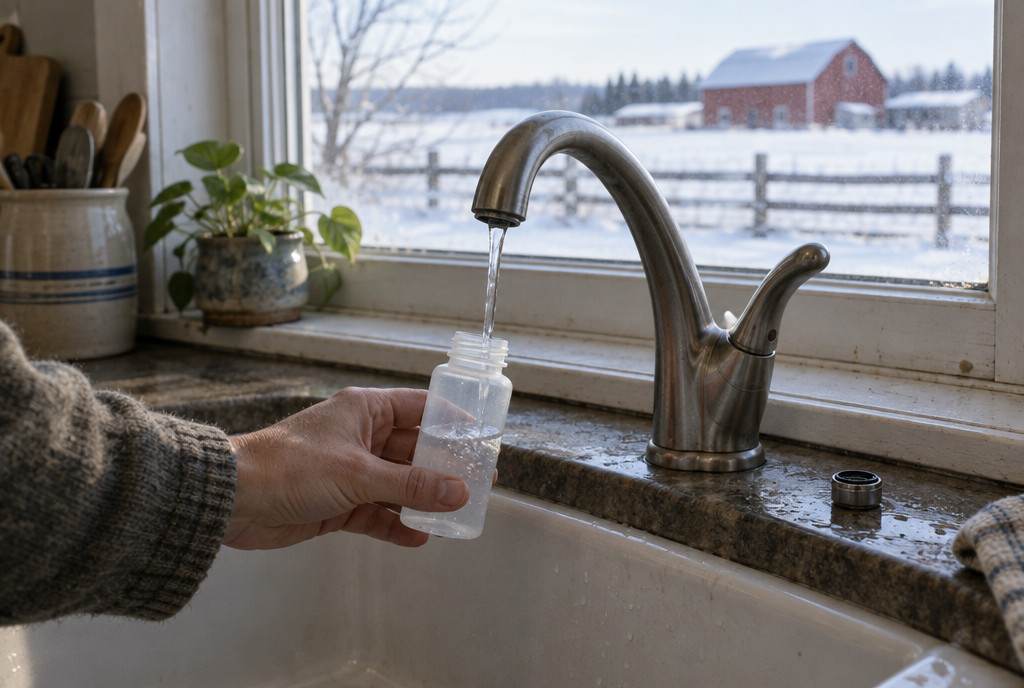
There's no free provincial program: use a qualified lab (search the CALA directory), which supplies the bottles. HealthLinkBC recommends testing for bacteria at least once a year and for chemistry when the well is new and annually after that.
What to test for
- Bacteria (total coliforms and E. coli): at least once a year, and right away if the water's clarity, colour or taste changes.
- Chemistry when the well is new and every year after: HealthLinkBC names nitrates, fluoride and metals such as arsenic, lead, copper and manganese as the most common concerns in B.C. groundwater.
Choosing a lab
Search the CALA directory for an accredited lab near you; the lab supplies sterile bottles and instructions, and charges for the analysis. Read the instructions carefully and follow them exactly, and keep every result for future reference.
What Northern Health does, and doesn’t do
Northern Health looks after water testing for permitted water systems but doesn't test individual homes, and it doesn't recommend specific labs: any accredited lab in B.C. will do. It says private supplies should be tested for bacteria at least once a year, that chemical results show whether anything exceeds health standards or aesthetic objectives, and that a local environmental health officer can help you interpret results or find a certified lab. It also notes that contaminants can get into a well through cracks in the casing, poorly fitted lids or other structural faults, and that a well close to sources of pollution can pick up bacteria, nitrates or other chemicals.
If the results show bacteria
HealthLinkBC says water with E. coli is not safe to drink: treat it before drinking, preparing food or brushing teeth (boiling is a short-term option), then find and fix the source, with long-term treatment if the source can't be corrected. Total coliforms without E. coli can mean the well needs better sanitation or physical upgrades, or that surface water may be getting in. Re-test after floods, drought or similar events, and don't rely on a neighbour's result: a safe test next door doesn't mean your water is safe.
Before disinfecting, the province's guide to simple chlorination asks you to check the wellhead:
- Sewage sources near the well, such as manure or compost piles or a septic field.
- Ground that slopes toward the well or lets water pond around it.
- A missing, cracked or damaged well cap, or one that lets water or vermin in.
- Casing that sticks up less than 30 cm (1 ft) above the ground or pump-house floor, or a gap or cracks in the seal around it.
Fix those first, or the well stays vulnerable. A registered well driller or pump installer has to do any surface-seal repair or casing extension, and the guide warns that chlorine vapour is dangerous in confined spaces such as pump houses, well pits and crawl spaces.
Read more: The well water guide.
Communities we cover in Northern BC
Every town, village and hamlet below is part of this page, grouped by municipality (2021 Census population).
- Prince George 76,708
- Fort St. John 21,465
- Dawson Creek 12,323
- Mackenzie 3,281
- Tumbler Ridge 2,399
- Chetwynd 2,302
- Taylor 1,317
- Valemount 1,052
- Hudson's Hope 841
- Pouce Coupe 762
- McBride 588
Well water testing in Northern BC: common questions
Is well water testing free in Northern BC?
No. B.C. has no free provincial program; a qualified lab charges for the analysis and supplies the bottles.
How often should I test my well?
HealthLinkBC recommends bacteria testing at least once a year, and chemistry when the well is new and every year after.
What chemicals should I test for?
HealthLinkBC names nitrates, fluoride and metals such as arsenic, lead, copper and manganese as the most common chemicals of concern in B.C. groundwater.
Where do I find a lab?
Search the CALA directory of accredited laboratories; the lab provides the bottles and instructions.
What if my well water test shows E. coli?
HealthLinkBC says the water is not safe to drink. Treat it before drinking, cooking or brushing teeth (boiling works short term), find and fix the source, and disinfect the well once the wellhead is sound.