The envelope · verified October 8, 2026
Roofs and attics: seal first, then insulate
The attic is a favourite starting point for many homeowners, yet NRCan notes basements and uninsulated walls often lose more heat than a typical attic. The attic's bigger problem is usually warm, moist air leaking up from the house, which drives frost, mould and ice dams.
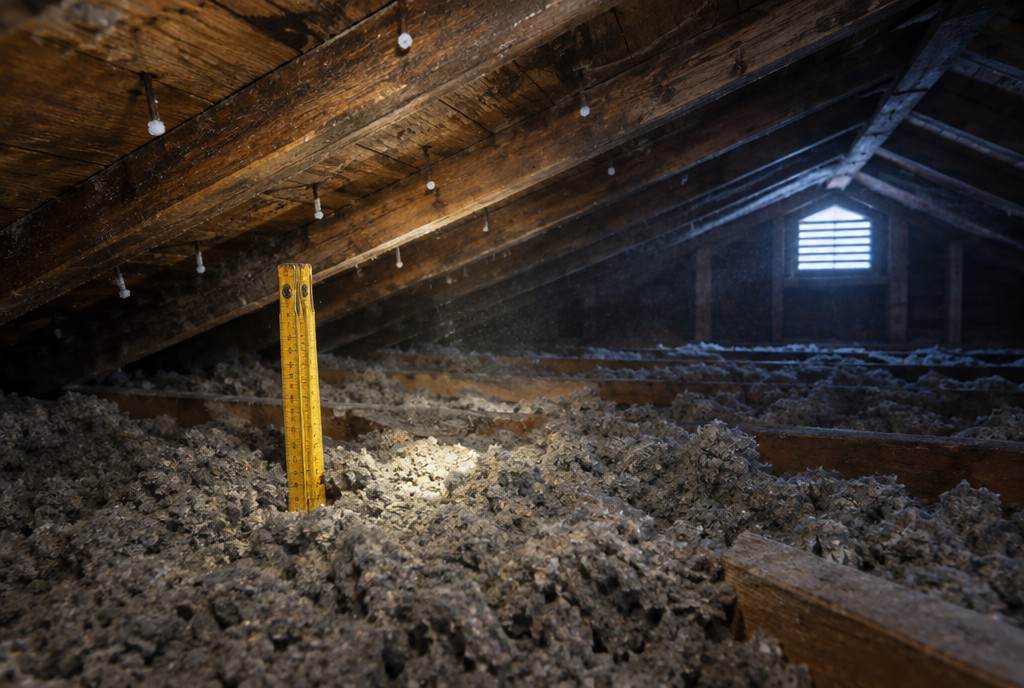
- R-33 Average ceiling insulation (RSI 5.84) in new homes built 1990–96, from an NRCan field study of 163 houses Source: NRCan researchers ↗
- R-45 to R-80 NRCan's recommended attic insulation for retrofits, by climate zone (RSI 7.9–14.1) Source: NRCan ↗
- 1/300 Minimum attic vent area as a share of the insulated ceiling area under the National Building Code Source: National Building Code ↗
How heat and moisture escape through the attic
In winter a heated house behaves like a chimney, pushing warm air up through the top-floor ceiling into the attic (CMHC ↗). Leaks around chimneys, vents, plumbing pipes and electrical boxes can account for substantial heat loss, and the moist air they carry condenses or frosts on cold roof sheathing (NRCan ↗). Adding insulation makes the attic colder, so moist air escaping into it is more likely to condense before it can be vented; NRCan calls air sealing the attic “essential” (NRCan ↗).
Insulation then and now
New houses built from 1990 to 1996 averaged RSI 5.84 (R-33) of ceiling insulation in an NRCan field study of 163 homes (NRCan researchers ↗). The code minimum for new homes is now higher, and NRCan recommends more again for retrofits. Heating degree-days measure how cold a climate is:
| Climate zone | Heating degree-days | Example cities | NRCan retrofit target | 2020 code minimum, new homes |
|---|---|---|---|---|
| Zone 4 | Under 3,000 | Vancouver 2,825; Victoria 2,650 | RSI 7.9 (R-45) | RSI 6.91 (R-39) |
| Zone 5 | 3,000 to 3,999 | Toronto 3,520 | RSI 9.7 (R-55) | RSI 8.67 (R-49) |
| Zone 6 | 4,000 to 4,999 | Halifax 4,000; Montréal 4,200; Ottawa 4,440 | RSI 10.6 (R-60) | RSI 8.67 (R-49) |
| Zone 7A | 5,000 to 5,999 | Calgary 5,000; Edmonton 5,120; Winnipeg 5,670 | RSI 14.1 (R-80) | RSI 10.43 (R-59) |
| Zones 7B and 8 | 6,000 and up | Whitehorse 6,580; Yellowknife 8,170 | RSI 14.1 (R-80) | RSI 10.43 (R-59) |
Retrofit targets are nominal values from NRCan (NRCan ↗). Code minimums are effective values (which count the framing) for ceilings below attics in homes without a heat recovery ventilator, and degree-days come from the code's climate tables (National Building Code ↗).
Signs of trouble in the attic
- Ice dams and icicles at the eaves, or ceiling leaks only in spring, when ice that built up on the sheathing melts (CMHC ↗).
- Frost on the underside of the roof after a cold snap. Some is normal, but NRCan says buildup of 10 mm (⅜ in.) or more is a reason to check for air leaks and blocked vents (NRCan ↗).
- Discoloured, dirty-looking patches in the insulation, where it has been filtering air leaking up from below (NRCan ↗; CMHC ↗).
- Snow melting first over certain spots, such as the hatch, a roof-ducted fan or a plumbing vent, or a horizontal melt line on a 1½-storey house where the knee wall meets the ceiling (NRCan ↗).
- Water stains or mould on sheathing and rafters, or a mouldy smell in the house, usually in summer (CMHC ↗).
- Thin insulation at the edges above the outside walls, which leaves cold spots where wall meets ceiling (NRCan ↗).
What an energy advisor checks
Clear access to the attic is a condition of an EnerGuide evaluation; the advisor measures ceiling insulation and photographs the attic space (NRCan ↗). An attic inspection looks at:
- Insulation type, condition, depth and coverage, compared with recommended levels (NRCan ↗).
- Moisture: roof leaks, stains, mould, rot, frost, and vents blocked by insulation (NRCan ↗).
- Hazards to deal with before any work: chimney clearances, recessed lights, wiring, animal droppings and vermiculite (NRCan ↗).
- Air leaks, found with a blower door, which CMHC notes can “amplify the leakage,” and a thermal camera (CMHC ↗; NRCan ↗).
Fixes, from simplest to biggest
| Fix | Typical cost | What it does | DIY or pro? |
|---|---|---|---|
| Weatherstrip, latch and insulate the hatch | Low | Treat it like an exterior door: caulk the frame, weatherstrip, add a latch that holds it tight and insulate the panel (NRCan ↗). New homes need hatches insulated to at least RSI 2.6 (R-15) (National Building Code ↗). | DIY |
| Seal leaks through the ceiling | Low to moderate | Seal plumbing stacks, wiring, wall top plates, ducts and chimney gaps, using non-combustible materials at chimneys (NRCan ↗). CMHC says a thorough job on most attics should take a two-person crew no more than a day (CMHC ↗). | DIY or pro |
| Fix bathroom fan ducts | Low | Fans must vent outside. In the attic, use solid metal duct, insulated and sloped to the outside, with taped or sealed joints (CMHC ↗). | DIY or pro |
| Install baffles at the eaves | Low | Keeps soffit vents clear of insulation. Code calls for at least 25 mm of air space at baffles and 63 mm above the insulation elsewhere (National Building Code ↗). | DIY |
| Deal with recessed lights | Low to moderate | Standard pot lights leak and can be a fire hazard under insulation; use approved airtight fixtures or covers, or flush LED fixtures (NRCan ↗). | Electrician |
| Top up the insulation | Moderate | Blow loose fill over the sealed ceiling to your zone's target. Agree with the contractor on the number of bags, settled depth and RSI (NRCan ↗). | DIY with a rented blower, or pro |
| Cathedral ceilings and flat roofs | High | Dense-pack at 56 to 72 kg/m³, add rigid board under the ceiling, or insulate from above when re-roofing; NRCan says a new insulated roof costs several thousand dollars (NRCan ↗). | Pro |
Ice dams and ventilation
Ice dams form when attic heat melts snow on the roof; the water runs down to the cold overhang, refreezes and backs up under the shingles. Uninsulated attics rarely get them, and neither do well-sealed, well-insulated ones; roofs with many valleys and dormers are more prone (NRCan ↗). The lasting fix is to keep house heat out of the attic by sealing and insulating (NRCan ↗; CMHC ↗). Where a baffle leaves only about 100 mm (4 in.) for insulation at the eaves, spray foam or cut extruded polystyrene helps (NRCan ↗).
Quick fixes fall short. Self-sealing membranes under the shingles, required on the lower roof of new houses, stop leaks but not the ice; heating cables use a significant amount of electricity; chopping at ice damages the roof (NRCan ↗).
Ventilation is the second line of defence. The National Building Code requires vent area of at least 1/300 of the insulated ceiling area, or 1/150 on roofs sloped less than 1 in 6, with at least 25% of the openings high and 25% low (National Building Code ↗). CMHC calls attic ventilation “overrated” and warns that adding vents to a wet attic can pull more moist house air up and make it worse (CMHC ↗).
Cathedral ceilings and flat roofs
Roofs without an attic have little room for insulation or ventilation, and NRCan says they need a qualified contractor (NRCan ↗). Dense-packing eliminates the roof's ventilation, so NRCan says it is generally not recommended without first checking with your building authority; ice dams on these roofs are often best fixed when re-roofing (NRCan ↗; CMHC ↗).
Mistakes to avoid
- Adding vents or fans instead of sealing. Electric attic fans can pull house air into the attic, increasing heat loss and moisture (NRCan ↗).
- Insulation against chimneys. Keep a 75 mm (3 in.) clearance with a non-combustible barrier that rises above the insulation (NRCan ↗).
- Burying standard pot lights or blocking soffit vents (NRCan ↗).
- Covering wet insulation. Fix the source and let it dry first (NRCan ↗).
- Expecting insulation to stop air. NRCan says not to rely on batt, blown or poured insulation in place of air sealing (NRCan ↗).
- Disturbing vermiculite or droppings. Vermiculite insulation from before 1990 may contain asbestos; leave it alone and read our vermiculite insulation guide before any attic work (NRCan ↗). Bat and bird droppings can grow moulds that cause illness (CMHC ↗).
Rebates and next steps
Programs open and close often, so check our rebates by province for what is available now. In Ontario, start with Home Renovation Savings assessments. Some programs include a post-upgrade EnerGuide evaluation that needs proof of the work, so keep paid invoices and receipts (NRCan ↗).
To compare this work with other upgrades at your local fuel prices, try the upgrade payback calculator, then put the order of work into your home plan. You can also find a registered energy advisor near you.
Run your numbers
See what this kind of upgrade could pay back at your city’s energy prices, then put the work in a sensible order in your home plan.
Common questions
How much attic insulation do I need in Canada?
NRCan recommends RSI 7.9 (R-45) in the mildest zone, rising to RSI 14.1 (R-80) where there are 5,000 or more heating degree-days. New homes must meet at least RSI 6.91 to 10.43 effective (about R-39 to R-59).
Should I air seal before adding attic insulation?
Yes. NRCan calls attic air sealing essential, because more insulation makes the attic colder and leaking house air more likely to condense. CMHC notes a thorough job means clearing insulation from each joist bay to reach the leaks.
What causes ice dams?
Heat from the house warms the roof and melts snow, which refreezes at the cold eaves. NRCan and CMHC both name air sealing and insulating the attic as the preferred fix.
Does my attic need more vents?
Usually not. The building code requires vent area of at least 1/300 of the ceiling area, but CMHC calls attic ventilation overrated and says stopping air leaks is the way to fix a wet attic.
Is vermiculite attic insulation dangerous?
Vermiculite sold before 1990 may contain asbestos. NRCan says it poses very little risk if left undisturbed, so do not move it, and have it assessed before any attic work.
Can I insulate a cathedral ceiling?
Yes, but it is a job for a qualified contractor. Options include dense-pack insulation, rigid board added under the ceiling, or insulation added from above when the roof is replaced.
Sources
- NRCan, Keeping the Heat In, Section 5: Roofs and attics (modified 2024-12-23) ↗
- NRCan, Keeping the Heat In, Section 2: How your house works (modified 2025-01-14) ↗
- NRCan, Keeping the Heat In, Section 1: Introduction (modified 2025-01-14) ↗
- NRCan, Keeping the Heat In, Section 4: Comprehensive air leakage control (modified 2025-01-14) ↗
- CMHC, About Your House CE13: Attic Venting, Attic Moisture, and Ice Dams (rev. 2007, PDF) ↗
- Gusdorf and Parekh (NRCan Buildings Group), Energy Efficiency and Indoor Air Quality in R-2000 and Conventional New Houses in Canada, ACEEE Summer Study 2000 (Tables 2 and 4) ↗
- National Research Council Canada, National Building Code of Canada 2020, second printing (2025): Part 9 and Appendix C Table C-2 ↗
- NRCan, EnerGuide energy efficiency home evaluations (modified 2024-12-23) ↗
- NRCan, How do I prepare for an EnerGuide home evaluation? (modified 2025-01-14) ↗
Figures checked against these pages on October 8, 2026. Programs and prices change, so confirm on the official page before you spend.
Have your own house measured
Tell us where you are and what you’re planning. We’ll connect you with a registered service organization for your area — no spam, no shared lead lists.