Toronto is one of the best-funded places in Canada to fix a house right now: provincial rebates, the City's own low-interest HELP loans, and a $600 assessment rebate can stack on the same project. It's also a city of old, leaky housing — which is exactly why the money exists.
Ontario
The housing stock, read like an auditor
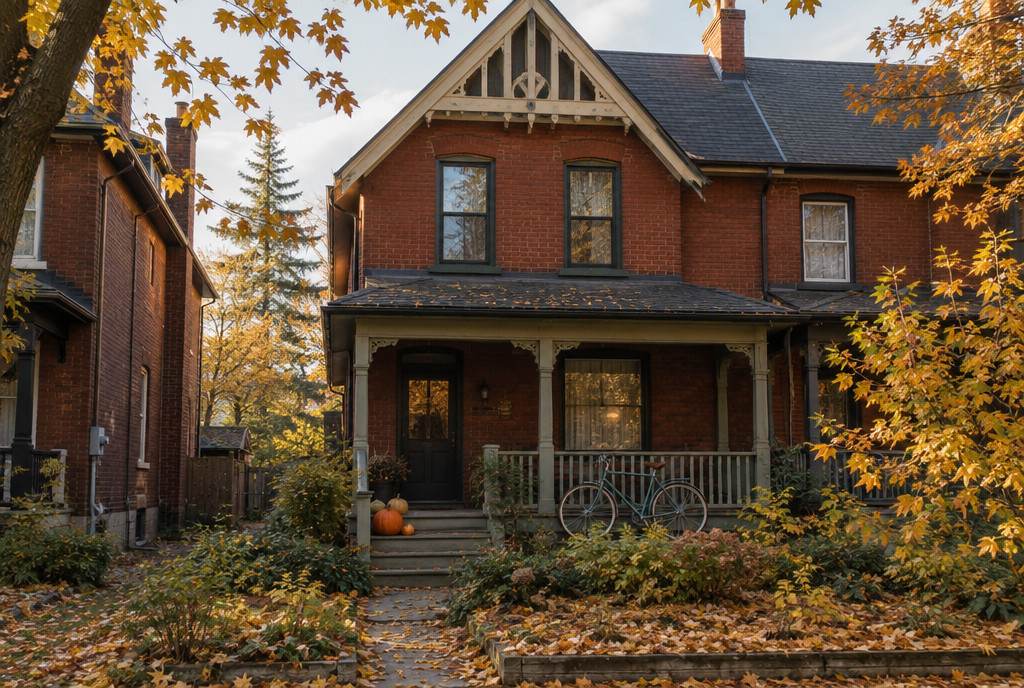
The classic Toronto house is a pre-war brick semi or Victorian rowhouse — solid masonry walls with no cavity to insulate, original attics, and air leakage everywhere. Ring around that core and you hit the post-war bungalows and side-splits of Scarborough, North York, and Etobicoke: empty 2×4 walls, R-10 attics, bare-concrete basements. Both profiles reward an audit-first approach, because the fixes differ completely — solid brick needs an interior or exterior insulation strategy, while post-war frame walls can often be drilled and filled.
What audits find in Toronto
Attic bypasses around chimneys and pot lights driving ice dams on brick semis
Knob-and-tube remnants in pre-1950 homes that block insulation work until an electrician signs off
Uninsulated solid-brick walls misdiagnosed as 'needs new windows'
Bare foundation walls in post-war bungalows losing 20%+ of the home's heat
Vermiculite in mid-century attics — sample before touching
Radon test — Health Canada recommends it for every home
Run the planner for the full test list matched to your house — it carries into your audit request automatically.
The rebate angle
Toronto homeowners uniquely stack three layers: Home Renovation Savings (insulation up to $7,700, heat pumps up to $7,500, and the $600 assessment rebate, with the follow-up done within 180 days of the first assessment or by December 31, 2026, whichever comes first), the City's HELP program (loans to $125,000 at rates the City resets quarterly, most projects requiring the same EnerGuide assessment), and for CMHC-insured recent buyers, the 25% Eco Improvement premium refund. One assessment, booked through one of the program's seven approved service organizations, unlocks all three — which is why booking it is step one, not step five.
Up to $10,000 per home ($5,000 if heated with Enbridge gas), including $600 back on your two assessments, for insulation, windows, air sealing and more — if the follow-up assessment is done by December 31, 2026
City loans up to $125,000 (or 10% of your home's assessed value) for energy retrofits, repaid on your property tax bill
Audit requiredVerified 2026-10-08
Monitor & test in Toronto: air, water, and what's in the walls
Beyond energy, every area has its own home-health checklist — driven by local geology,
water sources, housing eras, and weather. Here's Toronto's, each item linked to
its full guide. The 30-second screener personalizes this
to your exact house.
Levels vary house to house across the city — a brick semi and the detached next door can read completely differently. Health Canada's advice is universal: run the 3-month winter kit, whatever your postal code.
Wildfire smoke now reaches Toronto summers most years. A true-HEPA purifier sized to the bedroom, plus a PM2.5 monitor to prove it's working, is the practical defence in a leaky pre-war house.
Pre-1960 stock dominates the old city, so swab-test before any trim or window work — and if your home still has its original water service, ask Toronto Water about lead service line replacement and test a first-draw sample.
Solid-masonry foundations and humid lake summers make musty basements Toronto's default complaint. Diagnose ventilation vs. cold-surface first — the fix differs completely.
The gear side — monitors, alarms, kits — lives in the gear guides.
Registered advisors serving Toronto
All 11 are NRCan-licensed service organizations — with direct links to their
Google, HomeStars, and BBB reviews. Only assessments from the seven HRSP-approved
organizations qualify for the $600 Home Renovation Savings rebate; each card says whether the
provider is one of them. Full directory view →
Regional offices across Ontario: Toronto 416-558-8546, Eastern Ontario 613-686-5949, Niagara and Haldimand 289-267-2803, plus Mississauga, Southwestern Ontario, Windsor and the North
Ontario-wide from a Markham office, with local lines for the GTA (647-792-0276) and Ottawa (613-417-0432); its own list includes Kingston, Peterborough, Barrie, Waterloo, London, Niagara, Hamilton–Halton and Windsor–Essex
Is an energy audit worth it on a 100-year-old Toronto semi?
Old solid-brick homes benefit most: the audit distinguishes the fixes that work on masonry (air sealing, attic, basement, interior wall strategies) from the ones that don't, and its blower door number is usually dramatic enough to reorder your whole renovation plan.
Do Toronto condos qualify?
EnerGuide assessments and most rebates target houses and towns with their own envelope. In a condo, the corporation owns the envelope — your levers are in-suite sealing, and pushing the board toward a building-level audit.
Plan it properly in Toronto
Tell us about your home and we'll match you with a registered service organization — with the right tests flagged for your situation.