Learn · 15 topics · verified October 8, 2026
Keeping the heat in: how your house really works
Every upgrade decision comes down to a few numbers: how much heat leaves through each part of the house, how much a fix keeps in and what the equipment costs to run. These guides set out those numbers from NRCan, Health Canada, the National Building Code and other official sources, with the sources listed on every page.
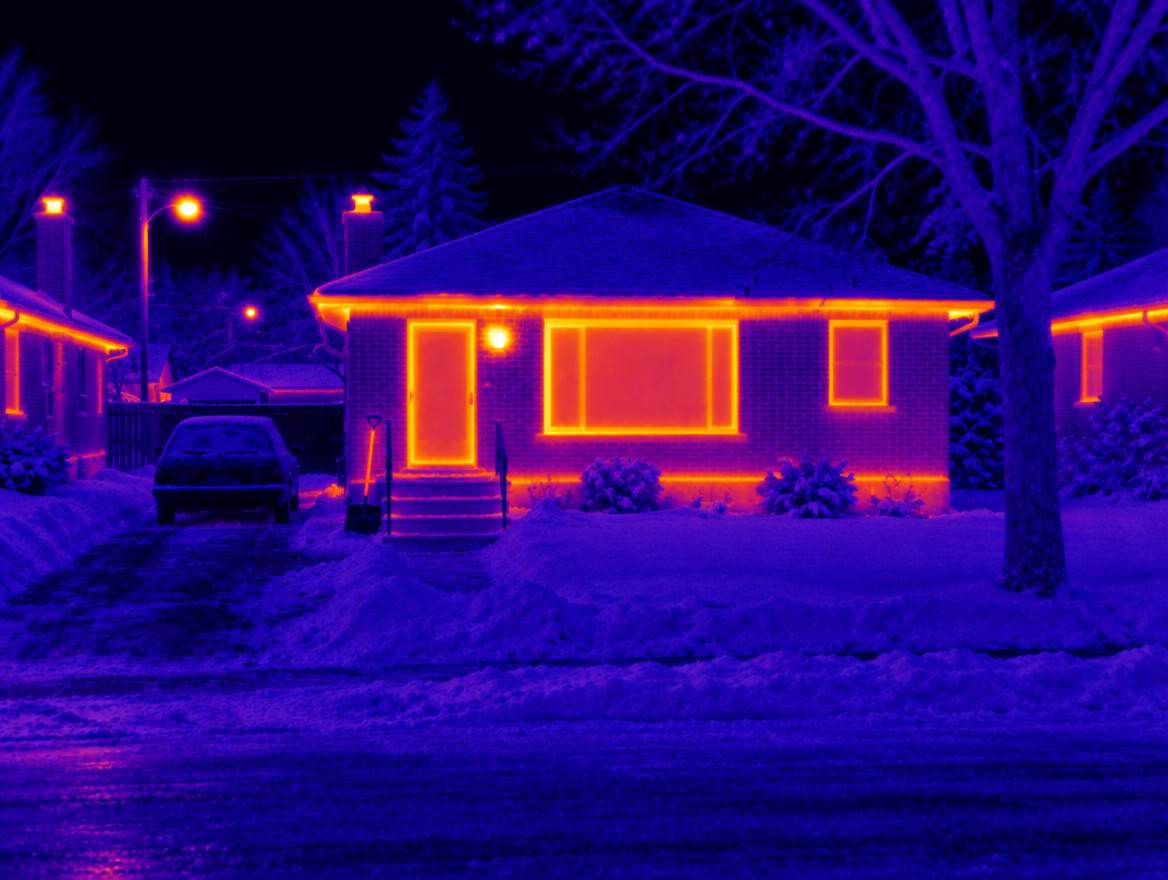
Headline numbers
- About 25% of a home's total heat loss can go through the basement Foundations and basements →
- Up to 35% of a home's heat loss can go through windows, doors and skylights Windows and doors →
- 100× more moisture carried by one small air leak than by diffusion through the same area Air sealing →
- ≈2% Heating energy saved for each 1°C of setback held for 8 hours Thermostat management →
- 17.2% of energy in the average Canadian home goes to water heating Water heaters →
- 100 GJ Average yearly energy use of a Canadian household EnerGuide ratings →
NRCan’s heat-loss shares describe what each part of a house can account for. They vary from house to house, so they aren’t meant to be added together. Each figure links to the guide that cites its source.
Start with the envelope (the shell of the house that holds heat in), then air and moisture, then the equipment that heats, cools and makes hot water. Already have an EnerGuide report? The last two guides explain what it tells you.
Worked examples What upgrades really save: four houses, every number shown → A 1970s gas-heated house in Ottawa, a 1950s electric bungalow in Winnipeg, a 1920s oil-heated house in Halifax and a 2000s Toronto semi, run through the same model as our calculators, step by step.The envelope
The shell that holds the heat in: foundation, walls, roof, windows and doors, and the air leaks between them.
Foundations and basements
Fix water first, seal the rim joist, then insulate, and test for radon before you finish.
About 25% of a home's total heat loss can go through the basement
Read the guide →Walls
Older frame walls are often partly empty, and many can be filled without opening them up.
About 20% of a home's heat loss can go through the walls
Read the guide →Roofs and attics
Stop warm, moist air leaking up from the house first: it drives frost, mould and ice dams.
R-45 to R-80 NRCan's recommended attic insulation for retrofits, by climate zone (RSI 7.9–14.1)
Read the guide →Windows and doors
What U-factors say about your windows, and when sealing or storms beat replacement.
Up to 35% of a home's heat loss can go through windows, doors and skylights
Read the guide →Air sealing
Find the leaks with a blower door, seal top and bottom first, and keep combustion safe.
100× more moisture carried by one small air leak than by diffusion through the same area
Read the guide →Air and moisture
How water vapour and fresh air move through a house, and how to control both as the house gets tighter.
Airflow and moisture control
Where indoor moisture comes from, the humidity to aim for, and how to stop condensation.
≈50 L a week Moisture a family of four adds to indoor air
Read the guide →Ventilation management
Code fan sizes, how long to run them, and when a tighter house needs makeup air.
5–10 L/s Outdoor air per occupant in ventilation guidelines
Read the guide →HRVs and ERVs
How heat recovery ventilators work, which ratings to compare and how to keep them balanced.
70–80% Heat a typical HRV recovers from outgoing air
Read the guide →Heating, cooling and hot water
The equipment that uses the energy: how efficient each type is, how to run it and how to keep it safe.
Heating systems and controls
Furnaces, boilers, baseboards, heat pumps and wood compared by efficiency and lifespan.
95% Minimum AFUE for gas and propane furnaces made since July 3, 2019
Read the guide →Thermostat management
What a setback saves, the 17°C and 20°C schedule, and how heat pumps and baseboards differ.
≈2% Heating energy saved for each 1°C of setback held for 8 hours
Read the guide →HVAC maintenance
How often each system needs service, what a tune-up covers and carbon monoxide safety.
Up to 25% Extra electricity a poorly maintained heat pump can use
Read the guide →Water heaters
Tank, tankless, heat pump and condensing heaters, safe settings and when to replace.
17.2% of energy in the average Canadian home goes to water heating
Read the guide →Air conditioning and cooling
What SEER2 and CEER mean, keeping heat out first, and upkeep that protects efficiency.
68% of Canadian households had air conditioning or a cooling heat pump in 2025 (83% in Ontario)
Read the guide →Ratings and audits
What an EnerGuide evaluation measures, and what an older report is still good for.
EnerGuide ratings
What the gigajoule number means, how to read the label and what an evaluation costs.
100 GJ Average yearly energy use of a Canadian household
Read the guide →Already had an energy audit?
What an older EnerGuide report is still good for, and when programs want a new one.
409,000+ households completed upgrades through the Canada Greener Homes Grant (2021–2025)
Read the guide →