How Northern BC is built
- Before 1961 11%
- 1961–1990 58%
- 1991–2000 13%
- 2001 or later 18%
This page covers Prince George and the Regional District of Fraser-Fort George, and Dawson Creek, Fort St. John and the Peace River Regional District. No city we cover is within 390 km, so the energy advisors listed here come straight from NRCan's list for Prince George, Dawson Creek and Fort St. John postal codes.
What an evaluation finds in Northern BC
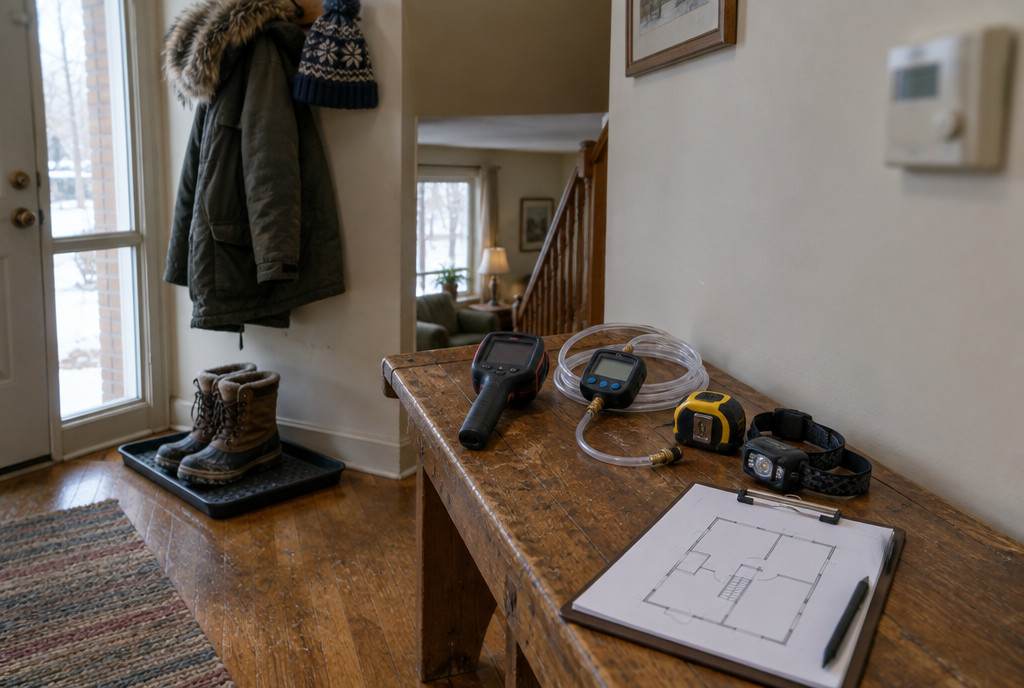
Of the 42,520 houses in the eleven municipalities listed here (single-detached, semi-detached, row houses, duplexes and mobile homes), 11% were built before 1961 and 69% before 1991, according to the 2021 Census. The typical house here dates from 1971–1980. An EnerGuide evaluation is how you find out what that means for yours: the blower door measures air leakage, the advisor inspects the attic, walls, basement, windows and heating system, and the report ranks upgrades by what they'd save.
Environment and Climate Change Canada's 1981–2010 climate normal at Prince George STP (4.0 km from Prince George) is 4,673 heating degree-days a year, with a January mean of −6.7°C. The more heating a climate needs, the more each fix is worth, which is why the ranked list in the report matters.
On census day (May 11, 2021), 10% of the 72,060 private dwellings in the Fraser-Fort George and Peace River regional districts were not anyone's permanent home. If you're evaluating a cottage or a house you're about to buy, tell the advisor how and when it's heated; the report models the house as a year-round home.
What it costs in Northern BC
There's no provincial price list; the City of Nanaimo quotes $400–$500 as typical for an existing home.
Most providers quote the initial (pre-upgrade) and follow-up (post-upgrade) visits separately, and organizations based in a city may add a travel fee for rural addresses. Rebate programs that pay on measured improvement need both visits, so ask for the combined price, travel included.
How a home energy assessment works
- Initial evaluation, about 2–3 hours. The advisor measures and inspects the house and runs the blower door test.
- Report and EnerGuide rating. You get the home's energy rating and a list of recommended upgrades with estimated savings.
- Do the work. Most rebate programs only count upgrades done after the initial evaluation.
- Follow-up evaluation. A second visit measures the improvement, which is what most rebates pay on.
Read more: What a home energy audit involves.
Communities we cover in Northern BC
Every town, village and hamlet below is part of this page, grouped by municipality (2021 Census population).
- Prince George 76,708
- Fort St. John 21,465
- Dawson Creek 12,323
- Mackenzie 3,281
- Tumbler Ridge 2,399
- Chetwynd 2,302
- Taylor 1,317
- Valemount 1,052
- Hudson's Hope 841
- Pouce Coupe 762
- McBride 588
NRCan-registered service organizations serving Northern BC
NRCan's list of service organizations (checked October 8, 2026) shows 16 organizations registered for postal codes in Prince George, Dawson Creek and Fort St. John (V2K, V2L, V2M, V2N, V1G, V1J). Registration means an organization lists those postal areas, not that it has an advisor in town: confirm they travel to your community, and ask about wait times and travel fees.
- Acacia Engineering
- CoEfficient Building Science
- Energy Werx Profile
- Enerhome Consulting
- EnerSolution Profile
- ER Energy Solutions
- Green Canada Home Advisors Profile
- HomeTech Energy Solutions
- The Energuy Profile
- VerdaTech Energy Management and Consulting
- Map Energy
- Sensible Home Inspections
- Canada Energy Audit Profile
- Engreen Home
- GETS Energy
- Isle Energy Consulting
Rebates an evaluation unlocks in Northern BC
Home energy audits in Northern BC: common questions
How much does a home energy audit cost in Northern BC?
There's no provincial price list; the City of Nanaimo quotes $400–$500 as typical for an existing home. Ask whether a travel fee applies to your address.
Which companies do EnerGuide evaluations in Prince George?
NRCan's list (checked October 8, 2026) shows 16 organizations registered for postal codes in Prince George, Dawson Creek and Fort St. John; 10 of them list all 3. Confirm they travel to your community before you book.
How long does an EnerGuide evaluation take?
The initial visit usually takes two to three hours, including the blower door test. The follow-up visit after upgrades is shorter.
Is a home energy audit worth it for an older house in Northern BC?
69% of local houses were built before 1991 (2021 Census), and the area averages about 4,673 heating degree-days a year. Older houses in a cold climate are where a ranked upgrade list pays off most, and most rebates need the evaluation first.
Which rebates need an EnerGuide evaluation in British Columbia?
Currently: BC Home Energy Improvement Bonus ($20 for every percentage-point your home improves — $750 minimum, $2,000 maximum — or $300 for any two upgrades). Check the program page for current terms before you book.