Heating, cooling and hot water · verified October 8, 2026
Air conditioning and cooling: energy use, ratings and upkeep
68% of Canadian households now have air conditioning or a heat pump that cools, including 83% in Ontario. Cooling is a small share of yearly energy in most homes, but it drives summer bills and peak demand, and shading and upkeep cut it.
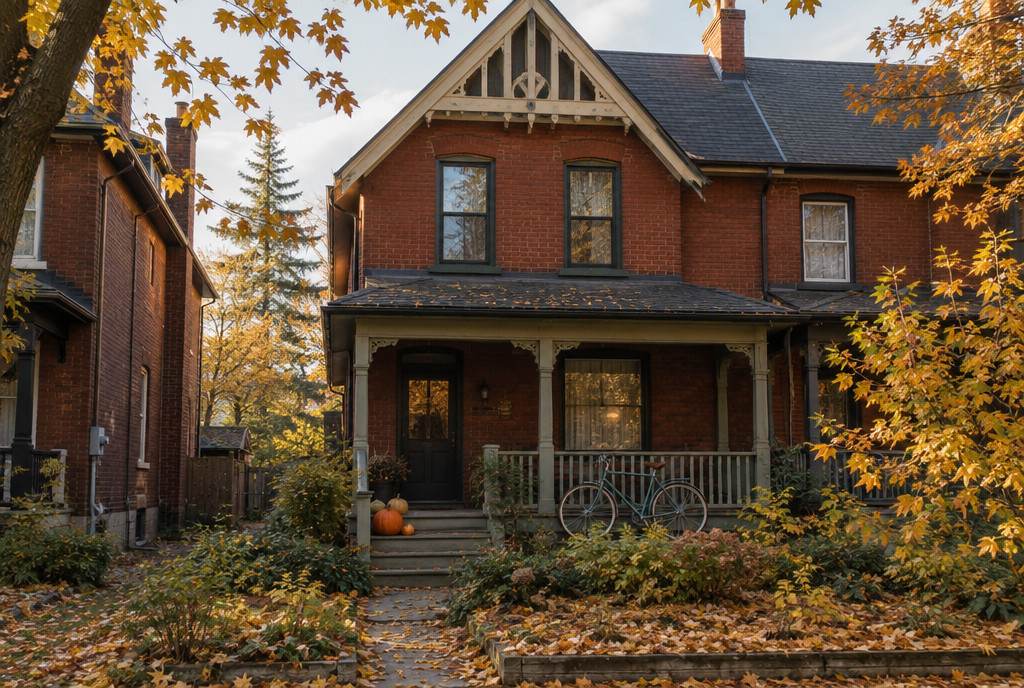
- 68% of Canadian households had air conditioning or a cooling heat pump in 2025 (83% in Ontario) Source: Statistics Canada ↗
- 13.4 Minimum SEER2 for split central air conditioners made since Jan. 1, 2023 Source: NRCan ↗
- 3% of yearly electricity use goes to cooling in all-electric Quebec homes with AC Source: Hydro-Québec ↗
How much electricity cooling uses
Across all Canadian homes, including those without air conditioning, space cooling was 1.6% of household energy use in NRCan's 2019 breakdown (NRCan ↗). In all-electric Quebec homes that have air conditioning, Hydro-Québec puts it at about 3% of yearly electricity use, roughly 720 kWh, by our arithmetic, of the 24,000 kWh an average detached home uses (Hydro-Québec ↗).
Summer is a different story. In 2015, Ontario's Independent Electricity System Operator reported that on the hottest days, increased air conditioning use accounted for roughly a third of the province's electricity use (IESO ↗). BC Hydro's 2020 data show the average central air conditioner runs 9.4 hours a day when in use, and BC Hydro estimates each degree lower on the thermostat can add 3% to cooling costs (BC Hydro, 2020 ↗).
Settings matter. In 2025, households with air conditioning set their thermostats to 21.3°C on average in the warmer months (Statistics Canada ↗), cooler than the 22–25°C NRCan suggests for central systems; NRCan's ENERGY STAR pages recommend 25–27°C. NRCan estimates a unit's seasonal use from your area's cooling degree-days and summer design temperature, the unit's capacity and its SEER. One ton of cooling capacity is 12,000 Btu/h, or 3.5 kW (NRCan, Air Conditioning Your Home ↗).
Efficiency ratings decoded
- SEER (seasonal energy efficiency ratio): cooling delivered over a season divided by the electricity used, based on a climate with a 28°C average summer temperature. Higher is better.
- EER (energy efficiency ratio): the same idea measured at one fixed temperature, a snapshot rather than a season.
- SEER2 and HSPF2: newer seasonal cooling and heating ratings (HSPF is the heating seasonal performance factor) calculated with a different, US-based test procedure. Don't compare a SEER2 number directly with an older SEER number (NRCan ↗).
- CEER (combined energy efficiency ratio): the rating on the mandatory EnerGuide label for window (louvred) and through-the-wall units (NRCan ↗).
Minimums for new equipment: split-system central air conditioners made since January 1, 2023 need SEER2 13.4 (NRCan ↗); split-system heat pumps made since January 1, 2025 need SEER2 14.3 and HSPF2 6.0 (NRCan ↗); room air conditioners made from May 26, 2026 must meet new CEER minimums, for example 16.0 for an 8,000–13,999 Btu/h window unit without reverse cycle (NRCan ↗). ENERGY STAR central units use 8% less energy than standard models and room units 10% less, and replacing a central air conditioner more than 10 years old can save upwards of 30% (ENERGY STAR Canada ↗).
Cooling systems compared
| System | Rating and minimum | Typical lifespan | Notes |
|---|---|---|---|
| Central air conditioner (split system) | SEER2 13.4 minimum if made since Jan. 1, 2023; ENERGY STAR uses 8% less | 15 years or longer (NRCan) | Needs ducts; replace the indoor coil with a matched one |
| Ducted air-source heat pump | SEER2 14.3 and HSPF2 6.0 minimum if made since Jan. 1, 2025 | 15–20 years (NRCan) | Heats and cools; removes moisture when cooling |
| Ductless mini-split heat pump | Rated by SEER2 and HSPF2, like other split systems | 15–20 years (NRCan, air-source) | No ducts; one outdoor unit can serve several rooms |
| Ground-source heat pump | Cooling EER 14.6–20.4 for closed-loop market models | 20–25 years (NRCan) | Needs a ground heat exchanger |
| Window or through-the-wall unit | CEER on the EnerGuide label; new minimums for units made from May 26, 2026; ENERGY STAR uses 10% less | Not published by NRCan | Cools up to three rooms; seal gaps around it |
| Portable unit | Not covered by the room air conditioner standard | Not published by NRCan | Single-hose models are least effective |
Keep the heat out first: shading, attic insulation and ventilation
- Shade the glass. Awnings, blinds or drapes keep direct sun out; deciduous trees on the south and west sides and wide roof overhangs cut summer sun with little effect in winter; light-coloured exterior finishes reduce solar heat gain (NRCan). BC Hydro's 2020 report says shading windows can block up to 65% of the heat (BC Hydro ↗).
- Choose glass for your climate. Low-e coatings can cut summer heat gain by up to 50%, and a lower SHGC lets in less solar heat. Solar-control films help on problem windows but can raise heating bills if used on every window (NRCan ↗).
- Insulate and vent the attic. Seal air leaks and insulate the attic and walls to at least recommended levels. Attic ventilation reduces summer heat build-up and air conditioner load; NRCan advises against powered attic fans, which can pull house air into the attic (NRCan ↗).
- Time your chores. Do cooking, dishwashing, clothes drying and bathing in cooler hours, and use bathroom and range fans that exhaust outside.
- Fix hot upper floors. Adjusting duct dampers can rebalance summer airflow; where ducts fall short, NRCan suggests a ductless mini-split upstairs (NRCan ↗). See house won't stay cool in summer.
Maintenance and signs of trouble
Have a central system serviced every year, ideally just before the cooling season (NRCan; ENERGY STAR Canada). Between visits, clean or replace filters (NRCan suggests every 3 months for heat pumps and at least once a season for room units), keep the outdoor unit clear of leaves and grass clippings, and gently hose the coil after vacuuming it. Dirty filters and coils cut airflow, efficiency and capacity, and left long enough can damage the compressor. If cooling is still weak after cleaning, a contractor should check the refrigerant level.
A house that feels cool but clammy can point to an oversized unit that shuts off before removing humidity (NRCan). NRCan puts central air conditioner life at 15 years or longer; when a major part such as the compressor fails, replacing may make more sense than repairing. Removing and storing a window unit over winter extends its life (ENERGY STAR Canada ↗).
What an energy advisor checks
An EnerGuide evaluation records the size and efficiency rating of your cooling equipment along with airtightness, insulation and the number, type and location of windows, and your label shows how much of your home's energy goes to cooling (NRCan ↗). For new equipment, a contractor should size the unit from a cooling load calculation (NRCan points to CSA F280) that accounts for insulation and the number, type and orientation of windows; see heat loss calculation.
Mistakes to avoid and next steps
- Oversizing: a bigger unit cools too fast without drying the air, leaving the house cold and damp.
- Single-hose portable units: they depressurize the house and draw in hot outdoor air; NRCan suggests a dual-hose model, and BC Hydro's 2020 report says portables use twice the energy of a window unit.
- Leaving the indoor fan on “on”: SEER ratings assume “auto”, and continuous fan use adds cost and can return moisture to the air.
- Keeping the old indoor coil with a new outdoor unit, so the system misses its rated efficiency.
- Buying a cooling-only unit when your heating also needs work: a heat pump does both, and NRCan says the extra cost over a cooling-only system is often quite low.
Next steps: look for cooling and heat pump rebates on our programs page, estimate summer running costs with the energy cost calculator, and add shading and attic work to your plan.
Run your numbers
Compare what heating, cooling and hot water cost to run at your city’s energy prices, then put any upgrade in order in your home plan.
Common questions
How much does air conditioning add to my electricity use?
In all-electric Quebec homes with air conditioning, Hydro-Québec puts cooling at about 3% of yearly electricity use. It weighs more in summer: on the hottest days, air conditioning drove roughly a third of Ontario's electricity use (IESO, 2015).
What temperature should I set my air conditioner to?
NRCan's air conditioning booklet suggests 22–25°C for central systems, and its ENERGY STAR pages recommend 25–27°C. In 2025, the average among Canadian households with air conditioning was 21.3°C, below both.
Is a heat pump better than a central air conditioner?
For cooling they are similar, but a heat pump also heats. NRCan says the extra cost over a cooling-only system is often quite low, and new split heat pumps must meet a higher SEER2 minimum (14.3) than central air conditioners (13.4).
Are portable air conditioners efficient?
Generally not. NRCan says single-hose units draw hot outdoor air into the house and suggests a dual-hose model, and BC Hydro's 2020 report says portables use about twice the energy of a window unit.
How often should my air conditioner be serviced?
Once a year, ideally just before the cooling season, with filters and the outdoor coil cleaned more often (NRCan, ENERGY STAR Canada).
Why is my upstairs so hot in summer?
Upper floors get more sun, warm air rises, and ducts are usually designed for heating. Rebalancing the dampers can help, and where ducts fall short NRCan suggests a ductless mini-split upstairs.
Sources
- Statistics Canada, A heated discussion: Who uses air conditioning in Canada in 2025? (July 8, 2025) ↗
- Statistics Canada, Table 1: Households with air conditioning by selected characteristics (2025) ↗
- ENERGY STAR Canada (NRCan), residential energy use by activity, 2019 ↗
- Hydro-Québec, Consumption based on the home's specific features ↗
- IESO, On hot summer days air conditioning accounts for roughly one-third of Ontario's electricity use (July 2015) ↗
- BC Hydro, Not-so-well-conditioned: air conditioning report (August 2020) ↗
- NRCan, Air Conditioning Your Home ↗
- NRCan, Central air conditioners and heat pumps: technical bulletin (SEER2 and HSPF2) ↗
- NRCan, Energy Efficiency Regulations: split-system central air conditioners ↗
- NRCan, Energy Efficiency Regulations: split-system central heat pumps ↗
- NRCan, Energy Efficiency Regulations: room air conditioners (modified June 11, 2026) ↗
- NRCan, Room air conditioners: EnerGuide label ↗
- ENERGY STAR Canada, Central air conditioners ↗
- ENERGY STAR Canada, Room air conditioners ↗
- NRCan, Heating and cooling with a heat pump ↗
- NRCan, Keeping the Heat In, Section 5: Roofs and attics ↗
- NRCan, Keeping the Heat In, Section 8: Windows and exterior doors ↗
- NRCan, Keeping the Heat In, Section 9: Operating your house ↗
- NRCan, After your EnerGuide home evaluation ↗
Figures checked against these pages on October 8, 2026. Programs and prices change, so confirm on the official page before you spend.
Have your own house measured
Tell us where you are and what you’re planning. We’ll connect you with a registered service organization for your area — no spam, no shared lead lists.