Heating, cooling and hot water · verified October 8, 2026
HVAC maintenance: keeping furnaces, boilers and heat pumps safe and efficient
Health Canada advises having fuel-burning appliances professionally inspected at least once a year, and Hydro-Québec says a heat pump without proper maintenance can use up to 25% more electricity. NRCan says homeowners can handle some of the work in between.
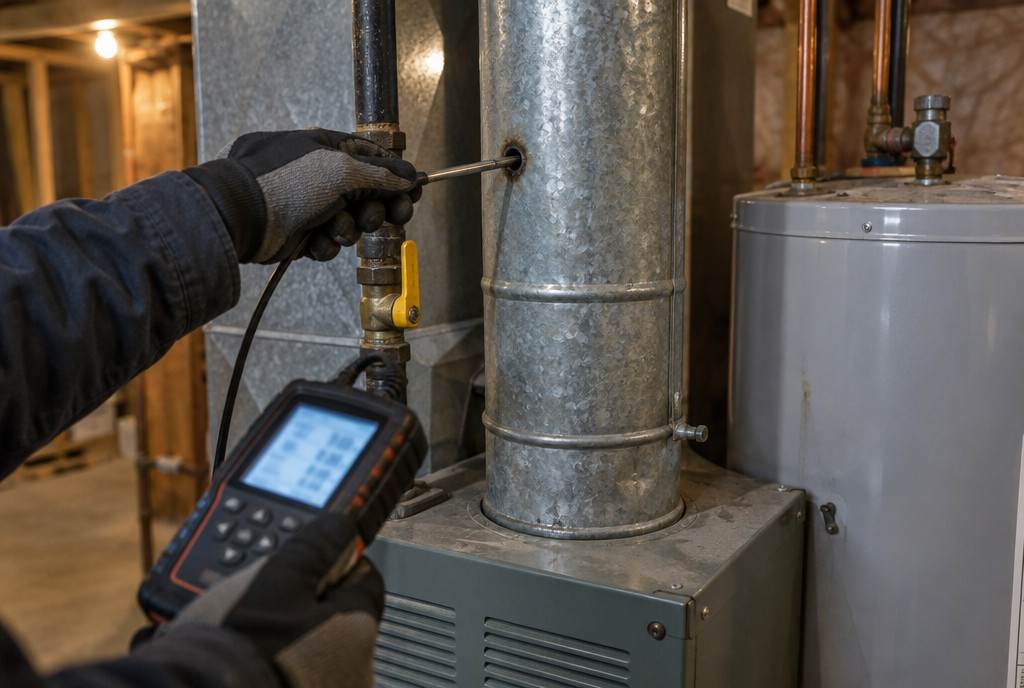
- Every year How often Health Canada says to have fuel-burning appliances professionally inspected Source: Health Canada ↗
- 3 months Forced-air filter change or cleaning interval, or sooner if loaded Source: NRCan ↗
- Up to 25% Extra electricity a poorly maintained heat pump can use Source: Hydro-Québec ↗
How often each system needs service
NRCan's Keeping the Heat In ↗ says a qualified service technician should perform annual maintenance and efficiency tune-ups, and that homeowners can do some of the work in between. Intervals by system, from NRCan and Health Canada:
| System | Professional service | Homeowner tasks |
|---|---|---|
| Oil furnace or boiler | Cleaning and tuning every year | Change or clean the filter every 3 months, or sooner when loaded |
| Natural gas or propane furnace or boiler | At least every two years (NRCan minimum); Health Canada advises an inspection of fuel-burning appliances at least once a year | Filter every 3 months; keep exhaust vents clear of snow and ice |
| Wood stove or fireplace | Inspect the equipment and chimney every year and clean as needed; Health Canada says to have a wood-burning fireplace chimney cleaned every year | Keep a CO alarm in the room; the building code requires one |
| Air-source heat pump | Every year | Filter every 3 months; keep the outdoor unit clear of snow and vegetation |
| Ground-source heat pump | Every year (NRCan heat pump guide); Keeping the Heat In says at least every two years | Filter every 3 months on air systems |
| Central air conditioner | Periodic service by a contractor | Clean or change the filter; keep the outdoor condenser clear of plants and leaves |
| HRV or ERV | Every year | Clean filters every 1 to 3 months |
| Electric or hot-water baseboards | None specified | Vacuum each autumn; straighten bent fins with a plastic comb; bleed radiators unless they bleed automatically |
The yearly inspection advice from Health Canada ↗ is about carbon monoxide (CO). Where intervals differ, follow the more frequent one and your manufacturer's instructions.
What a proper tune-up includes
HRAI ↗, the Heating, Refrigeration and Air Conditioning Institute of Canada, says a furnace inspection by a licensed technician should include:
- a safety test for carbon monoxide
- checking the chimney and flue for debris
- cleaning and reinstalling air filters
- checking the thermostat and safety controls, and the gas pilot safety system
- cleaning the motor and fan, and checking blower operation (and the fan belt on older systems)
- cleaning burners and setting them for proper combustion and ignition
- checking the gas piping to the furnace
For heat pumps, the US Department of Energy ↗ adds measuring the refrigerant charge, checking for refrigerant leaks, measuring airflow, sealing duct leaks, tightening electrical connections, lubricating motors, and confirming that heating and cooling can't run at the same time. CMHC ↗ notes that a properly tuned combustion appliance rarely produces carbon monoxide, and suggests asking for furnace cycles of six minutes or longer to limit spillage at start-up.
To find a contractor, HRAI's Contractor Locator ↗ lists members, who must carry insurance and valid trade certificates and licences, and agree to HRAI's code of ethics.
Signs of trouble and carbon monoxide safety
- Soot or staining around a furnace, boiler or water heater, or melted plastic fittings on top of a tank water heater: signs of back-puffing, according to NRCan.
- Unusual odours or hot, muggy air around a fuel-burning appliance.
- Frequent headaches, skin or throat irritation or nausea, or unexplained smoke or CO alarms.
- Exhaust vents blocked by ice or snow; Health Canada says to check them during and after snowstorms.
- Rooms that never heat evenly, which NRCan links to undersized or leaky ducts and poorly placed return grilles.
Health Canada lists early CO symptoms as tiredness, headaches, flu-like symptoms and shortness of breath; higher levels bring dizziness, chest pain, poor vision and difficulty thinking (symptoms ↗). If a CO alarm sounds, leave the home immediately, don't try to find the source, call 9-1-1 from outside and return only after a professional has fixed the problem.
The National Building Code 2025 ↗ requires CO alarms in homes with a fuel-burning appliance or an attached garage, certified to CSA 6.19 and placed inside each bedroom or within 5 m of each bedroom door. Health Canada says the most important spot is the hallway outside sleeping areas; test alarms regularly and replace them by the manufacturer's expiry date. See our CO alarm guide.
What an energy advisor checks
- Combustion safety: a combustion safety and spillage test checks whether exhaust fans can depressurize the house enough to pull flue gases back in. HRAI certifies technicians in depressurization testing (DTRS).
- Carbon monoxide: a CO alarm check confirms your alarms meet the requirements above.
- Ducts: duct leakage and airflow testing pressure-tests the ductwork and measures airflow at each register.
- Sizing before replacement: NRCan notes that a house with less heat loss after retrofits needs smaller equipment, and that oversizing causes short cycling. Its heat pump guide ↗ recommends sizing to CSA F280; see our room-by-room heat loss calculation.
Maintenance and fixes, from simplest to biggest
Filters. NRCan says to change or clean forced-air filters every three months or as they become loaded; Hydro-Québec ↗ suggests checking heat pump filters monthly during heavy use. On MERV, the rating printed on the filter, CMHC ↗ says a higher number means better filtration, but some higher-MERV filters reduce airflow through the furnace and affect its performance, so ask your technician before upgrading.
Heat pumps and air conditioners. In cold weather an air-source heat pump periodically runs a defrost cycle to melt frost off its outdoor coil; that is normal. NRCan puts its service life at 15 to 20 years (20 to 25 for ground-source). Air conditioners lose efficiency when the indoor coil is dirty, the outdoor condenser is blocked or the refrigerant runs low.
| Fix | Typical cost | What it does | DIY or pro? |
|---|---|---|---|
| Change or clean the filter every 3 months, or when loaded | Varies by filter | Keeps airflow and efficiency up | DIY |
| Keep registers, return grilles, exhaust vents and the outdoor unit clear of furniture, snow and leaves | No cost | Prevents blocked airflow and venting | DIY |
| Vacuum baseboards and radiators each autumn; bleed hot-water radiators | No cost | Removes dust buildup and trapped air | DIY |
| Test CO alarms regularly; replace them by the expiry date | Varies by model | Early warning of a venting failure | DIY |
| Annual tune-up by a licensed technician | Get quotes | Checks CO safety, burners, controls and airflow | Pro |
| Seal accessible ducts with foil tape or water-based mastic; insulate ducts in unheated spaces to at least RSI 2.1 (R-12) | Supplies vary | Improves comfort, safety and balancing (NRCan) | DIY or pro |
| Seal ducts from inside with a blown-in polymer (gaps up to about 10 mm) | Get quotes | Reaches leaks you can't get at | Pro |
| Replace spillage-prone appliances with direct-vent or sealed-combustion models, or a heat pump | Get quotes | Removes the backdrafting risk | Pro |
Mistakes to avoid
- Sealing ducts with standard vinyl duct tape. NRCan says its adhesive dries out over time and the tape falls off.
- Paying for duct cleaning to fix air quality or bills. CMHC ↗ and US EPA research found little or no difference in airborne particles or airflow after cleaning, and NRCan says it generally has little effect. CMHC also advises declining offers to spray or “fog” ducts with biocides.
- Upgrading to a high-MERV filter without checking. Some restrict airflow through the furnace.
- Ignoring an alarm, or hunting for the source. Leave first and call from outside.
- Running fuel-burning equipment indoors. Health Canada says never to run a generator indoors or idle a vehicle in the garage, even with the door open.
- Blocking airflow. NRCan warns that furniture or carpeting over vents and registers can shorten equipment life and reduce efficiency.
Rebates and next steps
Rebates for heating equipment and duct work vary by province and change often. Check current offers in our rebate program tracker, estimate whether replacing equipment pays off with the upgrade payback calculator, and use the home energy planner to line up maintenance, air sealing and any equipment change in the right order.
Run your numbers
Compare what heating, cooling and hot water cost to run at your city’s energy prices, then put any upgrade in order in your home plan.
Common questions
How often should a furnace be serviced in Canada?
NRCan says oil furnaces need cleaning and tuning every year and gas or propane furnaces at least every two years, while recommending annual maintenance by a qualified technician. Health Canada advises a professional inspection of fuel-burning appliances at least once a year.
How often should I change my furnace filter?
Every three months, or sooner when it is loaded, according to NRCan. Ask your technician before switching to a higher-MERV filter, since CMHC notes some reduce airflow.
Do heat pumps need annual maintenance?
Yes. NRCan recommends annual maintenance by a qualified contractor plus cleaning or changing the filter every three months, and Hydro-Québec says a poorly maintained heat pump can use up to 25% more electricity.
Is duct cleaning worth it?
Not for air quality or energy savings in most homes. CMHC research found little or no difference in airborne particles or airflow after cleaning, though it can make sense after construction, water in the ducts or a blockage.
Where should carbon monoxide alarms go?
The National Building Code requires them inside each bedroom or within 5 m of each bedroom door in homes with a fuel-burning appliance or attached garage. Health Canada says the most important spot is the hallway outside sleeping areas.
What should a furnace tune-up include?
HRAI's list includes a carbon monoxide safety test, a chimney and flue check, filter cleaning, thermostat and safety control checks, motor, fan and blower cleaning, and burner cleaning with combustion and ignition set-up.
Sources
- NRCan, Keeping the Heat In, Section 9: Operating your house (page modified 2025-09-29) ↗
- Health Canada, Carbon monoxide: Preventing exposure (page modified 2024-11-12) ↗
- Health Canada, Carbon monoxide: Symptoms of exposure (page modified 2024-11-12) ↗
- HRAI, Consumer tip: It's Time for Your Annual Check-Up ↗
- HRAI, Consumer page and Contractor Locator ↗
- HRAI, Certified Installers and Designers database ↗
- US Department of Energy, Operating and Maintaining Your Heat Pump (archived May 29, 2026; live page returned 404 on Oct. 8, 2026) ↗
- CMHC, About Your House: Combustion Gases in Your Home (2006, PDF) ↗
- CMHC, About Your House: Your Furnace Filter (revised 2008, PDF) ↗
- CMHC, About Your House: Should You Get Your Heating Ducts Cleaned? (2007, PDF) ↗
- Hydro-Québec, Heat pump tips (checked October 8, 2026) ↗
- NRCan, Heating and cooling with a heat pump (page modified 2025-12-24) ↗
- NRC, National Building Code of Canada 2025, Section 9.32 and Notes (PDF, 15 MB) ↗
- NRCan, ENERGY STAR: Heat and energy recovery ventilators (page modified 2025-10-07) ↗
Figures checked against these pages on October 8, 2026. Programs and prices change, so confirm on the official page before you spend.
Have your own house measured
Tell us where you are and what you’re planning. We’ll connect you with a registered service organization for your area — no spam, no shared lead lists.