How Halifax is built
- Before 1961 22%
- 1961–1990 42%
- 1991–2000 14%
- 2001 or later 22%
Who needs it in Halifax
In the Halifax area, 26% of households heat mainly with a heat pump, 20% with electric baseboards, 20% with a boiler and radiators and 12% with a forced-air furnace; electricity is the main heating energy for 28% of households and oil for 23% (Statistics Canada, 2023).
Electric baseboards outnumber furnaces here, and a baseboard-heated house has no ducts to test. The test matters if you have forced air, or before you add a ducted heat pump to existing ductwork.
Of Halifax's 121,700 houses (single-detached, semi-detached, row houses and duplexes), 22% were built before 1961 and 63% before 1991, according to the 2021 Census. Ducts in older houses often run through unheated spaces with taped or unsealed joints, and supply runs to the far rooms are the first to suffer.
What the test shows
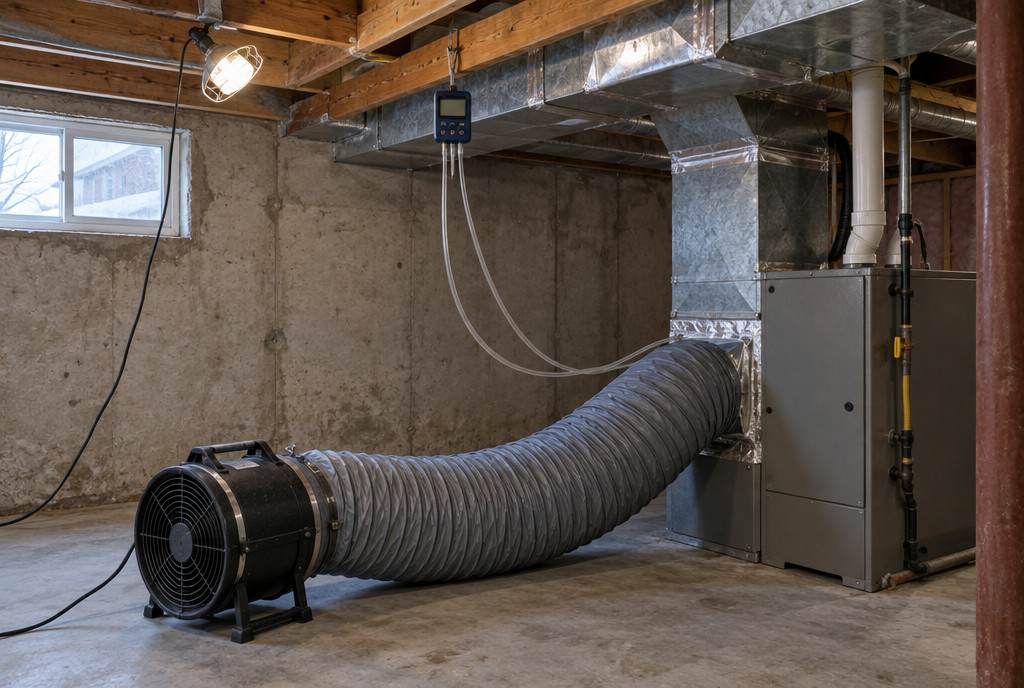
- Total duct leakage, as a share of the system's airflow, measured by pressure-testing the ductwork with a calibrated duct-pressurization fan.
- Airflow at each register, which explains why one bedroom is always cold.
- Whether sealing and balancing will fix comfort problems before you buy bigger equipment.
What it costs
About $200–$450 (a September 2026 planning range; quotes vary). It isn't part of a standard EnerGuide evaluation, so ask for it when you book if comfort is your main complaint.
NRCan-licensed service organizations serving Halifax
In Nova Scotia, EnerGuide home energy assessments are booked through Efficiency Nova Scotia's Home Energy Assessment program, which assigns one of its Delivery Agent Partners; NRCan's list shows no separate service organizations for Nova Scotia postal codes.
Programs in Halifax
Duct leakage testing in Halifax: common questions
How much does duct leakage testing cost in Halifax?
Plan on about $200–$450. It is usually a separate service from an EnerGuide evaluation.
Is duct cleaning the same thing?
No. Cleaning removes dust; it doesn't find or seal leaks. A leakage test measures where air is lost.
What is ductwork pressure testing?
The same thing as a duct leakage test: registers are sealed, a calibrated fan pressurizes the ducts, and the airflow needed to hold the test pressure shows how leaky they are.
Should I close vents in unused rooms?
Usually not. Closing registers raises duct pressure and can increase leakage elsewhere in the system.