How the Okanagan is built
- Before 1961 12%
- 1961–1990 43%
- 1991–2000 18%
- 2001 or later 27%
This page covers the Okanagan Valley outside Kelowna, which has its own pages: West Kelowna, Lake Country and Peachland in the Central Okanagan, Penticton, Summerland, Oliver and Osoyoos to the south, and Vernon, Coldstream, Armstrong, Spallumcheen, Enderby and Lumby to the north.
Testing a well in the Okanagan
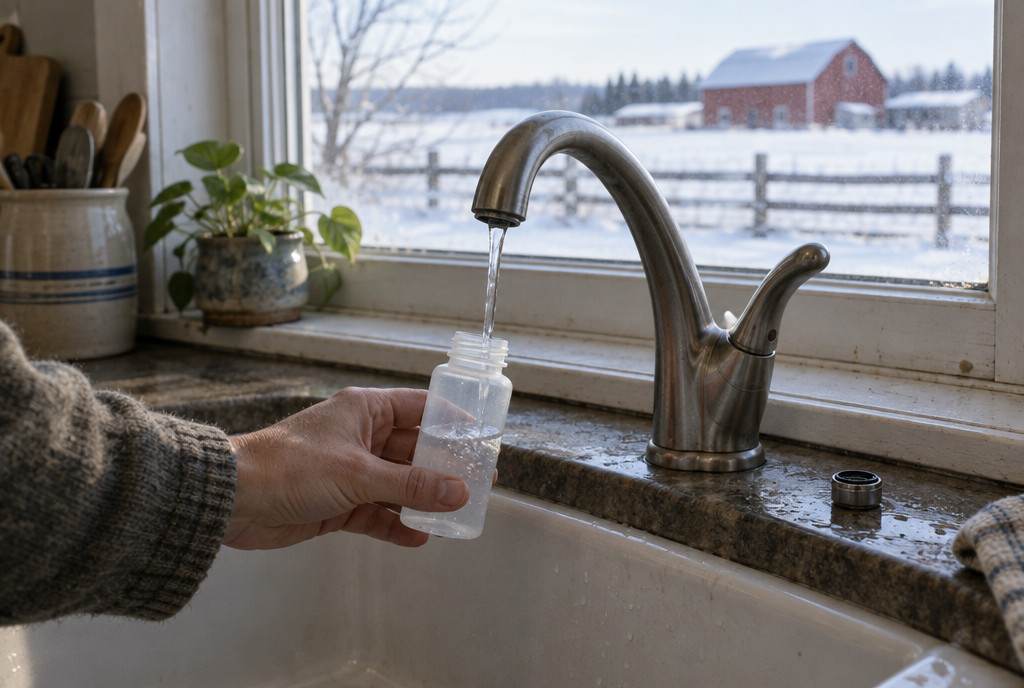
There's no free provincial program: use a qualified lab (search the CALA directory), which supplies the bottles. HealthLinkBC recommends testing for bacteria at least once a year and for chemistry when the well is new and annually after that.
What to test for
- Bacteria (total coliforms and E. coli): at least once a year, and right away if the water's clarity, colour or taste changes.
- Chemistry when the well is new and every year after: HealthLinkBC names nitrates, fluoride and metals such as arsenic, lead, copper and manganese as the most common concerns in B.C. groundwater.
Choosing a lab
Search the CALA directory for an accredited lab near you; the lab supplies sterile bottles and instructions, and charges for the analysis. Read the instructions carefully and follow them exactly, and keep every result for future reference.
What Interior Health says about private water
Interior Health says private systems have minimal regulatory oversight and that the homeowner is responsible for making sure the water is safe for drinking, cooking and household sanitation; for a rental, it becomes a legal requirement for the landlord. It says surface water and well water should be tested, that surface water and many groundwater sources should be disinfected, and it links to the Provincial Health Services Authority's list of labs approved for drinking water microbiology testing. If your water comes from the lake or a stream, watch for algae blooms: Interior Health says boiling will not remove algal toxins, and to use another source for drinking, and for pets and livestock, during a bloom.
If the results show bacteria
HealthLinkBC says water with E. coli is not safe to drink: treat it before drinking, preparing food or brushing teeth (boiling is a short-term option), then find and fix the source, with long-term treatment if the source can't be corrected. Total coliforms without E. coli can mean the well needs better sanitation or physical upgrades, or that surface water may be getting in. Re-test after floods, drought or similar events, and don't rely on a neighbour's result: a safe test next door doesn't mean your water is safe.
Before disinfecting, the province's guide to simple chlorination asks you to check the wellhead:
- Sewage sources near the well, such as manure or compost piles or a septic field.
- Ground that slopes toward the well or lets water pond around it.
- A missing, cracked or damaged well cap, or one that lets water or vermin in.
- Casing that sticks up less than 30 cm (1 ft) above the ground or pump-house floor, or a gap or cracks in the seal around it.
Fix those first, or the well stays vulnerable. A registered well driller or pump installer has to do any surface-seal repair or casing extension, and the guide warns that chlorine vapour is dangerous in confined spaces such as pump houses, well pits and crawl spaces.
Read more: The well water guide.
Communities we cover in the Okanagan
Every town, village and hamlet below is part of this page, grouped by municipality (2021 Census population).
- Vernon 44,519
- Penticton 36,885
- West Kelowna 36,078
- Lake Country 15,817
- Summerland 12,042
- Coldstream 11,171
- Peachland 5,789
- Osoyoos 5,556
- Armstrong 5,323
- Spallumcheen 5,307
- Oliver 5,094
- Enderby 3,028
- Lumby 2,063
Covered on city pages: Kelowna.
Well water testing in the Okanagan: common questions
Is well water testing free in the Okanagan?
No. B.C. has no free provincial program; a qualified lab charges for the analysis and supplies the bottles.
How often should I test my well?
HealthLinkBC recommends bacteria testing at least once a year, and chemistry when the well is new and every year after.
What chemicals should I test for?
HealthLinkBC names nitrates, fluoride and metals such as arsenic, lead, copper and manganese as the most common chemicals of concern in B.C. groundwater.
Where do I find a lab?
Search the CALA directory of accredited laboratories; the lab provides the bottles and instructions.
What if my well water test shows E. coli?
HealthLinkBC says the water is not safe to drink. Treat it before drinking, cooking or brushing teeth (boiling works short term), find and fix the source, and disinfect the well once the wellhead is sound.