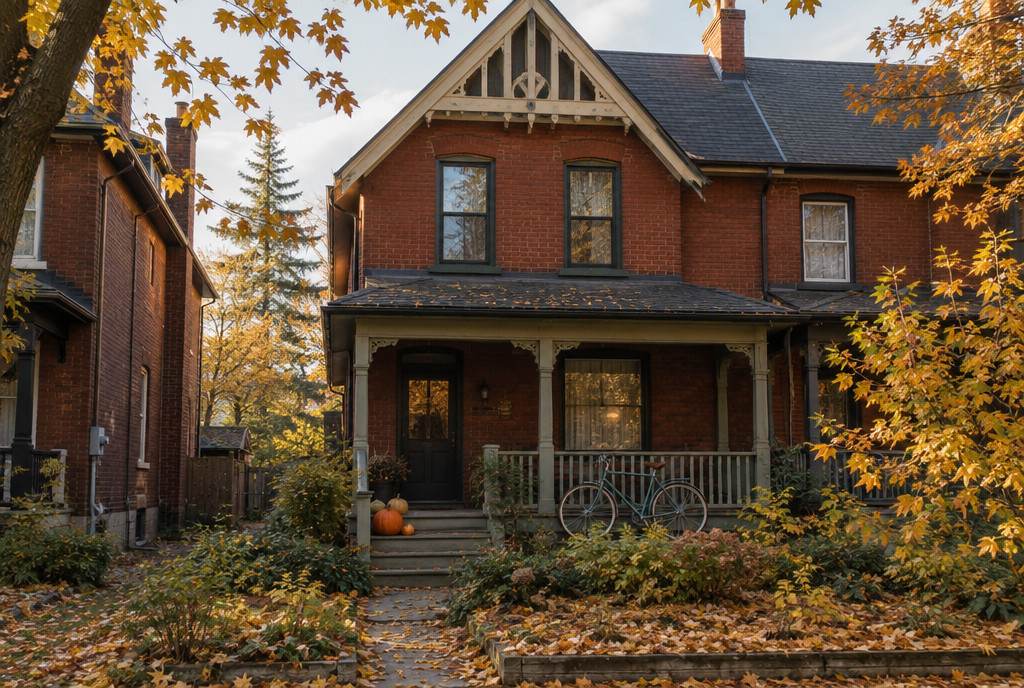
How Dufferin County is built
- Before 1961 16%
- 1961–1990 38%
- 1991–2000 16%
- 2001 or later 30%
This page covers the eight towns and townships of the County of Dufferin, from Orangeville and Mono north to Shelburne, Melancthon and Mulmur.
Why inspections matter in Dufferin County
Environment and Climate Change Canada's 1981–2010 climate normal at Orangeville MOE (14.1 km from the middle of the area) is 4,421 heating degree-days a year, with a January mean of −7.5°C. Of the 20,775 houses in Dufferin County (single-detached, semi-detached, row houses, duplexes and mobile homes), 16% were built before 1961 and 54% before 1991, according to the 2021 Census.
WETT Inc., the non-profit that trains and registers wood-energy professionals across Canada, says hiring a WETT-certified professional ensures wood-burning appliances are inspected, installed and maintained to current safety codes and standards, and helps homeowners meet insurance or regulatory requirements.
What a wood-burning inspection checks
An inspection looks at what the fire and installation codes regulate:
- The chimney, flue and flue pipe: structural problems such as a missing liner or inadequate supports, and decay such as cracking, crumbling mortar, corrosion or separated sections (National Fire Code notes).
- Creosote and soot: deposits more than 3 mm thick mean the chimney needs cleaning right away and should be inspected more often.
- Clearances: the required space between the appliance, flue pipe or chimney and anything combustible, which must be kept clear.
- The installation: CSA B365 is the installation code for solid-fuel appliances, covering installation, alteration and maintenance.
- The appliance itself: whether it's certified to CSA B415.1 or the US EPA standard, which you can usually tell from its label or plate.
Finding a WETT-certified inspector
Search the WETT directory ↗ for certified professionals near Orangeville and the rest of Dufferin County, and ask your home insurer what it needs to see when you add a stove or buy a house that has one. WETT doesn't publish inspection prices, so get two or three written quotes and ask what each inspection includes.
Keeping it safe between inspections
- Burn dry wood: the US EPA says wood burns best below 20% moisture; check it with a moisture meter.
- Dense smoke at the top of the chimney is a warning sign of poor operation, a wrongly sized chimney or unsuitable fuel (National Fire Code note).
- Keep combustible things out of the clearance space around the stove and flue pipe.
- Have the chimney inspected after any chimney fire, and when you add or replace an appliance.
Communities we cover in Dufferin County
Every town, village and hamlet below is part of this page, grouped by municipality (2021 Census population).
- Town of Orangeville 30,167
- Town of Mono 9,421
- Town of Shelburne 8,994
- Township of Amaranth 4,327
- Town of Grand Valley 3,851
- Township of Mulmur 3,571Mansfield
- Township of Melancthon 3,132
- Township of East Garafraxa 2,794Orton
Wood-burning appliance inspections (WETT) in Dufferin County: common questions
How often should a wood stove chimney be inspected in Dufferin County?
Ontario's Fire Code requires every chimney, flue and flue pipe to be inspected at least once every 12 months, when an appliance is added and after any chimney fire, and cleaned as often as needed to keep combustible deposits from building up.
What is a WETT inspection?
An inspection of a wood-burning appliance and its chimney or venting by a professional certified through the WETT program, which WETT Inc. says helps homeowners meet insurance or regulatory requirements.
How do I find a WETT-certified inspector near Orangeville?
Search the WETT directory on wettinc.ca, then confirm the inspector covers your address and ask what the inspection includes.
How much does a WETT inspection cost?
WETT doesn’t publish prices and we found no reliable published range, so ask two or three inspectors for written quotes.
What is a certified wood stove?
One tested to CSA B415.1 or certified by the US EPA for emissions. The EPA’s 2020 limit for new room heaters is 2.0 grams of particles per hour (crib wood) or 2.5 g/h (cord wood).