How Chatham-Kent is built
- Before 1961 42%
- 1961–1990 39%
- 1991–2000 9%
- 2001 or later 10%
Wells in Chatham-Kent
Chatham-Kent is a large, mostly rural municipality.
How testing works in Ontario
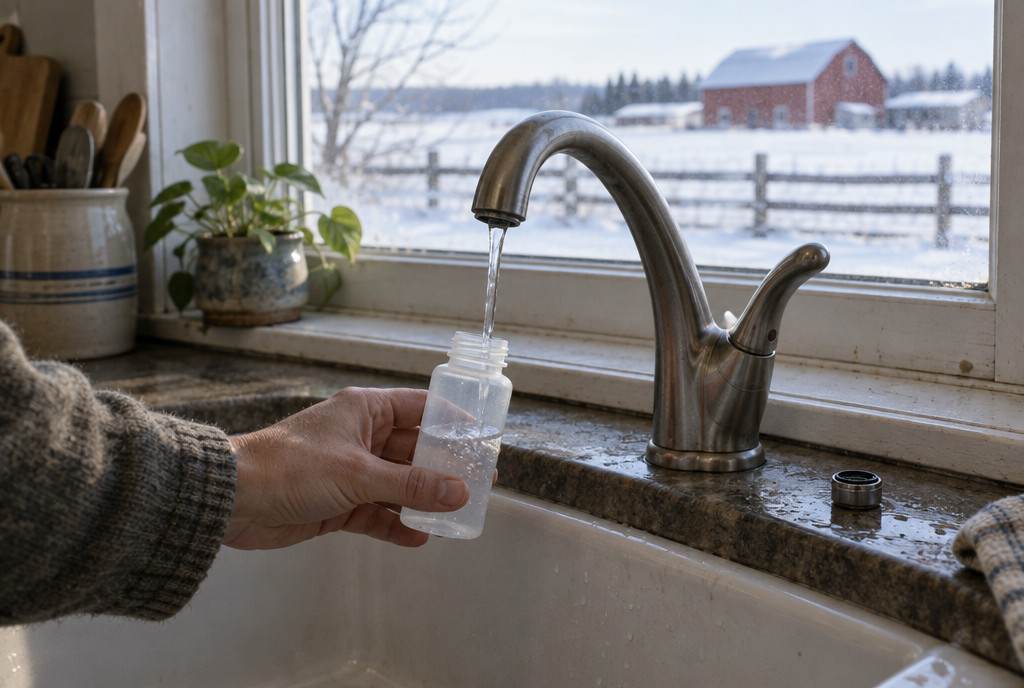
Free bacteria testing through Public Health Ontario labs: pick up a kit at a PHO lab or your public health unit and drop it back off. Chemistry (nitrate, sodium, metals) goes to a licensed private lab for a fee. Local health units recommend testing at least three times a year: spring, summer and fall.
What to test for
- Bacteria (total coliforms and E. coli): at least once a year, and after flooding, heavy rain or work on the well.
- Nitrate, especially near farmland or septic systems.
- Metals and naturally occurring contaminants such as arsenic, uranium or manganese when a well is new and every few years after, depending on local geology.
Well water testing in Chatham-Kent: common questions
Is well water testing free in Ontario?
Free bacteria testing through Public Health Ontario labs: pick up a kit at a PHO lab or your public health unit and drop it back off. Chemistry (nitrate, sodium, metals) goes to a licensed private lab for a fee. Local health units recommend testing at least three times a year: spring, summer and fall.
How often should I test my well?
For bacteria, at least once a year and after flooding, heavy rain or well work; many health units recommend more often. Test chemistry when the well is new and every few years after.
Are private wells common in Chatham-Kent?
Chatham-Kent is a large, mostly rural municipality.