How Halifax is built
- Before 1961 22%
- 1961–1990 42%
- 1991–2000 14%
- 2001 or later 22%
Radon in Halifax
Health Canada's 2012 survey found 13.6% of 103 homes tested in the Zone 6 health region above the guideline. The larger 2024 Cross-Canada survey reports 38.7% (1 in 3) of houses at or above the guideline for the Halifax, NS (Halifax CMA) metro area.
The two surveys aren't directly comparable: the 2024 study pooled about 69,000 volunteer tests and more of them were taken in basements, which partly explains its higher numbers. Neither can tell you about a single house, because neighbouring homes can differ widely.
How to test properly
- Use a long-term test of at least three months, with most of it in the heating season, which gives the most conservative result.
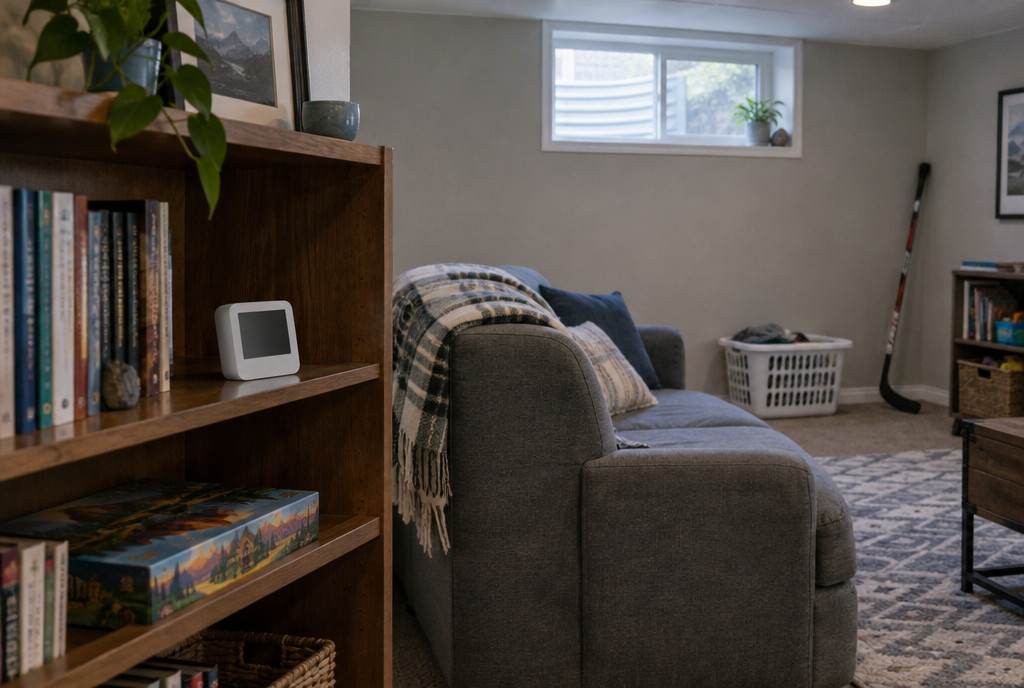
- Place the detector in the lowest level you spend four or more hours a day in, away from drafts, and follow the kit's instructions.
- If the result is above 200 Bq/m³, Health Canada recommends fixing it within a year, sooner if it's much higher.
Kits and professionals in Halifax
- LungNSPEI's pilot Radon Reduction Grant Program provides free test kits and mitigation grants of up to $2,500 to low-income Nova Scotia households, and its library loan program lends detectors through public libraries; Nova Scotia also publishes a Radon Risk Map.
- For a professional measurement or mitigation, search the C-NRPP directory by your Halifax postal code; it lists certified measurement and mitigation professionals.
Rules and help in Nova Scotia
- Nova Scotia's building code (the 2020 National Building Code, effective April 1, 2025) requires a radon rough-in in new homes.
- The Canadian Lung Association's Lungs Matter program offers up to $1,500 toward mitigation for households with low to moderate incomes or a lung cancer diagnosis.
- If your level is high, mitigation (usually a sub-slab depressurization fan system installed by a C-NRPP-certified professional) typically costs $2,000–$4,000.
Radon testing in Halifax: common questions
Is radon a problem in Halifax?
Health Canada's 2012 survey found 13.6% of 103 homes tested in the Zone 6 health region above the guideline. The larger 2024 Cross-Canada survey reports 38.7% (1 in 3) of houses at or above the guideline for the Halifax, NS (Halifax CMA) metro area. Any home can have high radon, so Health Canada recommends testing every home.
How long should a radon test take?
At least three months, with most of it during the heating season. Short tests can't tell you your long-term average.
Where can I get a radon test kit in Halifax?
LungNSPEI's pilot Radon Reduction Grant Program provides free test kits and mitigation grants of up to $2,500 to low-income Nova Scotia households, and its library loan program lends detectors through public libraries; Nova Scotia also publishes a Radon Risk Map. Hardware stores and lung associations also sell long-term kits for about $30–$60.
What does radon mitigation cost?
Typically $2,000–$4,000 for a sub-slab depressurization system installed by a C-NRPP-certified professional.