How Vancouver is built
- Before 1961 31%
- 1961–1990 31%
- 1991–2000 13%
- 2001 or later 25%
What an evaluation finds in Vancouver homes
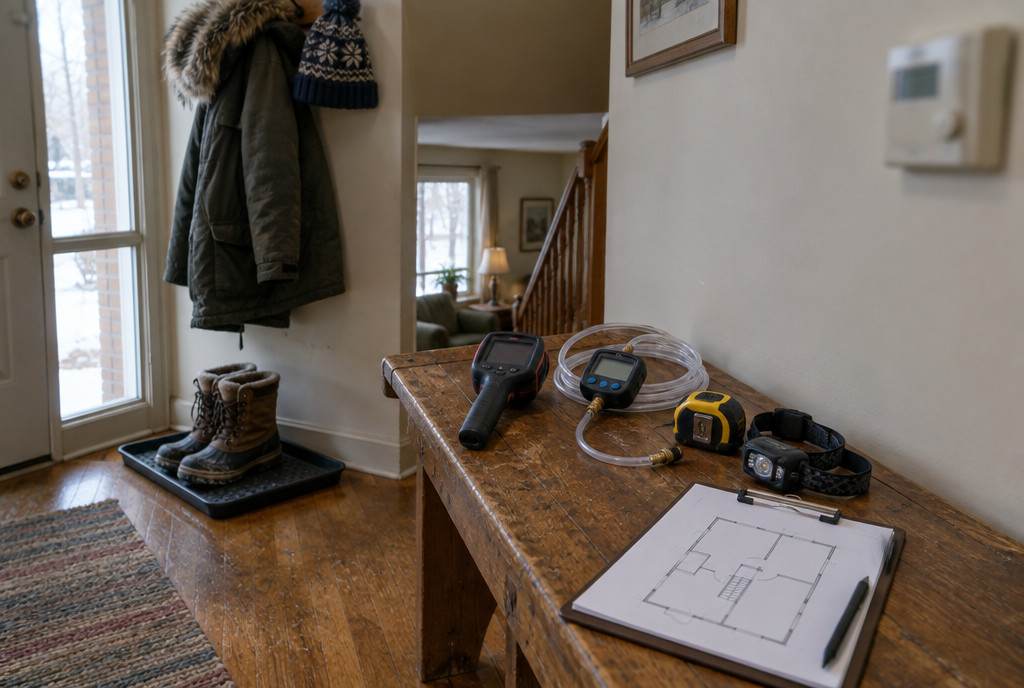
Of Vancouver's 115,455 houses (single-detached, semi-detached, row houses and duplexes), 31% were built before 1961 and 62% before 1991, according to the 2021 Census. The typical Vancouver house dates from 1981–1990, and an evaluation is how you find out what that means for yours: the blower door measures air leakage, the advisor inspects the attic, walls, basement, windows and heating system, and the report ranks upgrades by what they'd save.
Vancouver gets about 2,768 heating degree-days a year and has a winter design temperature of −4.4°C, according to NRCan's HOT2000 climate data for Vancouver International. That's the 7th-lowest heating demand of the 70 cities we cover. The more heating a climate needs, the more each fix is worth, which is why the evaluation's ranked list matters more in some cities than others.
In the Vancouver area, 32% of households heat mainly with a forced-air furnace, 31% with electric baseboards, 12% with a boiler and radiators and 5% with a heat pump; natural gas is the main heating energy for 42% of households and electricity for 39% (Statistics Canada, 2023). The heating system on the report shapes the recommendations: a forced-air furnace invites a ducted heat pump, electric baseboards a ductless one.
What it costs in Vancouver
There's no provincial price list; the City of Nanaimo quotes $400–$500 as typical for an existing home. Several B.C. municipalities subsidize evaluations for their residents (see local programs below).
Most providers quote the initial (pre-upgrade) and follow-up (post-upgrade) visits separately. Rebate programs that pay on measured improvement need both, so ask for the combined price.
How it works
- Initial evaluation, about 2–3 hours. The advisor measures and inspects the house and runs the blower door test.
- Report and EnerGuide rating. You get the home's energy rating in gigajoules per year and a list of recommended upgrades with estimated savings.
- Do the work. Most rebate programs only count upgrades done after the initial evaluation.
- Follow-up evaluation. A second visit measures the improvement, which is what most rebates pay on.
NRCan-licensed service organizations serving Vancouver
Every organization below is licensed by NRCan to deliver EnerGuide evaluations and lists Vancouver postal codes. Coverage is the share of Vancouver's urban postal areas each one lists.
- Acacia Engineering
- AmeriSpec Profile
- Canada Energy Audit Profile
- Capital Home Energy
- City Green Solutions
- Clean Energy Solutions
- CoEfficient Building Science
- Enerhold Engineering Solutions
- Enerhome Consulting
- EnerSolution Profile
- EnerTech Solutions
- Engreen Home
- ER Energy Solutions
- GETS Energy
- Green Canada Home Advisors Profile
- Greenbrain Profile
- Homesol Building Solutions
- HomeStep.ca
- HomeTech Energy Solutions
- Isle Energy Consulting
- NRGwise (A1 NRGwise Consulting) Profile
- Sensible Home Inspections
- The Energuy Profile
- VerdaTech Energy Management and Consulting
- All Season Inspection Profile
- EnerVision
- Green Think
- Energy Werx Profile
- ecoGEO Energy
Rebates and financing an evaluation unlocks in Vancouver
Home energy audit in Vancouver: common questions
How much does a home energy audit cost in Vancouver?
There's no provincial price list; the City of Nanaimo quotes $400–$500 as typical for an existing home. Several B.C. municipalities subsidize evaluations for their residents (see local programs below).
How many companies do EnerGuide evaluations in Vancouver?
NRCan's list of service organizations shows 29 licensed organizations with Vancouver postal codes (checked September 25, 2026).
How long does an EnerGuide evaluation take?
The initial visit usually takes two to three hours, including the blower door test. The follow-up visit after upgrades is shorter.
Which rebates need an EnerGuide evaluation in British Columbia?
Currently: BC Home Energy Improvement Bonus ($20 for every percentage-point your home improves — $750 minimum, $2,000 maximum — or $300 for any two upgrades). Check the program page for current terms before you book.