How Delta is built
- Before 1961 8%
- 1961–1990 66%
- 1991–2000 9%
- 2001 or later 17%
Who needs it in Delta
In the Vancouver area, 32% of households heat mainly with a forced-air furnace, 31% with electric baseboards, 12% with a boiler and radiators and 5% with a heat pump; natural gas is the main heating energy for 42% of households and electricity for 39% (Statistics Canada, 2023).
Of Delta's 31,845 houses (single-detached, semi-detached, row houses and duplexes), 8% were built before 1961 and 74% before 1991, according to the 2021 Census. Ducts in older houses often run through unheated spaces with taped or unsealed joints, and supply runs to the far rooms are the first to suffer.
What the test shows
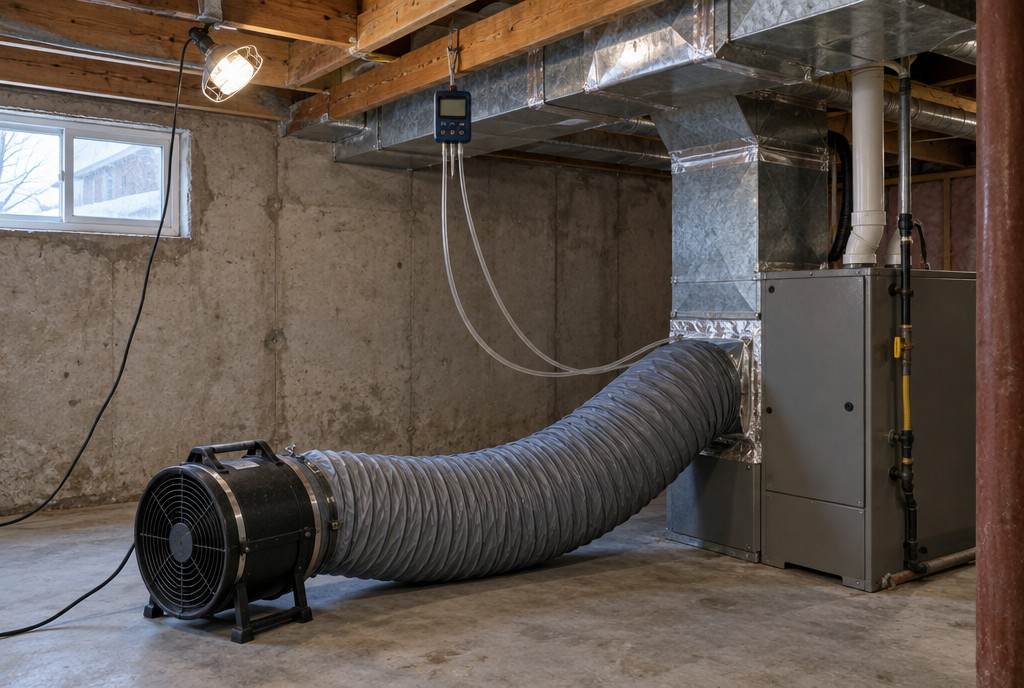
- Total duct leakage, as a share of the system's airflow, measured with a duct-pressurization fan.
- Airflow at each register, which explains why one bedroom is always cold.
- Whether sealing and balancing will fix comfort problems before you buy bigger equipment.
What it costs
About $200–$450 (a September 2026 planning range; quotes vary). It isn't part of a standard EnerGuide evaluation, so ask for it when you book if comfort is your main complaint.
NRCan-licensed service organizations serving Delta
Duct leakage testing isn't part of a standard EnerGuide evaluation. Some of these organizations offer it, as do HVAC contractors with duct-testing equipment, so ask when you call.
- Acacia Engineering
- All Season Inspection Profile
- AmeriSpec Profile
- Canada Energy Audit Profile
- Capital Home Energy
- City Green Solutions
- CoEfficient Building Science
- Energy Werx Profile
- Enerhold Engineering Solutions
- Enerhome Consulting
- EnerSolution Profile
- EnerTech Solutions
- Engreen Home
- ER Energy Solutions
- GETS Energy
- Green Canada Home Advisors Profile
- Greenbrain Profile
- Homesol Building Solutions
- HomeStep.ca
- HomeTech Energy Solutions
- Isle Energy Consulting
- NRGwise (A1 NRGwise Consulting) Profile
- Sensible Home Inspections
- The Energuy Profile
- VerdaTech Energy Management and Consulting
- Green Think
- EnerVision
- The House Whisperers
- Clean Energy Solutions
Programs in Delta
Duct leakage testing in Delta: common questions
How much does duct leakage testing cost in Delta?
Plan on about $200–$450. It is usually a separate service from an EnerGuide evaluation.
Is duct cleaning the same thing?
No. Cleaning removes dust; it doesn't find or seal leaks. A leakage test measures where air is lost.
Should I close vents in unused rooms?
Usually not. Closing registers raises duct pressure and can increase leakage elsewhere in the system.