How Gatineau is built
- Before 1961 14%
- 1961–1990 44%
- 1991–2000 16%
- 2001 or later 27%
The rule in Quebec
Quebec has no province-wide rule requiring CO alarms in existing houses: provincial rules cover larger multi-unit buildings, and for houses it's up to each municipality's by-law, so ask your local fire service.
CO sources in Gatineau homes
In the Gatineau (Quebec) part of the Ottawa–Gatineau region, the main heating energy is natural gas for about 22% of households (Statistics Canada, 2023). Any fuel-burning appliance, fireplace or attached garage is a potential CO source.
Single-detached houses make up 36% of Gatineau's households; many have an attached garage, another reason to put an alarm near the door into the house.
What a CO check involves
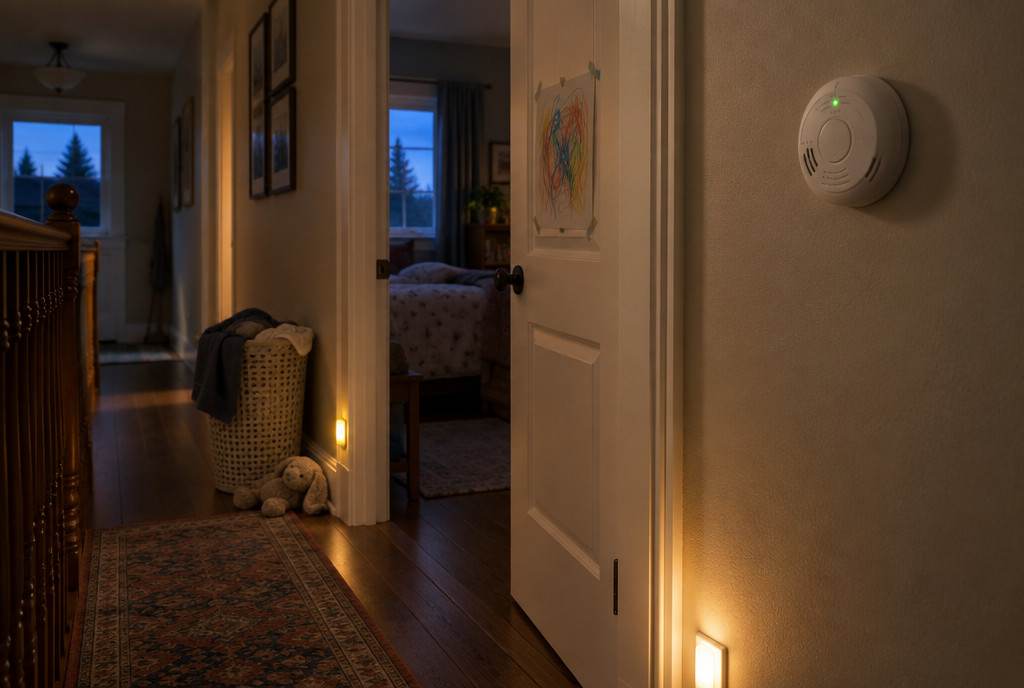
- Alarms next to sleeping areas and on every storey, tested monthly and replaced by their end-of-life date (usually 7 to 10 years).
- Annual service of fuel-burning appliances by a licensed technician.
- A combustion spillage test during an energy evaluation, which catches a venting problem before it produces CO.
Our carbon monoxide guide · Combustion safety testing in Gatineau
Carbon monoxide testing in Gatineau: common questions
Are carbon monoxide alarms mandatory in Gatineau?
Quebec has no province-wide rule requiring CO alarms in existing houses: provincial rules cover larger multi-unit buildings, and for houses it's up to each municipality's by-law, so ask your local fire service.
Where should CO alarms go?
Outside every sleeping area and on every storey, following the manufacturer's instructions. Some rules also call for one near a fuel-burning appliance or the door from an attached garage.
How long do CO alarms last?
Most have an end-of-life date of 7 to 10 years printed on the unit; replace them by then even if they still beep when tested.