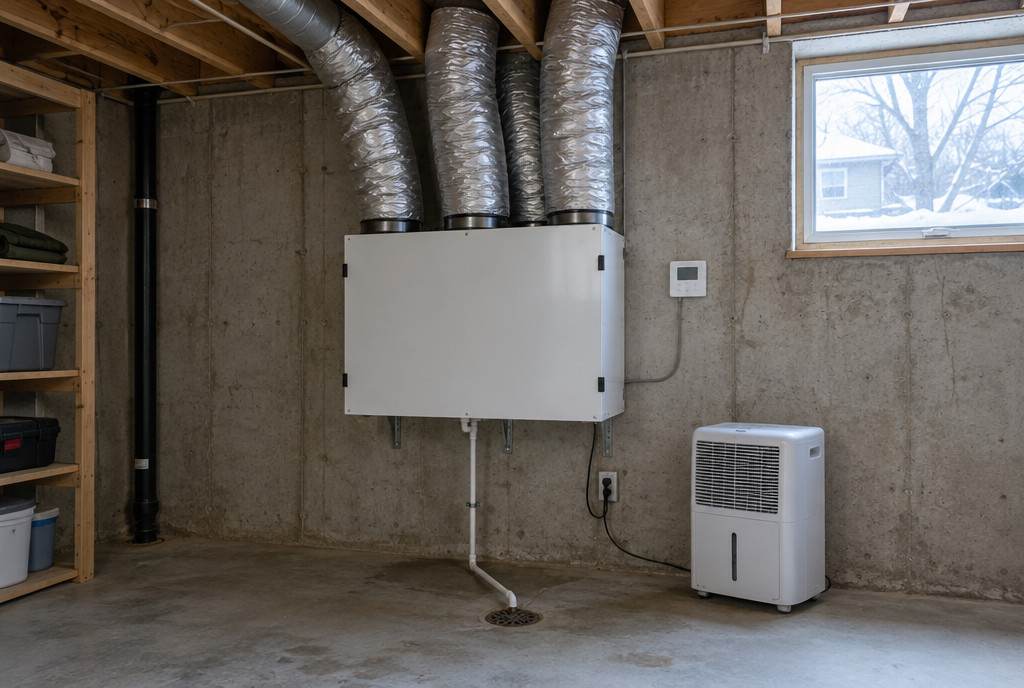
Cold, damp basement
The basement is 5°C colder than upstairs, feels damp, and nobody wants to spend time there.
What it usually means
- Bare concrete walls — uninsulated foundations can shed 20%+ of a home's heat
- Rim joist leakage (the draftiest 30 cm in most houses)
- Slab moisture migrating through unsealed concrete
What an audit measures
- Thermal imaging shows exactly how much wall is losing heat and where moisture concentrates
- The audit sequences moisture control before insulation — order matters in basements
Try first (cheap or free)
- Seal rim joists with cut-and-cobble foam or hire it out cheaply
- Check grading and downspouts before any interior moisture fix
The fix ladder
- Rim joist air sealing + insulation
- Full-height foundation wall insulation
Rebates that apply
- HRSP (with assessment) — Up to $10,000 per home ($5,000 if heated with Enbridge gas), including $600 back on your two assessments, for insulation, windows, air sealing and more — if the follow-up assessment is done by December 31, 2026
- Toronto HELP — City loans up to $125,000 (or 10% of your home's assessed value) for energy retrofits, repaid on your property tax bill
Want it diagnosed properly?
A registered energy advisor measures instead of guessing — blower door, thermal imaging, and a written upgrade report priced against rebates.