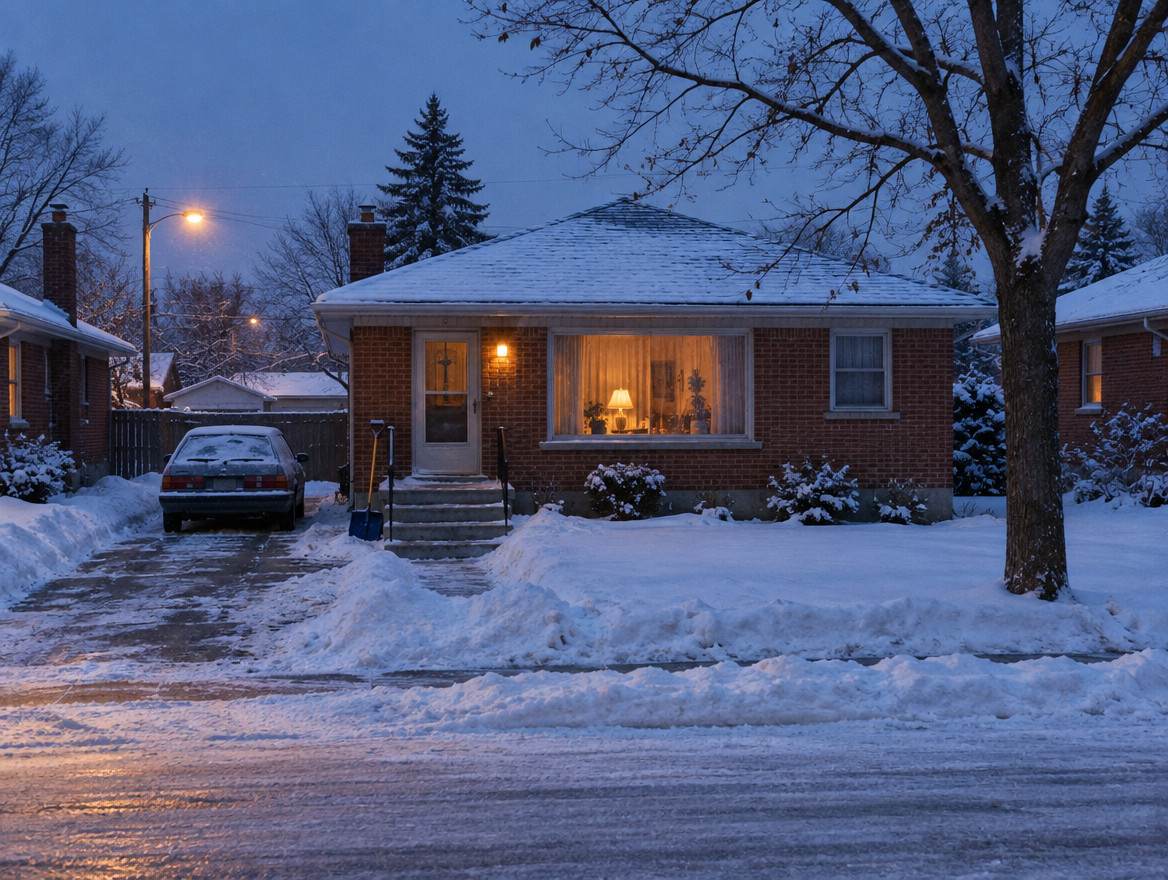
Buying (or just bought) a home
You want to know what the house will really cost to run — before you're the one paying its bills.
What it usually means
- A pre-purchase or move-in energy audit reveals insulation, leakage, and equipment condition no home inspection quantifies
- CMHC-insured buyers can claim a 25% mortgage-insurance premium refund after $20,000+ of eligible energy renovations
- Move-in is the cheapest renovation window — empty rooms make insulation and sealing easy
What an audit measures
- Full EnerGuide evaluation with rating and upgrade report — a renovation roadmap priced against rebates
- Documentation that supports the CMHC Eco Improvement claim
Try first (cheap or free)
- Ask the seller for 12 months of utility bills — normal in Ontario, revealing everywhere
- Book the audit for the week after closing, before furniture arrives
The fix ladder
- Move-in audit + quick wins (sealing, attic)
- Planned retrofit against HRSP + CMHC refund
Rebates that apply
- HRSP (with assessment) — Up to $10,000 per home ($5,000 if heated with Enbridge gas), including $600 back on your two assessments, for insulation, windows, air sealing and more — if the follow-up assessment is done by December 31, 2026
- Toronto HELP — City loans up to $125,000 (or 10% of your home's assessed value) for energy retrofits, repaid on your property tax bill
- CMHC Eco Improvement — A 25% energy-efficiency rebate on your CMHC mortgage insurance premium after $20,000 of energy renovations
Want it diagnosed properly?
A registered energy advisor measures instead of guessing — blower door, thermal imaging, and a written upgrade report priced against rebates.