Home health · verified September 28, 2026
Vermiculite insulation: when it was used, how to spot it, and what to do
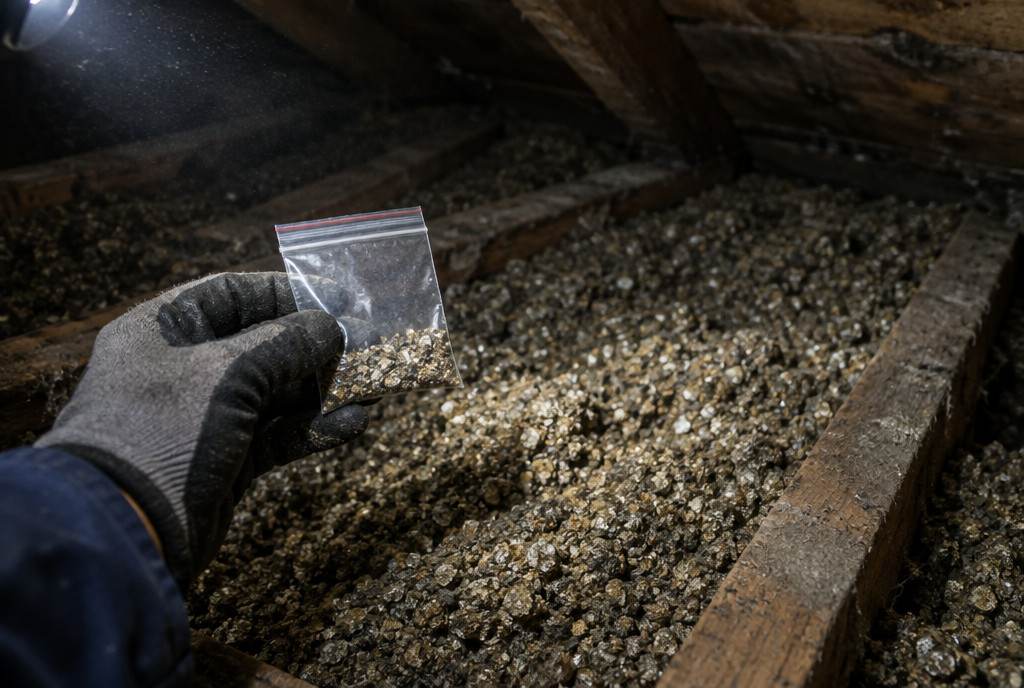
If your attic is filled with loose, pebbly granules — grey-brown or silvery-gold — instead of fluffy batts or blown fibre, you may have vermiculite insulation. Most of it is harmless left alone, but it changes how any insulation or air-sealing work has to proceed.
When vermiculite insulation was used
Health Canada traces the problem to one source: vermiculite ore from the Libby mine in Montana, worked from the 1920s to 1990, which supplied most of the world's vermiculite insulation, mostly under the brand name Zonolite. It wasn't widely used after the mid-1980s and hadn't been sold in Canada for more than a decade when Health Canada issued its advisory in 2004 (Health Canada ↗).
So the homes to check are those built or re-insulated before about 1990 — and "re-insulated" matters, because vermiculite was often poured into older attics as a top-up decades after the house was built.
How to recognize it
Vermiculite insulation looks like light, pebble-sized granules that pour like gravel between the attic joists. The flakes are flat and shiny, silver-gold to grey-brown (CCOHS ↗). It can also turn up inside wall cavities. Look from the attic hatch with a flashlight; don't reach in and handle it.
Why it matters
Not all vermiculite contains asbestos, but vermiculite insulation sold in Canada before 1990 may, because much of the Libby ore was contaminated with amphibole asbestos (CCOHS ↗). Inhaled asbestos fibres can cause asbestosis, mesothelioma and lung cancer, and the illnesses are usually tied to frequent, prolonged exposure (Health Canada ↗).
The reassuring part: Health Canada says there's currently no evidence of a health risk while the insulation stays sealed behind walls and floors or isolated in the attic. The danger comes from disturbing it — renovating, running wires or ducts through the attic, air sealing from above, or storing things up there.
Testing
Testing tells you what you have, and it's a job for a professional: CCOHS advises having a competent person test before any renovation. A qualified sampler wets the material, collects bulk samples and sends them to an accredited lab; expect roughly $50–$150 per sample. Because contamination varied from batch to batch, results depend on proper sampling, which is why a DIY kit isn't the answer. Our asbestos and vermiculite testing guide walks through the process.
What it means for an energy upgrade
An attic full of vermiculite is usually exactly the attic that needs air sealing and more insulation — and both jobs disturb it. So the order matters:
- Flag it before the energy assessment, so the advisor notes it and doesn't disturb it.
- Have it sampled before any contractor quotes attic work.
- If it tests positive, choose between managing it in place (no attic work, sealed hatch, no storage) and professional removal before insulating.
- Only then book the air sealing and insulation — and remember that Ontario's Home Renovation Savings attic work has to be installed by November 30, 2026 (no-assessment stream) or finished before a December 31, 2026 follow-up (assessment path).
What to do now
- Leave it alone. Don't vacuum it, move it or store boxes on it.
- Seal the gaps — cracks and openings where it could sift into the living space, and the attic hatch (CCOHS ↗).
- Test before any renovation that touches the attic, walls or ceilings below it.
- Hire a qualified removal contractor if it has to come out. Never remove suspected asbestos-containing vermiculite yourself.
Common questions
When was vermiculite insulation used in Canada?
Most came from the Libby, Montana mine, worked from the 1920s to 1990 and sold mainly as Zonolite. It wasn't widely used after the mid-1980s, so homes built or re-insulated before about 1990 are the ones to check.
Does all vermiculite insulation contain asbestos?
No. But vermiculite insulation sold in Canada before 1990 may contain asbestos, because much of it came from the contaminated Libby mine. Only lab testing of properly collected samples tells you what you have.
Is vermiculite dangerous if I leave it alone?
Health Canada says there is currently no evidence of a health risk while it stays sealed behind walls and floors or isolated in the attic. The risk comes from disturbing it.
Can I add insulation on top of vermiculite?
Not without dealing with it first. Adding insulation and air sealing both disturb it, so have it tested, then either leave the attic alone or have it professionally removed before the work.
How much does vermiculite testing cost?
Roughly $50–$150 per lab sample when a qualified professional collects bulk samples and sends them to an accredited lab.
Sources
- Health Canada — advisory on vermiculite insulation that may contain asbestos
- CCOHS — vermiculite insulation: identification and precautions
- Government of Canada — vermiculite insulation containing tremolite asbestos
Program facts checked against these pages on September 28, 2026. Programs change — confirm on the official page before you spend.
Planning attic work? Start with the measurements
Tell us where you are and what you’re planning. We’ll connect you with a registered service organization for your area — no spam, no shared lead lists.
Email us what you’re planning, your postal code and the type of building (a house, a duplex or triplex, or a larger multi-unit building) — we’ll reply with registered service organizations for your area and which rebates apply.
Email dave@clickshift.ca