Buildings & industry · verified September 28, 2026
Commercial and industrial energy audits in Toronto and Ontario
Houses get an EnerGuide evaluation. Offices, apartment towers, schools, plants and warehouses get an engineering energy audit: scoped to a recognized standard, priced by size, and in Ontario often half-funded by the gas utility. Here's how it works and who does it.
Three levels, one standard
Commercial energy audits in North America are scoped to ASHRAE Standard 211, the standard for commercial building energy audits (ANSI/ASHRAE/ACCA 211 ↗). It defines three levels, each building on the last:
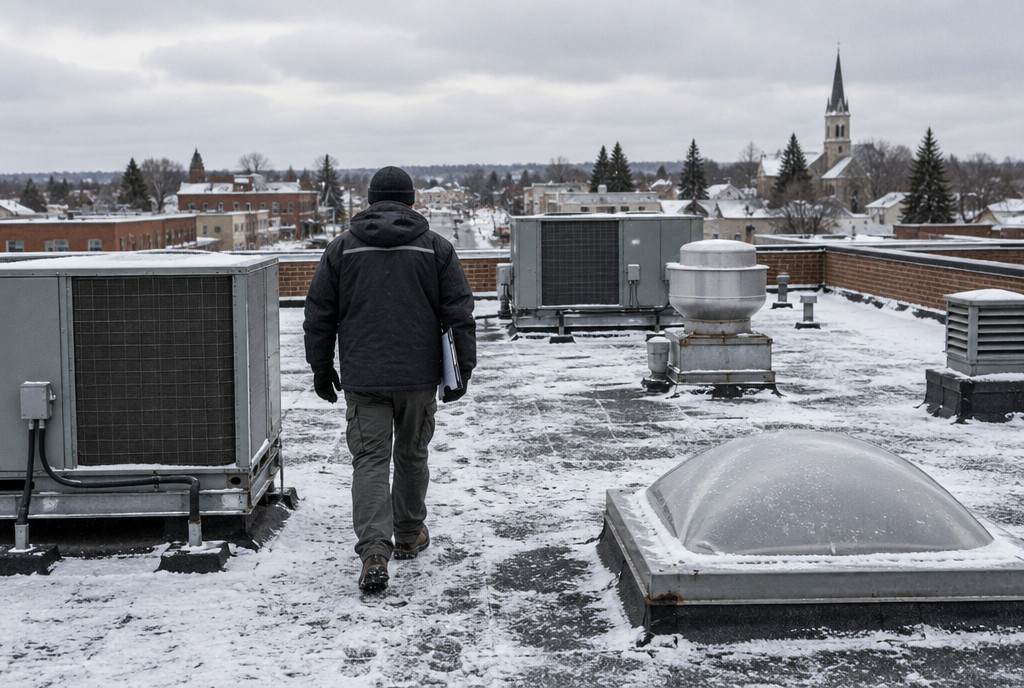
- Level 1 — walk-through. A site visit and a review of utility bills that benchmark the building and list low-cost and no-cost measures, plus candidate projects worth studying.
- Level 2 — energy survey and analysis. A detailed breakdown of where the energy goes, with savings and cost estimates for each measure. Most capital plans and incentive applications are built on this level.
- Level 3 — detailed analysis of capital-intensive projects. Monitoring, modelling and engineering-grade estimates for the big-ticket decisions, sometimes called investment-grade.
Ask any firm you're considering which level its quote covers and which sections of the ASHRAE 211 report it will deliver. "Energy audit" on its own can mean anything from a two-hour walk-through to months of metering.
Who performs them
Building audits are engineering work, delivered by mechanical engineering firms and energy consultancies. Look for licensed engineers (P.Eng., licensed by Professional Engineers Ontario) signing the recommendations, and credentials such as the Certified Energy Manager (CEM). For condo and apartment buildings, building-science firms often lead, because the envelope matters as much as the plant.
Energy management services are the ongoing half: utility monitoring and benchmarking, retro-commissioning, and strategic energy management programs that keep savings from drifting away after the audit. Save on Energy funds several of these directly (below).
The residential EnerGuide system is separate. Its service organizations and registered energy advisors are licensed for houses and low-rise homes, not commercial buildings.
The reporting rules in Toronto and Ontario
- Ontario (EWRB): buildings of 50,000 sq ft and larger report energy and water use to the province every year by July 1 (ontario.ca ↗).
- City of Toronto: buildings of 50,000 sq ft and larger have reported to the City since 2024, due July 2 each year, using ENERGY STAR Portfolio Manager. Buildings of 10,000 sq ft and larger join in 2027, after the City postponed the expansion in December 2025 (toronto.ca ↗).
- Toronto's Building Emissions Performance Standards are still being designed. Council approved the approach in July 2024; limits, thresholds and dates haven't been set, and low-rise residential buildings of three storeys or fewer are exempt (toronto.ca ↗).
Reporting isn't auditing, but it produces the benchmark that tells an owner whether an audit will find much. A building that scores poorly against its peers is the one to audit first.
Who pays: Ontario incentives for audits and upgrades
Enbridge Gas pays up to 50% of eligible assessment costs — energy audits, engineering feasibility studies, steam trap surveys, air and water balancing, and metering — capped at $10,000 per project for commercial customers and $20,000 for institutions. You need to be an Enbridge customer using at least 100,000 m³ of gas a year, and the study must be pre-approved before it starts (Enbridge commercial audits ↗). Industrial customers have a parallel stream for process and steam studies, also at up to 50%, with work completed between January 1 and November 30 (Enbridge industrial studies ↗).
Save on Energy (the IESO) funds the electricity side: the Retrofit Program for equipment and controls, Existing Building Commissioning, the pay-for-performance Energy Performance Program, the Expanded Energy Management Program, XLerate for large industrial, municipal, institutional and healthcare projects, Peak Performance for summer peak reductions, and Instant Discounts (Save on Energy ↗).
What it costs
Level 1 walk-throughs are the cheapest; Level 2 and Level 3 work scales with floor area, the number of systems and how much metering and modelling is involved. Ask for a fixed fee per level and a list of deliverables, and ask whether the firm will prepare the Enbridge pre-approval. On a qualifying project the utility can cover half the fee.
Houses and small multi-unit buildings
If you own a house, a duplex or a small low-rise, you need an EnerGuide assessment instead — see energy audit services in Toronto and our Toronto directory. Toronto's HELP loans cover low-rise buildings of up to 3 storeys and 6 units.
Common questions
What is the difference between an ASHRAE Level 1, 2 and 3 energy audit?
Level 1 is a walk-through with a utility-bill review and a list of low-cost measures. Level 2 breaks down where the energy goes and prices each measure. Level 3 adds monitoring and detailed modelling for capital-intensive projects.
Does Enbridge pay for commercial energy audits?
Yes. Enbridge Gas pays up to 50% of eligible audits and engineering studies, capped at $10,000 per project for commercial customers and $20,000 for institutions. You need at least 100,000 m³ a year of gas use and pre-approval before the study starts.
Do Toronto buildings have to report energy use?
Buildings of 50,000 sq ft and larger report energy and water use to the City every year, due July 2. Buildings of 10,000 sq ft and larger start reporting in 2027.
Who can perform a commercial energy audit in Ontario?
Mechanical engineering firms and energy consultancies, ideally with licensed engineers (P.Eng.) and Certified Energy Managers on the project. The residential EnerGuide licence doesn't cover commercial buildings.
Sources
- ANSI/ASHRAE/ACCA Standard 211 — commercial building energy audits
- Enbridge Gas — commercial audits and studies (up to 50%)
- Enbridge Gas — industrial studies and assessments
- Save on Energy — business and industry programs
- City of Toronto — energy and water reporting for buildings
- City of Toronto — Building Emissions Performance Standards
- Ontario — energy and water reporting for large buildings
Program facts checked against these pages on September 28, 2026. Programs change — confirm on the official page before you spend.