How Nanaimo is built
- Before 1961 15%
- 1961–1990 40%
- 1991–2000 18%
- 2001 or later 28%
Why mold shows up in Nanaimo homes
Nanaimo gets about 2,939 heating degree-days a year and has a winter design temperature of −3.2°C, according to NRCan's HOT2000 climate data for Comox, the closest comparable location in that data set (87 km away). Mild, wet winters keep materials damp, so poorly vented bathrooms, basements and crawlspaces are the usual suspects.
Of Nanaimo's 33,520 houses (single-detached, semi-detached, row houses and duplexes), 15% were built before 1961 and 54% before 1991, according to the 2021 Census. Older basements without a moisture barrier and houses that were air-sealed without adding ventilation are common trouble spots.
When sampling is worth it
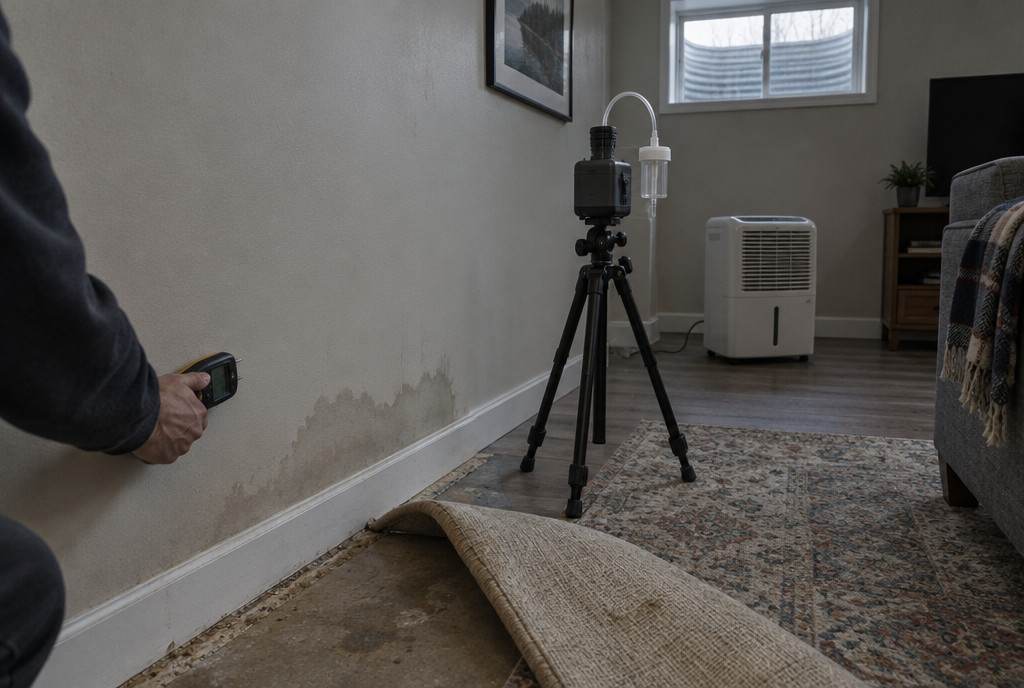
- You smell mustiness but can't find the source.
- After a leak or flood, to check that cleanup worked.
- Before buying an older house with signs of past water damage.
If you can see mould, you usually don't need a test to know it's there; you need to fix the moisture and clean it up properly.
No Canadian province has a mandatory mould standard for homes. Health Canada's guideline sets no numerical limit: it says to fix moisture problems and clean up visible mould.
Choosing a tester and lab
Ask any Nanaimo tester which lab analyzes their samples, and look for one accredited under AIHA's EMLAP program for environmental microbiology. Pair sampling with a ventilation and humidity assessment, which finds the cause.
Ventilation and humidity assessments in Nanaimo · Our mold and indoor air quality guide
Mold and air quality testing in Nanaimo: common questions
How much does mold testing cost in Nanaimo?
Plan on about $300–$600 for a typical sampling visit (a September 2026 planning range); lab fees for extra samples add to that.
Do I need a test if I can see mould?
Usually not. Visible mould needs cleanup and a fix for the moisture source. Testing helps most when you suspect mould you can't see.
Is there a legal mould limit for homes in Canada?
No. Health Canada sets no numerical limit; its guidance is to control moisture and clean up mould. Quebec has a voluntary handling standard.