How Brampton is built
- Before 1961 3%
- 1961–1990 29%
- 1991–2000 15%
- 2001 or later 53%
The rule in Ontario
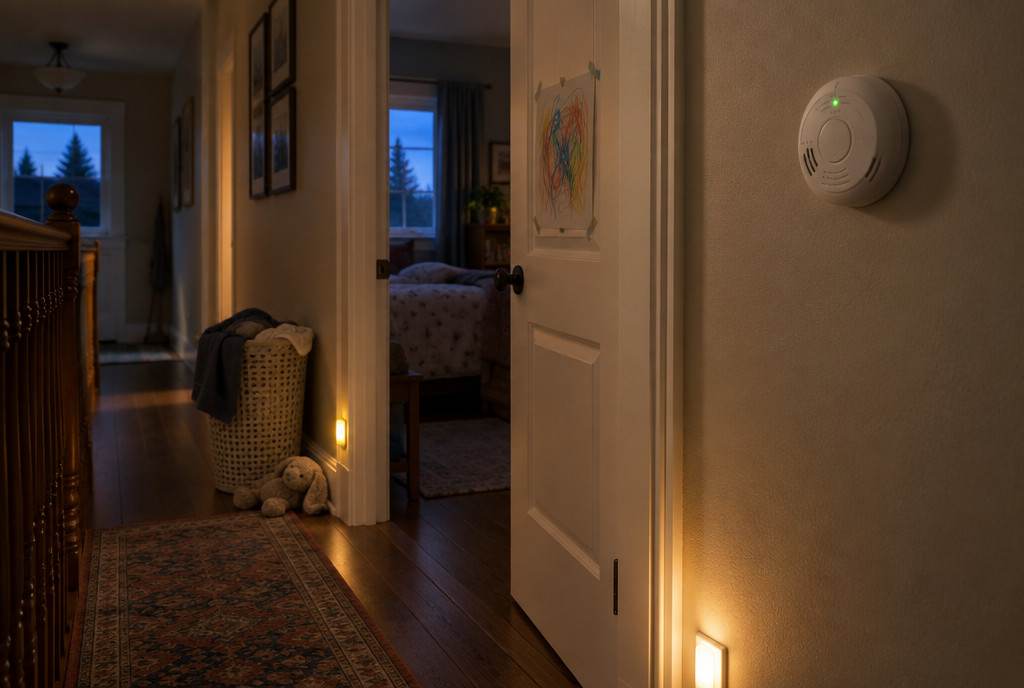
Ontario's Fire Code requires CO alarms in existing homes that have a fuel-burning appliance, a fireplace or an attached garage: next to every sleeping area and, since January 1, 2026, on every storey as well.
CO sources in Brampton homes
In the Toronto area, the main heating energy is natural gas for 52% of households (Statistics Canada, 2023). Any fuel-burning appliance, fireplace or attached garage is a potential CO source.
Single-detached houses make up 53% of Brampton's households; many have an attached garage, another reason to put an alarm near the door into the house.
What a CO check involves
- Alarms next to sleeping areas and on every storey, tested monthly and replaced by their end-of-life date (usually 7 to 10 years).
- Annual service of fuel-burning appliances by a licensed technician.
- A combustion spillage test during an energy evaluation, which catches a venting problem before it produces CO.
Our carbon monoxide guide · Combustion safety testing in Brampton
Carbon monoxide testing in Brampton: common questions
Are carbon monoxide alarms mandatory in Brampton?
Ontario's Fire Code requires CO alarms in existing homes that have a fuel-burning appliance, a fireplace or an attached garage: next to every sleeping area and, since January 1, 2026, on every storey as well.
Where should CO alarms go?
Outside every sleeping area and on every storey, following the manufacturer's instructions. Some rules also call for one near a fuel-burning appliance or the door from an attached garage.
How long do CO alarms last?
Most have an end-of-life date of 7 to 10 years printed on the unit; replace them by then even if they still beep when tested.