Article · verified October 2, 2026
Energy audits in Prince George, Dawson Creek & Northern BC
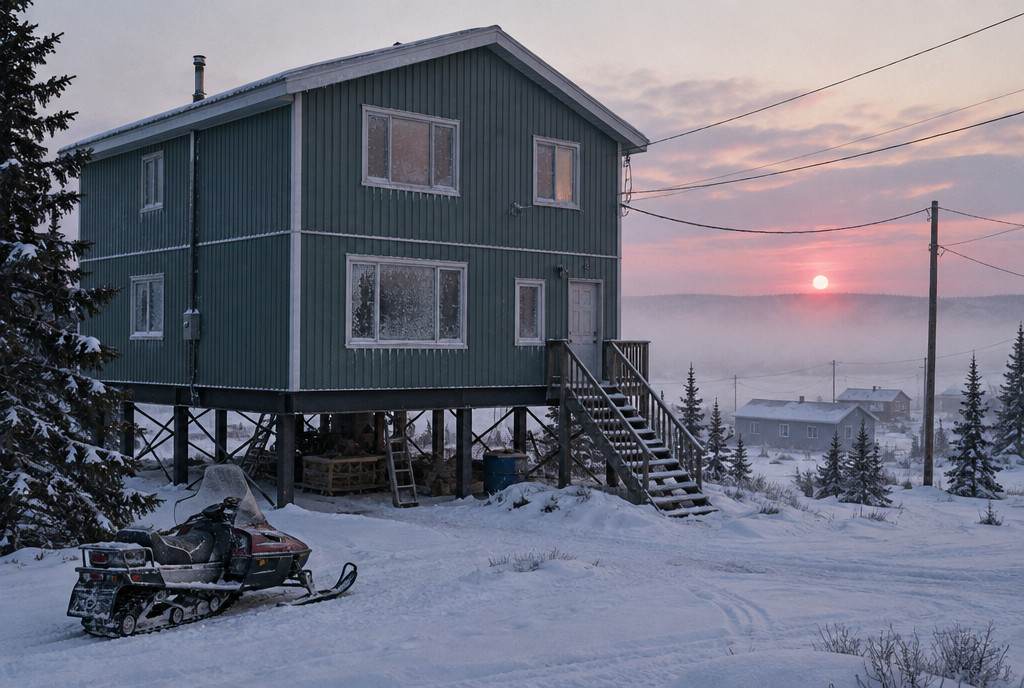
Northern BC heats through winters the southern rebate brochures weren't written for — -30° design temperatures, long shoulder seasons, wood-and-propane rural stock. That climate is precisely why the audit math works harder here than almost anywhere in Canada.
Why the north is the best audit country
Every measured leak costs more in Prince George than in Vancouver, because you buy heat for more hours at deeper cold. The same blower-door-guided air sealing that saves a Lower Mainland home 5% of heating costs saves a leaky northern home dramatically more in absolute dollars — and the region's housing (1970s–90s subdivisions, rural properties on propane and wood, converted seasonal cabins around the lakes) is full of exactly the empty walls, thin attics, and rim-joist leakage an EnerGuide evaluation quantifies. Wood-heat homes get one extra reason: the combustion safety and spillage check matters before any tightening.
The money, as of October 2, 2026
The audit-linked money is the Home Energy Improvement Bonus, available across BC under the current program requirements (for invoices dated May 15, 2026 onward): $20 for every percentage-point improvement in your EnerGuide rating, minimum $750, maximum $2,000, when you complete three bonus-eligible upgrades with a pre- and post-upgrade evaluation by a program-qualified advisor within 18 months, then apply within six months of the second evaluation (Better Homes BC ↗). Doing only two upgrades? The separate $300 Two Upgrade Bonus needs no evaluation, and it's one bonus per home (BC Hydro ↗). It stacks on the utility Home Renovation Rebate measures from BC Hydro and FortisBC, and heat pump rebates in BC require a CSA F280 heat-load calculation — the sizing document that matters most at northern design temperatures. Income-qualified households have a separate door: the CleanBC Energy Savings Program delivers no-cost upgrades (program portal ↗).
Standards worth knowing up north
New construction across BC follows the Energy Step Code's tiered performance targets (energystepcode.ca ↗) — with climate-zone adjustments that acknowledge the north's reality. For existing homes, the pre/post EnerGuide evaluation is the program currency, the blower door runs to the national CGSB method, and F280 governs equipment sizing. If you're comparing quotes, an advisor who volunteers those three terms unprompted is the one to shortlist.
Booking it in the north
Supply is thinner than the Lower Mainland's but real: province-wide service organizations — including The Energuy, active across BC — cover Prince George, Dawson Creek, and the Highway 16/97 corridors, and Better Homes BC keeps an energy advisor list ↗ you can filter by area. Our full BC directory is in the works; meanwhile the planner reads any BC postal code and returns the current program stack for your situation.
Common questions
How do I book an energy audit in Prince George or Dawson Creek?
Through an NRCan-registered service organization active in Northern BC — province-wide providers like The Energuy operate across BC, and Better Homes BC maintains an energy advisor list you can filter by location. Book the pre-upgrade EnerGuide evaluation before starting work if you want the Improvement Bonus.
What rebates apply in Northern BC right now?
The utility Home Renovation Rebate program (BC Hydro/FortisBC) covers equipment and envelope measures, and the Home Energy Improvement Bonus pays $20 per percentage-point EnerGuide improvement ($750 minimum, $2,000 maximum) when you complete three bonus-eligible upgrades with pre and post evaluations within 18 months, or $300 through the separate Two Upgrade Bonus if you do two (no evaluation needed; one bonus per home). Income-qualified households can access no-cost upgrades through the CleanBC Energy Savings Program.
Do heat pumps work in Prince George winters?
Cold-climate models sized from a real CSA F280 heat-loss calculation do — but Northern BC is exactly where sizing shortcuts fail publicly. At -30°C design temperatures, insist on the F280 calculation (BC's utility rebates require it), consider dual-fuel setups where gas is present, and treat the envelope work the audit identifies as the way to shrink the unit you need.
Sources
Northern BC: get matched
Tell us your community and heating fuel — we'll point you to registered organizations covering your area and the current BC program stack.
Email us what you’re planning, your postal code and the type of building (a house, a duplex or triplex, or a larger multi-unit building) — we’ll reply with registered service organizations for your area and which rebates apply.
Email dave@clickshift.ca